Agricultural Afterlives: When Waste Becomes Architecture
A building material rarely begins where architecture encounters it. By the time concrete reaches a construction site, its limestone has already been quarried, processed, and transformed. Timber arrives long after the forest. Glass appears detached from the sand from which it was made. By the time materials enter construction, much of the landscape and industry that produced them has already disappeared from view.
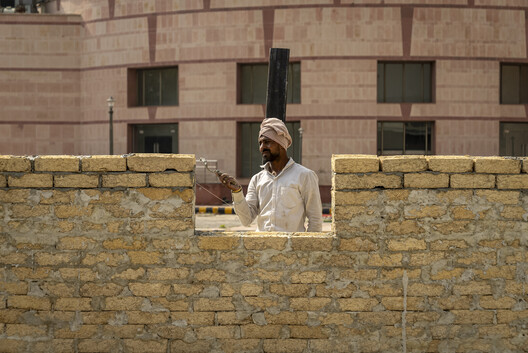
 School built in India with Sugarcrete. Image © Husain Akbar
A building material rarely begins where architecture encounters it. By the time concrete reaches a construction site, its limestone has already been quarried, processed, and transformed. Timber arrives long after the forest. Glass appears detached from the sand from which it was made. By the time materials enter construction, much of the landscape and industry that produced them has already disappeared from view.
Across India and the SWANA region, another material supply chain is becoming visible. Rice husks, coconut fibres, sugarcane bagasse, and date palm residues, once treated as agricultural leftovers, are increasingly entering architecture as insulation, composite panels, fibreboards, and cement substitutes. Rice mills, coconut plantations, sugar factories, and date farms are increasingly becoming part of the architectural supply chain.