An Expansion Preserves What Makes This Melbourne Midcentury So Renowned
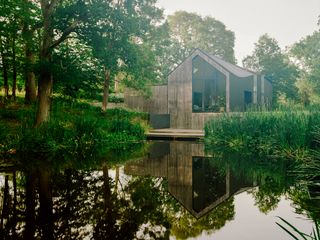
An en suite bedroom and living room have been added to the rear of Coil House, distinct for the way it wraps up and around a central courtyard.
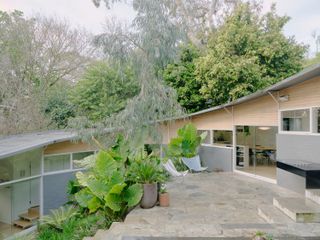
An en suite bedroom and living room have been added to the rear of Coil House, distinct for the way it wraps up and around a central courtyard.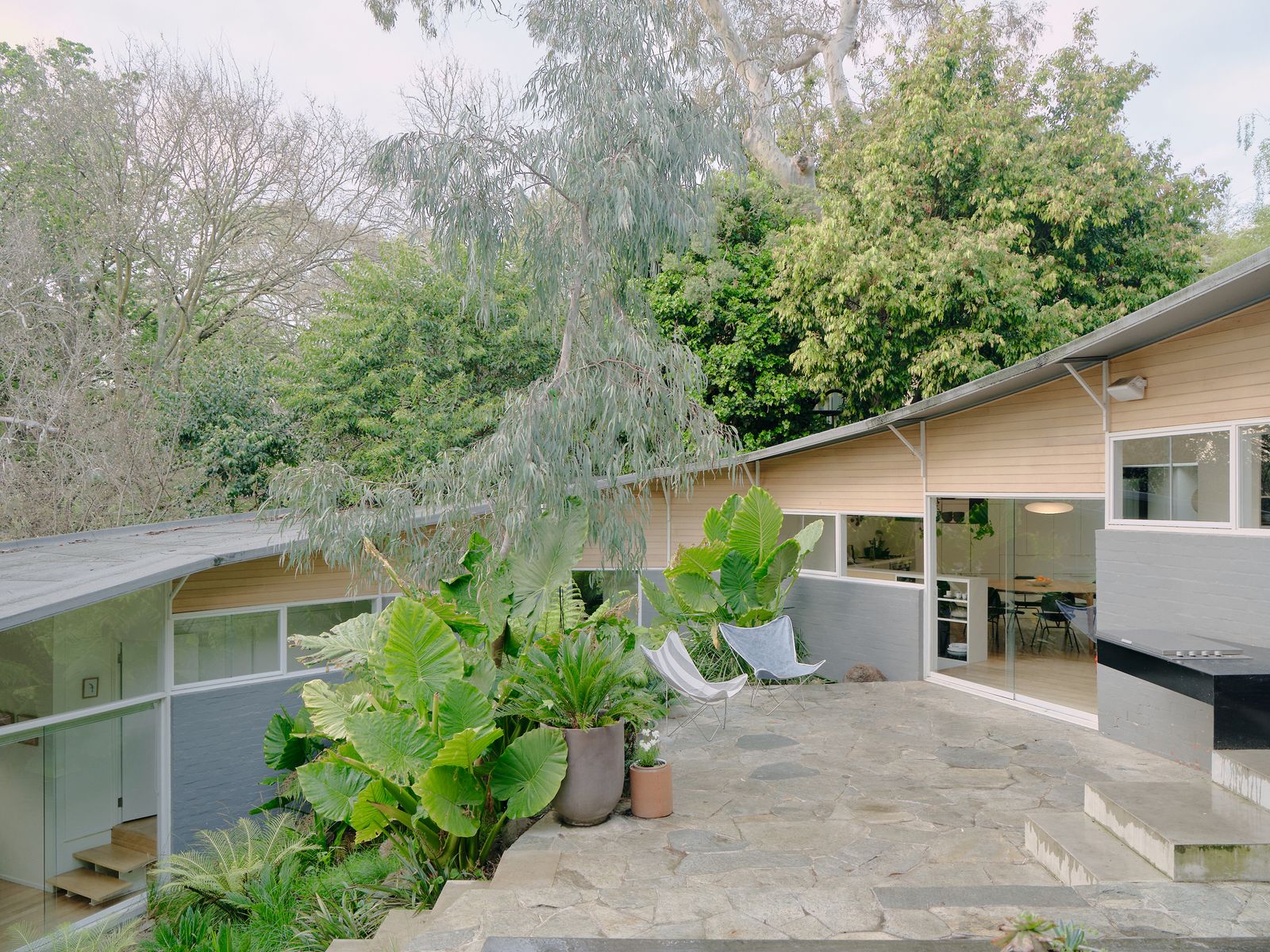
Houses We Love: Every day we feature a remarkable space submitted by our community of architects, designers, builders, and homeowners. Have one to share? Post it here.
Project Details:
Location: Ivanhoe, Australia
Architect: Karen Abernethy / @kvabernethy
Footprint: 2,400 square feet
Builder: Resicon Master Builders
Structural Engineer: Solid Structure Engineering
Landscape Design: Hamish Freeman
Cabinetry: Timberon
Photographer: Tom Ross / @tomross.xyz
From the Architect: "The Coil House, also know as The Snelleman house, is a modernist residence built on a steeply sloping site in Ivanhoe East. It was built in 1954 as a family home for Hans Snelleman by architect Peter McIntyre, who established his own practice in 1950. The original house was referred to as the Coil House for the way it curved down the slope around two gum trees. Once built, the home immediately drew critical acclaim and media attention. The ‘coil’ is a single room width (plus a hallway) and winds down the slope in a reverse J-shape on multiple split levels that follow the fall of the land. Modifications were made in the 1970s which added an eave to the lower, internal side of the roof as well as the original garage being filled in to become an additional bedroom. In 2018 I was approached by the current owners to find a way to extend the dwelling to meet the needs of their family of five.
"It was imperative that the inside of the coil remain unchanged to ensure continuous views. Contrasting in approach and aesthetic to the original house and in order to complement the existing conditions, two contemporary ‘pavilions’ were carved into the front setback, at the rear of the coil. The pavilions connect to the original house with low, glazed linking structures and contain the much the needed extra spaces: a living room/laundry and a study with a main bedroom with en suite. The original part of the house has been restored with the only substantial change to the original layout being the kitchen/dining area, which became open plan and slightly enlarged to enable a larger central meals area for the family."
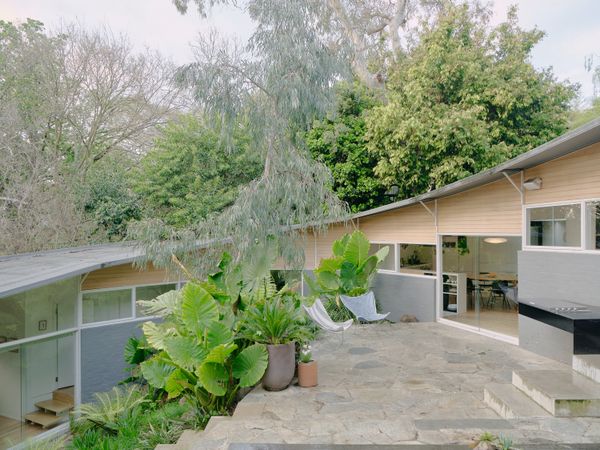
Photo by Tom Ross
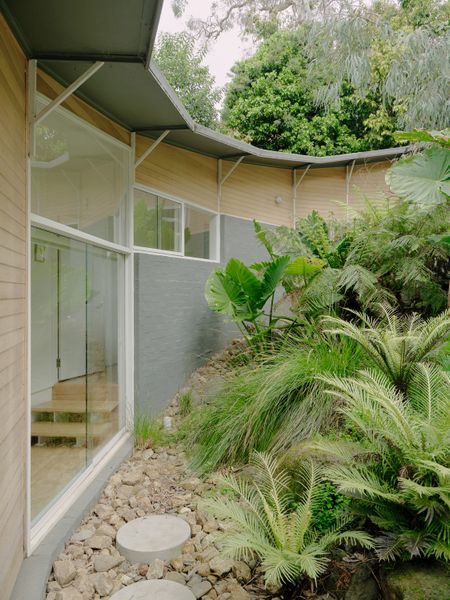
Photo by Tom Ross
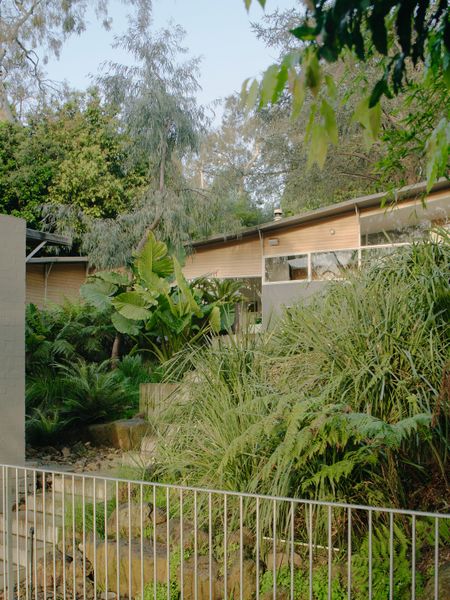
Photo by Tom Ross
See the full story on Dwell.com: An Expansion Preserves What Makes This Melbourne Midcentury So Renowned
Related stories: