Before & After: To Save a Ruined Cottage, They Had to Take It Apart and Put It Back Together Again
Splinter Society dismantled, catalogued, and rebuilt the historic Melbourne home with an industrial rear addition, two courtyards, and a fireplace turned outdoor firepit.
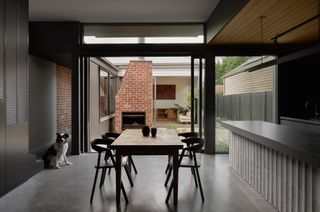
Splinter Society dismantled, catalogued, and rebuilt the historic Melbourne home with an industrial rear addition, two courtyards, and a fireplace turned outdoor firepit.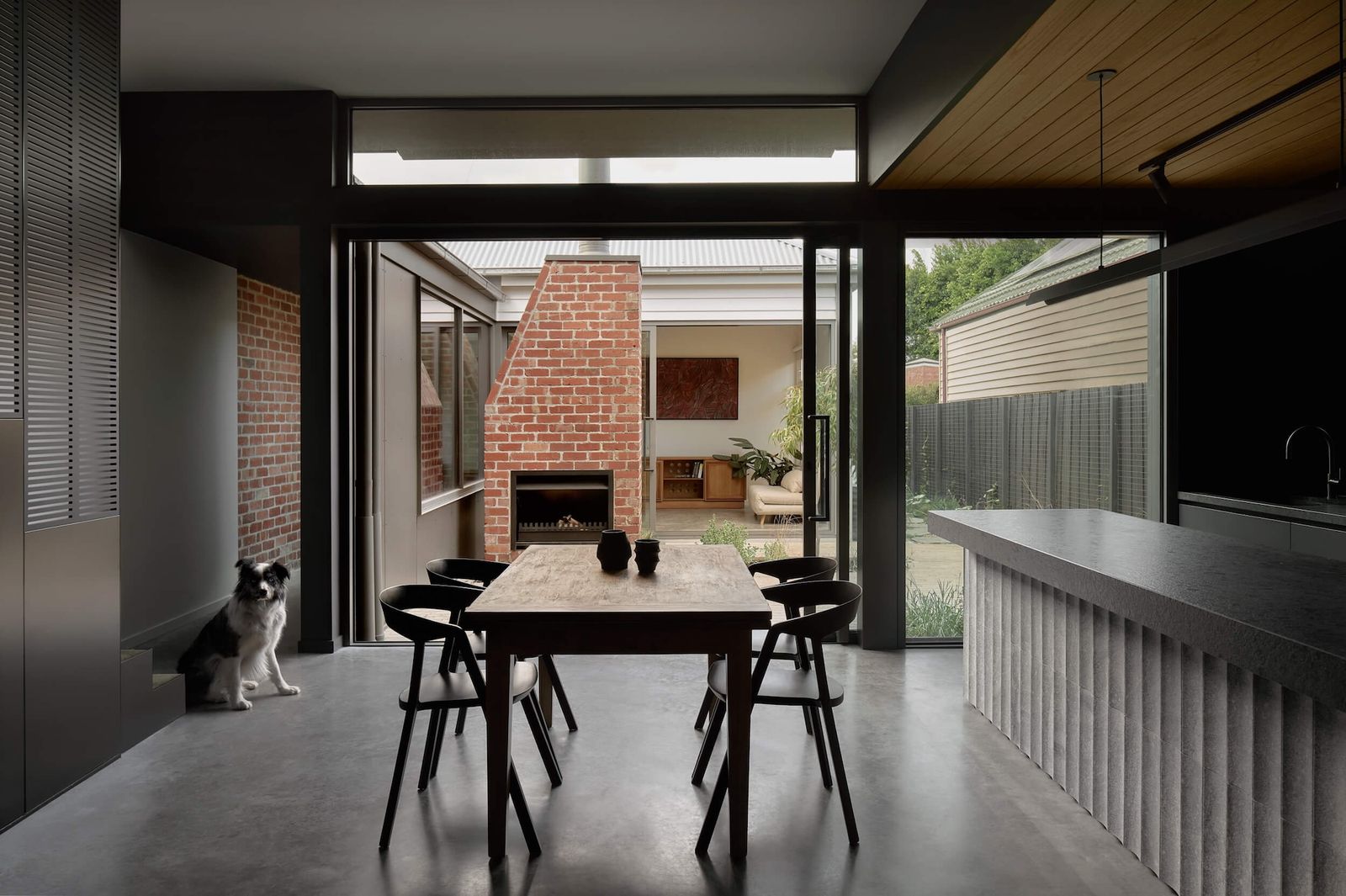
When Cam Bailey bought a crumbling cottage in Melbourne’s Collingwood neighborhood, there didn't seem to be much to save. The property, however, fell under a heritage overlay—a planning control that recognizes historical significance. So, when Cam hired local architectural practice Splinter Society to plan a renovation and extension, they had to carefully dismantle the entire cottage, catalogue its parts, store them off-site, and rebuild it once the addition was completed.
"Honestly, I didn’t go into the project with a strong desire to preserve specific original features, mainly because the cottage was in quite an extreme state of disrepair," recalls Cam. "It was actually a bit of a surprise when it became clear that the existing structure needed to be retained. It required a real shift in how I was thinking about the project, and I had to reconsider what was possible."
In addition to restoring the original cottage, Splinter Society extended the home with an industrial-inspired rear addition and created two courtyards that extend the living space outside and invite natural light into the interiors.
Before: Exterior
In the late 19th century, Collingwood was a large manufacturing precinct with thousands of modest two- and three-room cottages built to house workers. During the 1960s and 1970s, most of the cottages were demolished and replaced by apartment buildings, and today the remaining cottages are deemed historically significant.
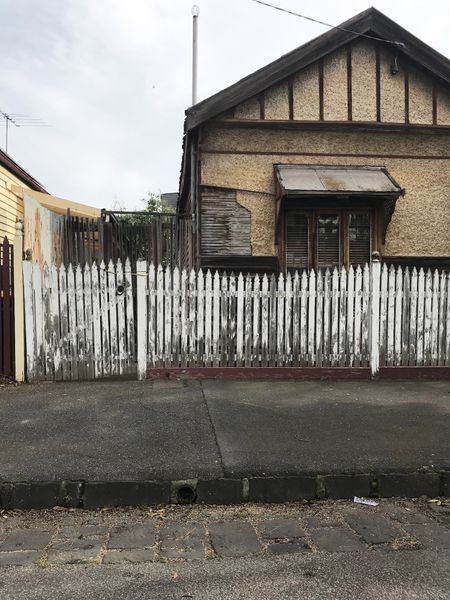
Before: "It wasn’t so much the cottage itself that initially drew me in, but the location," says homeowner Cam Bailey. "I had already lived in Collingwood for some time and really loved the area’s energy and character. I was particularly drawn to its industrial heritage and resulting aesthetic."
Photo courtesy of Splinter Society
The house Cam purchased was one of the original cottages, and it was in a severely dilapidated state. "The same old fellow had lived in it forever and had never done anything to it," recalls Splinter Society director Chris Stanley. "The floors had collapsed, the windows were smashed, and it still had the original cooker and bathtub."
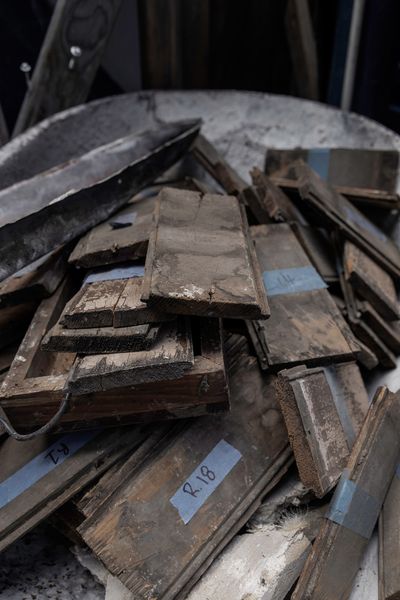
Before: The dismantling process required the creation of heritage working drawings of the cottage, followed by the numbering and removal of individual elements. "That included all the decorative timberwork, the windows, and each brick—every single element of the building," says Splinter Society director Chris Stanley. The cottage then had to be completely reconstructed.
Photo courtesy of Splinter Society
After: Exterior
Cam, who works in finance, travels frequently for work, and he bought the home to serve as a base when living in Melbourne. He was attracted to Collingwood’s industrial vibes, and he selected Splinter Society for their track record of transforming old industrial sites. "He wanted layers of industrial, inner-city fabric brought together with a cottage," says Stanley. "It became a question of: how do you reconcile these two things?"
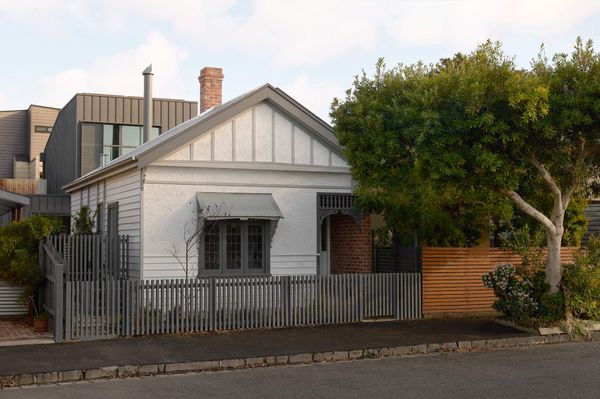
The old and new volumes are clearly distinct in style, but the vertical rhythm of the new cladding echoes the timberwork on the original gable roof, and the neutral color palette.
Photo by Jack Lovel
See the full story on Dwell.com: Before & After: To Save a Ruined Cottage, They Had to Take It Apart and Put It Back Together Again
Related stories: