Beyond the Render: How AI Is Restructuring Architectural Documentation
Some types of work only become visible when they are no longer done. They are discrete, repetitive, rarely celebrated, yet they quietly sustain the functioning of any operation. In architecture, this dimension rarely appears in the images that circulate. When we think about the discipline, we evoke seductive renderings, carefully lit perspectives, precise plans, drawings that promise possible or even utopian futures. Yet the layer that supports these formal gestures is not found in the image, but in specification, detailing, and documentation.
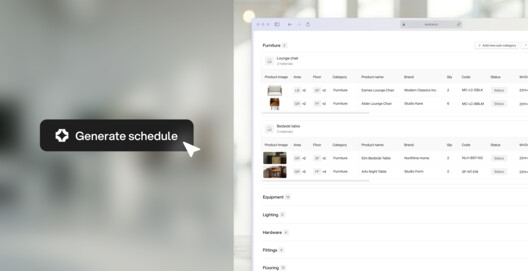
 Courtesy of Avoice
Some types of work only become visible when they are no longer done. They are discrete, repetitive, rarely celebrated, yet they quietly sustain the functioning of any operation. In architecture, this dimension rarely appears in the images that circulate. When we think about the discipline, we evoke seductive renderings, carefully lit perspectives, precise plans, drawings that promise possible or even utopian futures. Yet the layer that supports these formal gestures is not found in the image, but in specification, detailing, and documentation.
Since artificial intelligence moved to the center of architectural debate, the conversation has largely been driven by its ability to generate forms and atmospheres in seconds. Stylistic simulations, conceptual variations, and visual experimentation have come to symbolize technological advancement in the field. There is something understandable in this fascination: architecture has always engaged with representation as a way of imagining what does not yet exist.