Evenly Lit, Not Overlit: Rethinking Brightness in Subtropical Cities
In South China, there is occasionally an urban myth—especially across Hong Kong, Shenzhen, and Guangzhou—about choosing a home that avoids western light. Over decades, the west-facing sun has proven to be a particularly difficult condition to live with: its low angle in the afternoon, its aggressive heat gain (especially in summer), and the way it penetrates deep into interiors. With global warming and longer, hotter seasons, that much-romanticized "afternoon glow" is increasingly experienced less as romance and more as glare, heat, and fatigue. Although this wisdom circulates as a community-driven rule of thumb, it carries an undeniable architectural clarity about building orientations: avoiding western light is not only about thermal comfort, but also about avoiding the sharpest, most intrusive form of direct illumination—light that strikes at the most unforgiving angle, washing surfaces, flattening depth, and turning rooms into high-contrast fields of discomfort.
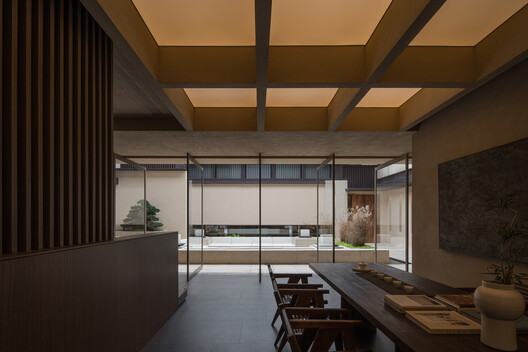
 Younch Hotel / MUDA-Architects. Image © HereSpace
In South China, there is occasionally an urban myth—especially across Hong Kong, Shenzhen, and Guangzhou—about choosing a home that avoids western light. Over decades, the west-facing sun has proven to be a particularly difficult condition to live with: its low angle in the afternoon, its aggressive heat gain (especially in summer), and the way it penetrates deep into interiors. With global warming and longer, hotter seasons, that much-romanticized "afternoon glow" is increasingly experienced less as romance and more as glare, heat, and fatigue. Although this wisdom circulates as a community-driven rule of thumb, it carries an undeniable architectural clarity about building orientations: avoiding western light is not only about thermal comfort, but also about avoiding the sharpest, most intrusive form of direct illumination—light that strikes at the most unforgiving angle, washing surfaces, flattening depth, and turning rooms into high-contrast fields of discomfort.