Everyone Knows These 5 Classic Furnishings, But You Should Meet Their Contemporary Alternatives
The canon isn’t dying anytime soon, but you can add individuality to your home by investing in pieces from a new generation of designers.
The canon isn’t dying anytime soon, but you can add individuality to your home by investing in pieces from a new generation of designers.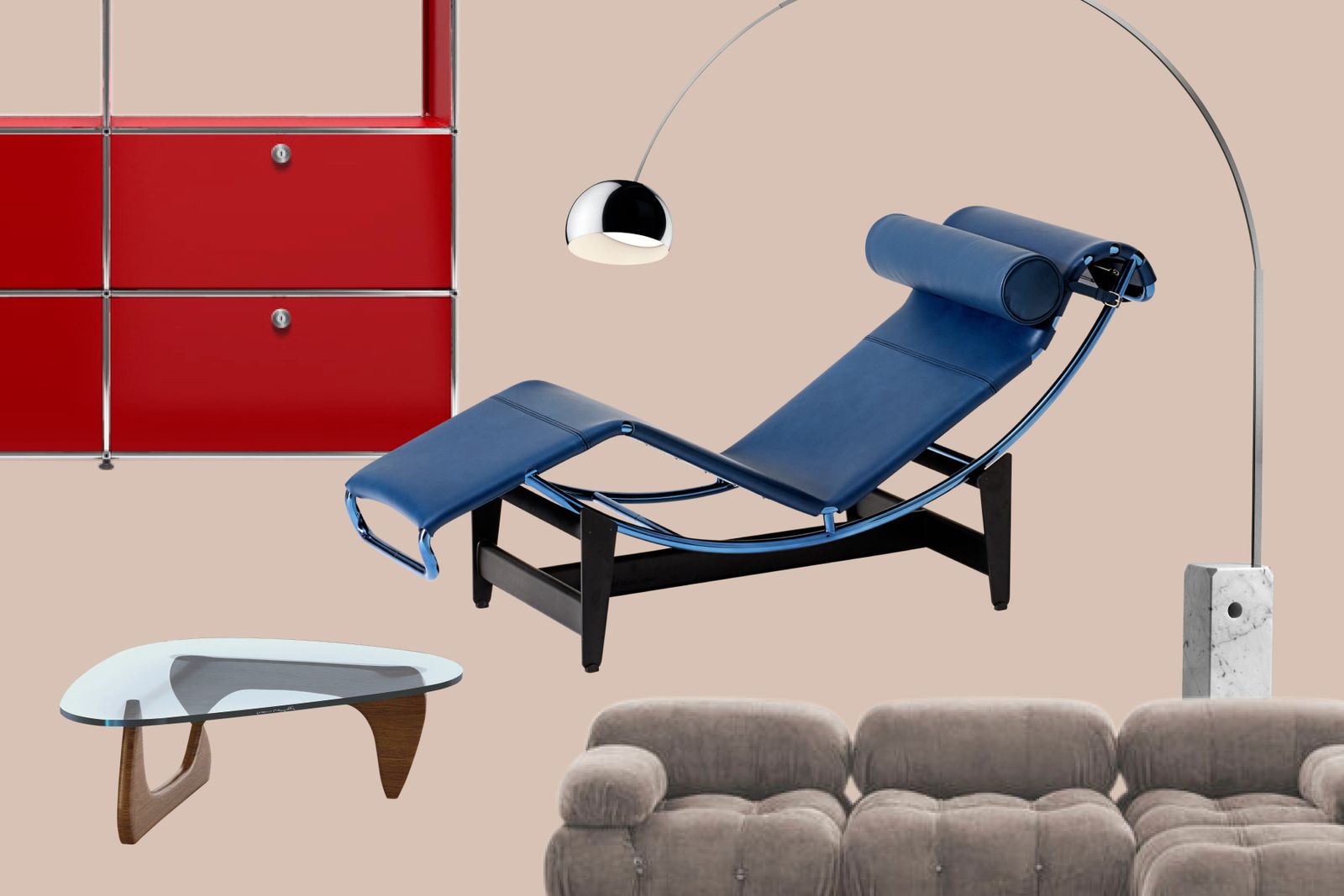
Most design classics are classic for a reason. What we now collectively revere as 20th-century furniture and lighting icons became ubiquitous because of their recognizable forms, innovative use of materials, and ability to transform a space. But popularity can also be a curse, and issues of skyrocketing costs tend to follow in-demand pieces. While we will always appreciate these design icons, there are fresher alternatives worth considering to populate your living space. Read on to learn the lore of five furniture pieces that have achieved household-name status and discover other options that could add a bit of surprise to the same square footage instead. No matter what you choose, dig deeper, and never, ever settle for a dupe!
Camaleonda: The Popular but Polarizing Sofa
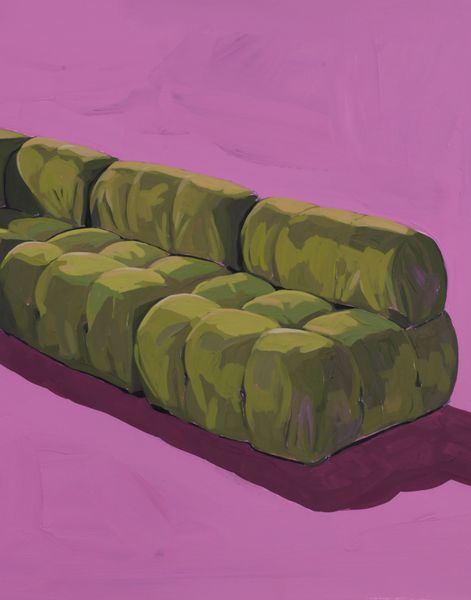
When Italian architect and designer Mario Bellini released his Camaleonda modular seating in 1970, he could hardly have guessed that his creation would someday grace thousands of magazine pages, Pinterest boards, and Instagram carousels. The sofa is unmistakable thanks to its cloudlike silhouette, created by tightly ruched upholstery over foam seat, back, and armrest cushions. The hooks and rings allow the modules to easily be rearranged and reconnected, depending on the whims of the user. "You get a modular sofa when you need to functionally split or fit a space," says L.A.-based design adviser and curator Meaghan Roddy.
After its initial launch, the sofa was only in production for nine years in the ’70s, until B&B Italia reissued it in 2020. The design quickly became emblematic of pandemic-era redecorating, and six years later, we may have officially hit peak Camaleonda. Although the sofa is touted as a dynamic icon well suited for a new era, Roddy finds it ironic that a modular piece has become so expected. "Modular sofas say, ‘I’m unpredictable; I am never in the same place twice,’" she says. "It’s antithetical to use a sofa that is half a century old for this."
With that in mind, newer alternatives include the Mangas Outdoor system, designed by Patricia Urquiola for Gan, which is contemporary, comfortable, and, better still, also suitable for outdoor use. How’s that for unpredictability? The simple chaise and pouf modules wrapped in a variety of textured knits can be positioned together in various arrangements, and a matching rug is available, too. Or, if you’re drawn to Camaleonda’s curves, Jennifer Choi’s Venn Modular Seating for Otras Formas offers rounded modules and pebblelike backs and armrests that can be configured into sofas and armchairs.
Camaleonda Sectional Sofa by Mario Bellini for B&B Italia
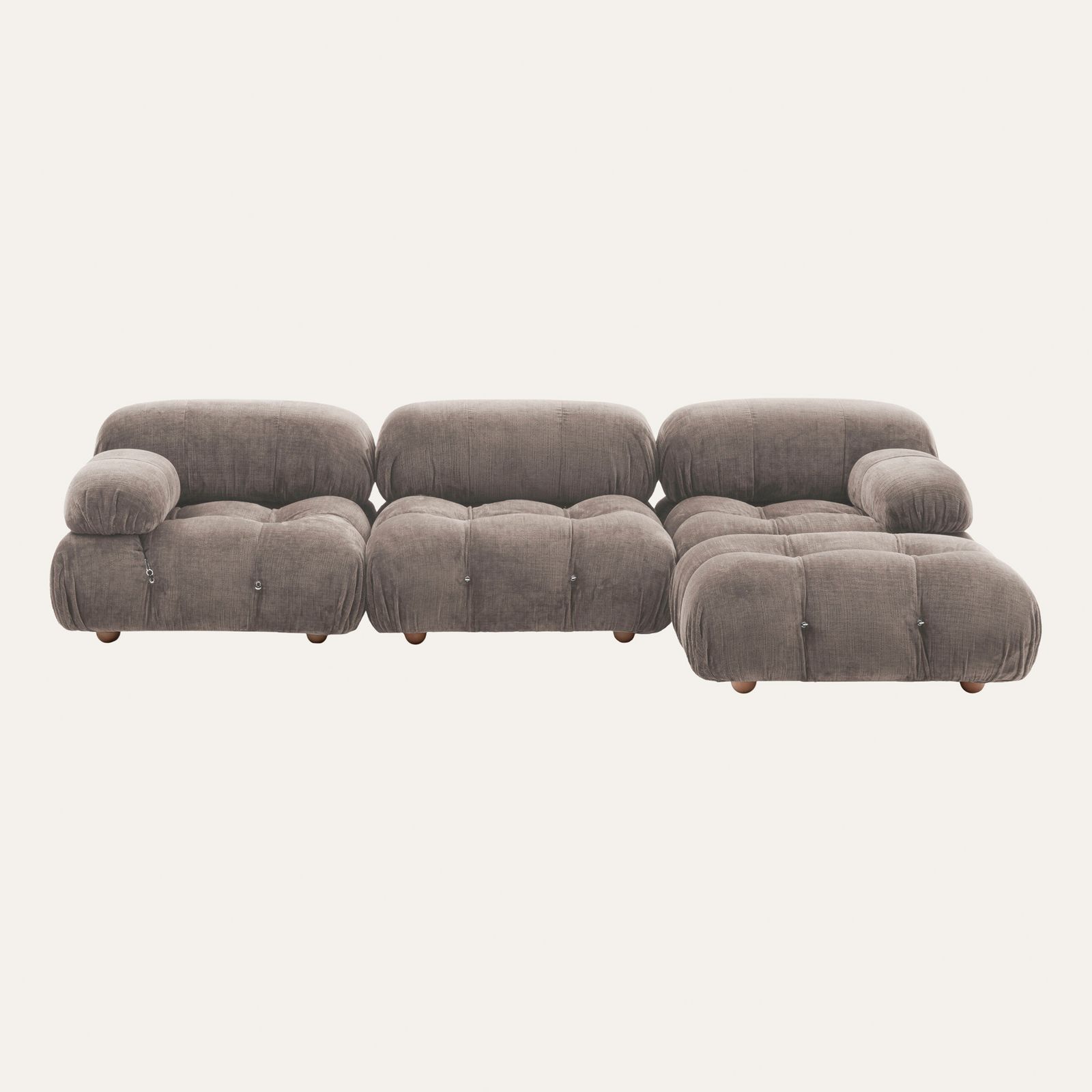
The seat module, backrest, armrest, and capitonné design of the new Camaleonda are still manufactured with the innovative system of cables, hooks and rings created by Bellini in 1970. Internally, it has been redesigned to be more comfortable than the original.
Marechiaro System Sofa Units designed by Mario Marenco for Arflex
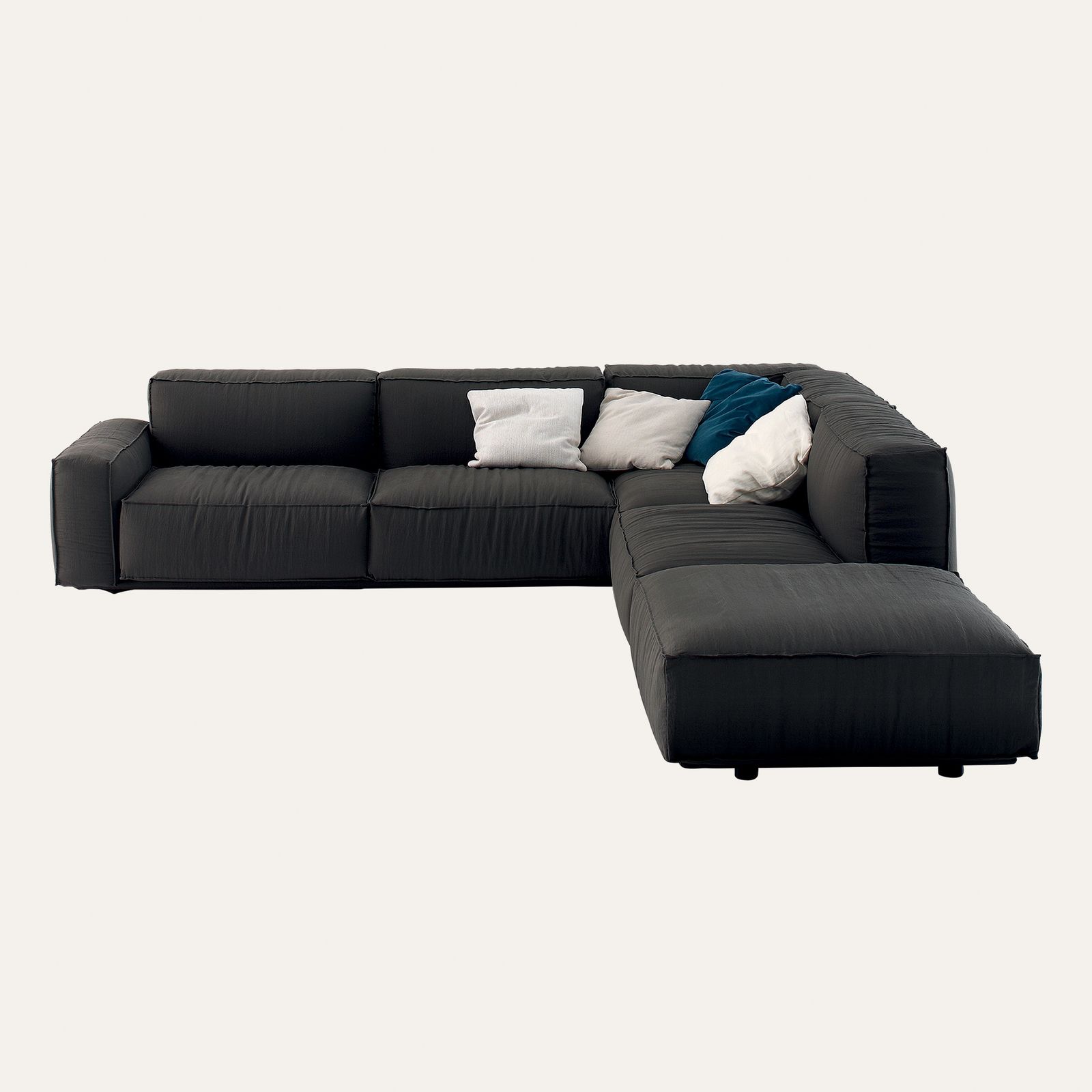
Designed by architect Mario Marenco, the system is defined by the extreme formal essentiality of its upholstered elements.
Mangas Outdoor Module by Patricia Urquiola for GAN
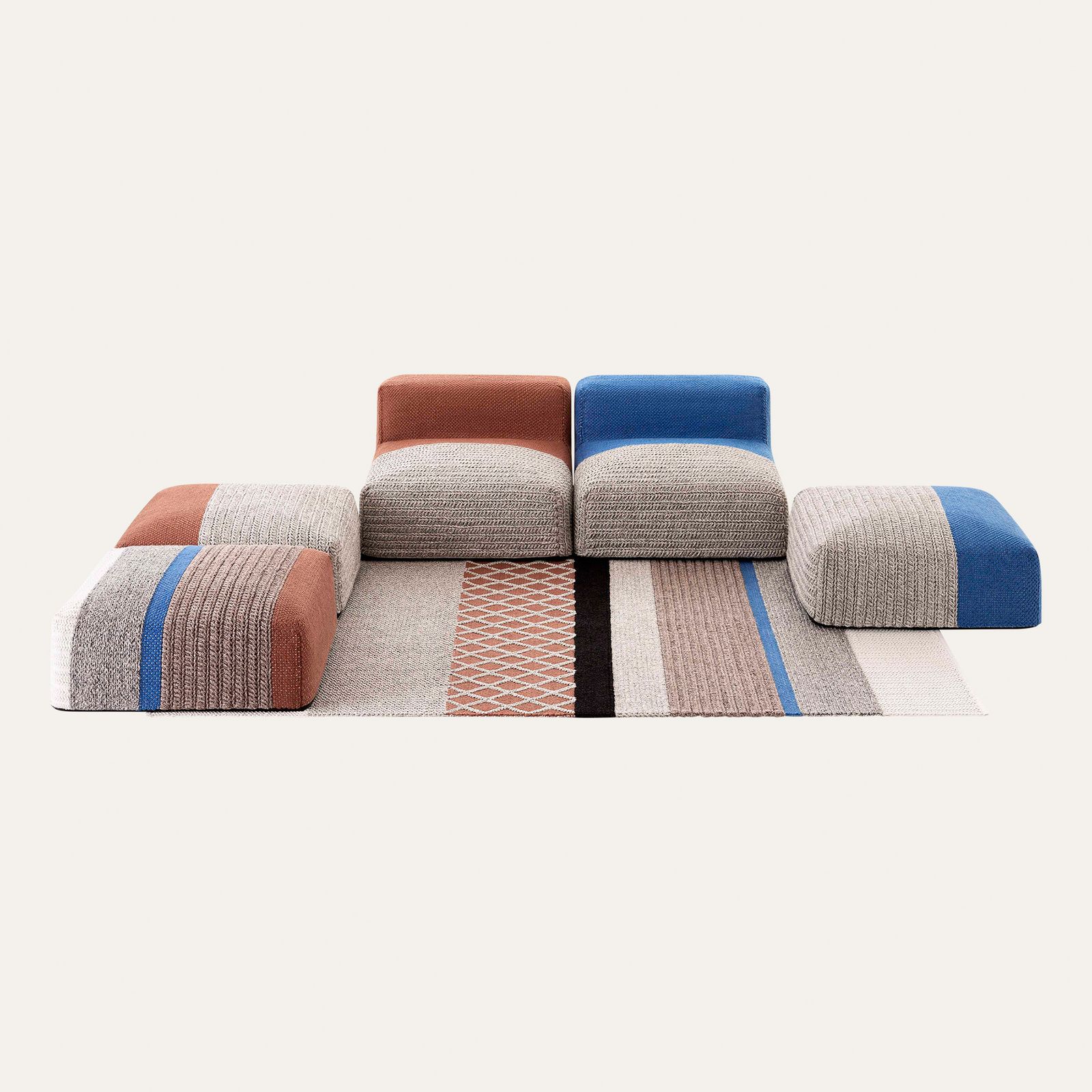
The Mangas Outdoor module is a large-format seat specially designed for relaxed and casual semi-covered environments, such as porches or pergolas. Prices range between $2,480 and $4,860 for the items in the collection.
Tufty-Time 20 Sofa by Patricia Urquiola for B&B ITALIA
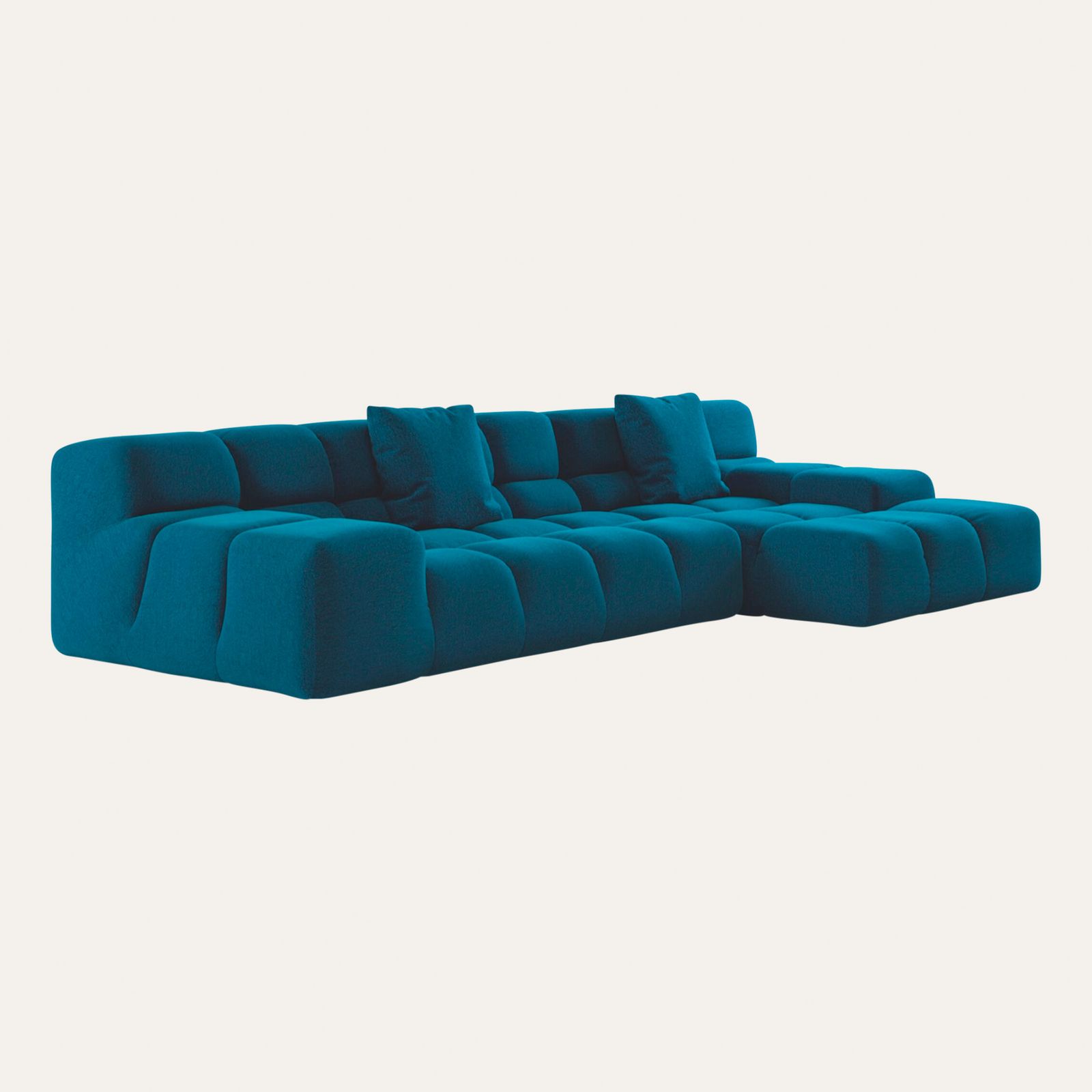
Tufty-Time 20 represents the contemporary evolution of Tufty-Time upon its 20th anniversary. The reimagined system fully disassemblable, ensuring that all the components can be given a second life at the end of the product's life cycle.volumes, padding and seat height have been redesigned to offer even greater comfort, while the introduction of a curved module expands the system's potential.
Venn Modular Seating by Jennifer Choi for Otras Formas
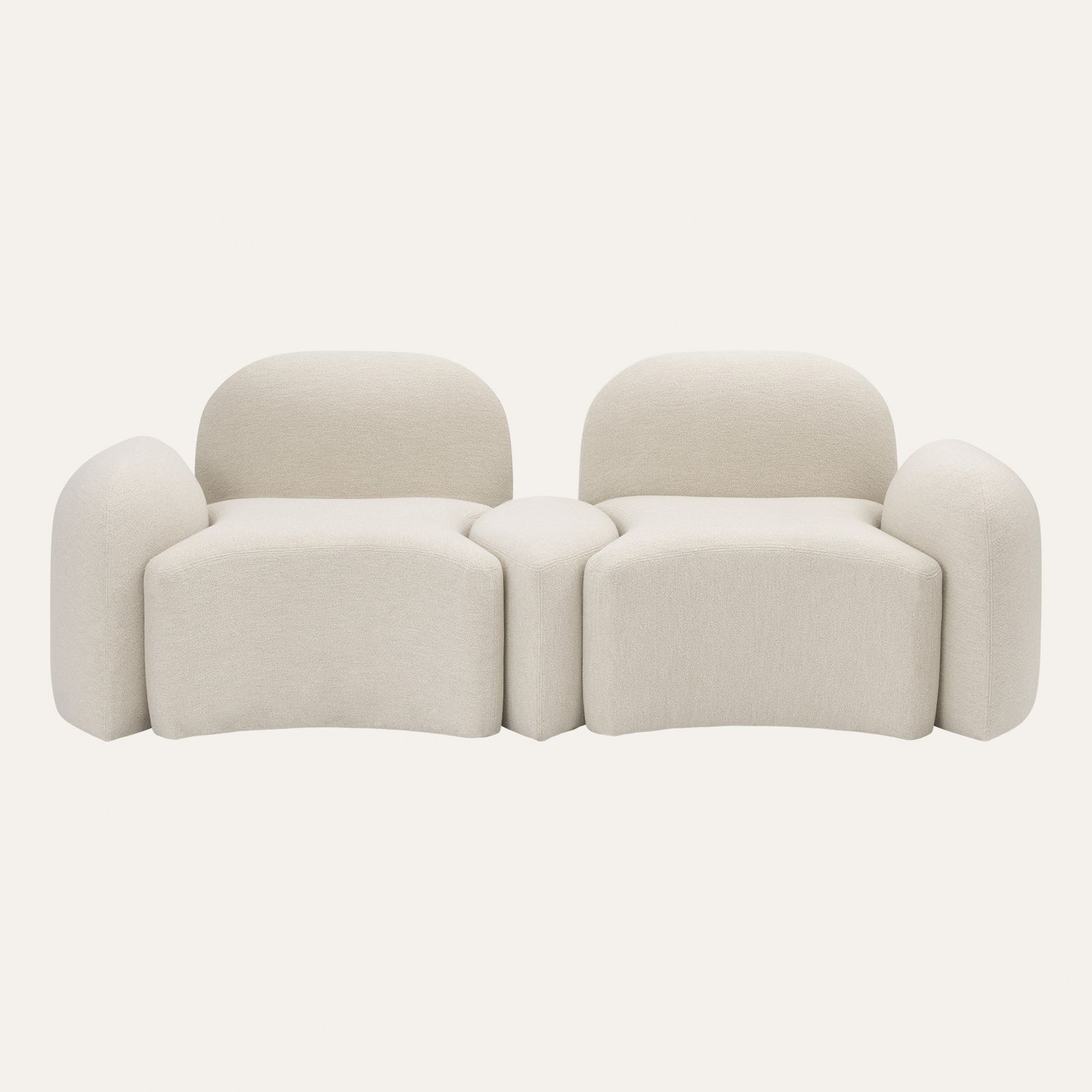
Modular seating system in upholstery, foam, wood and steel. The collection provides several options for the components of the sofa, including the seat backs and the arm rests.
Haybale Lounge Chair with Footstool by Nicholas Baker for MOOOI
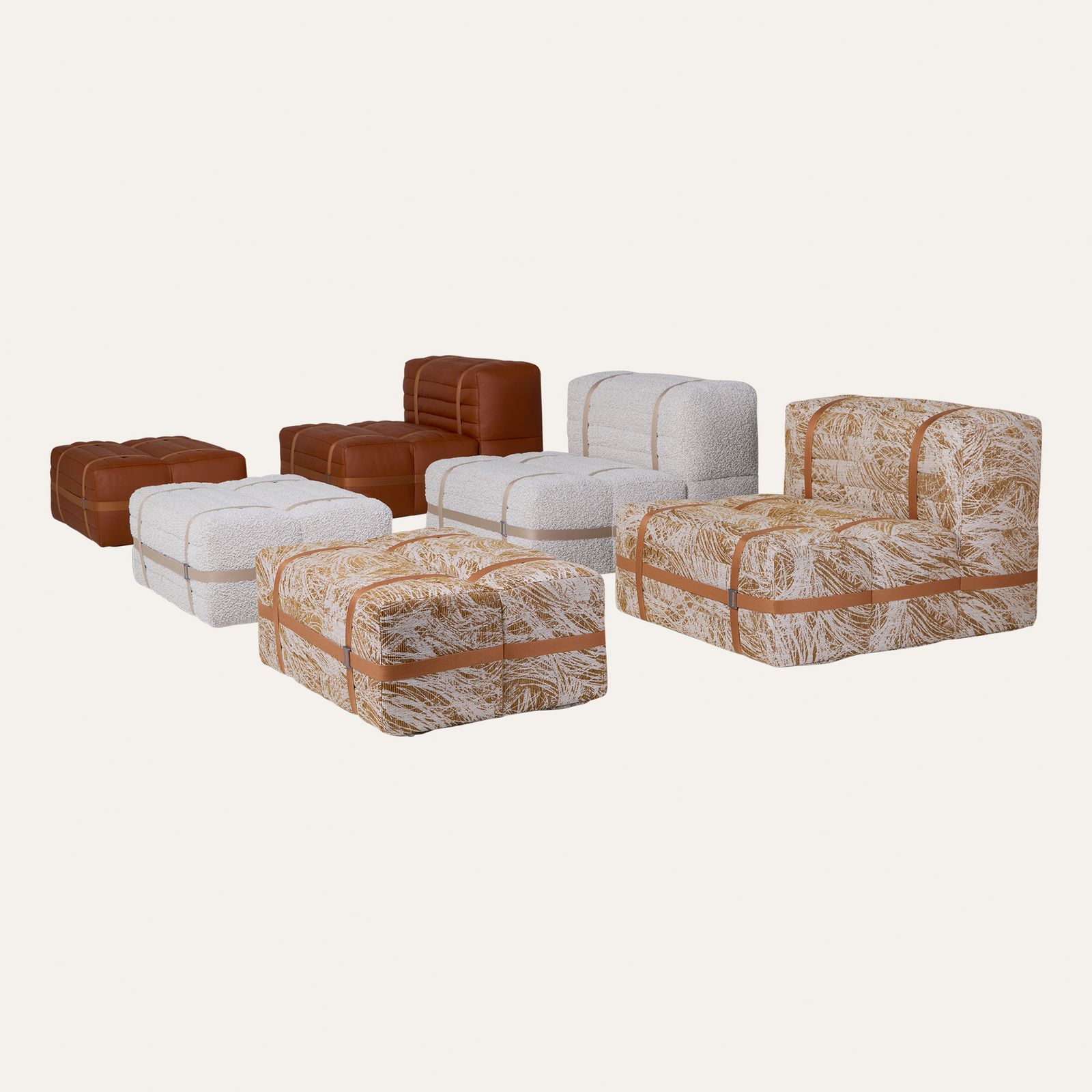
A bold reinterpretation of rural nostalgia, Haybale Lounge Chair with Footstool by Nicholas Baker transforms stacked hay bales into a sculptural statement of comfort.
USM Haller: The Too Perfect Modular System
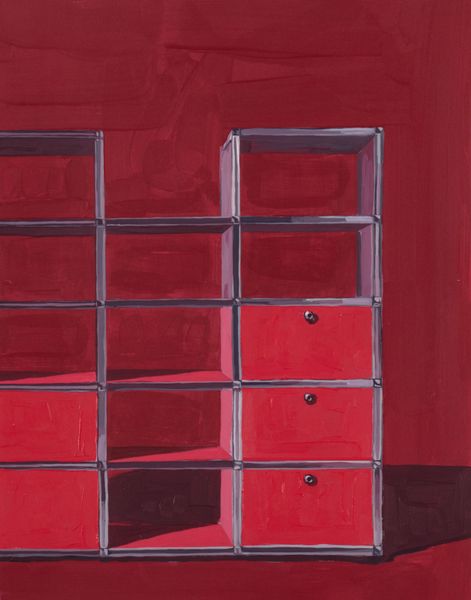
In 1961, Swiss architect Fritz Haller was hired to design the headquarters for USM, which was then a heritage metal company in sleepy Münsingen, Switzerland. Together with Paul Schärer Jr., he decided that they needed a reconfigurable furniture system to align with the modernist building’s interiors. The result was so attractive that the company pivoted to producing the USM Haller for the global market—and a new identity was born for the then 80-year-old manufacturer.
Decades after its initial release, the USM Haller system still strikes an impressive balance between aesthetics and functionality. "This is a tough one to beat," says San Francisco–based interior designer Michael Hilal. "It really is a perfect modular system in every way." Given its customization potential, the system can be put to use in almost any context, from the office to the bedroom, so "it can be a real ‘Who is she?!’ moment," Hilal says. Though he notes that "the price keeps creeping up," potentially due to current unpredictable tariffs.
For a more playful take that is somehow even more flexible than the Haller system, the CABINET+ collection by UK and Georgian studio SKNYPL is composed of a stained birch coffee table, shelf, and two stools, which can be stacked and reconfigured into a large cabinet. Meanwhile, Netherlands-based designer Rino Claessens’s Modular Ceramics offer a sculptural alternative. His cross, T-shape, corner and straight modules are all fired separately in the ceramic kiln, then bolted together from the inside to be combined into striking compositions.
USM Haller Shelving (R2)
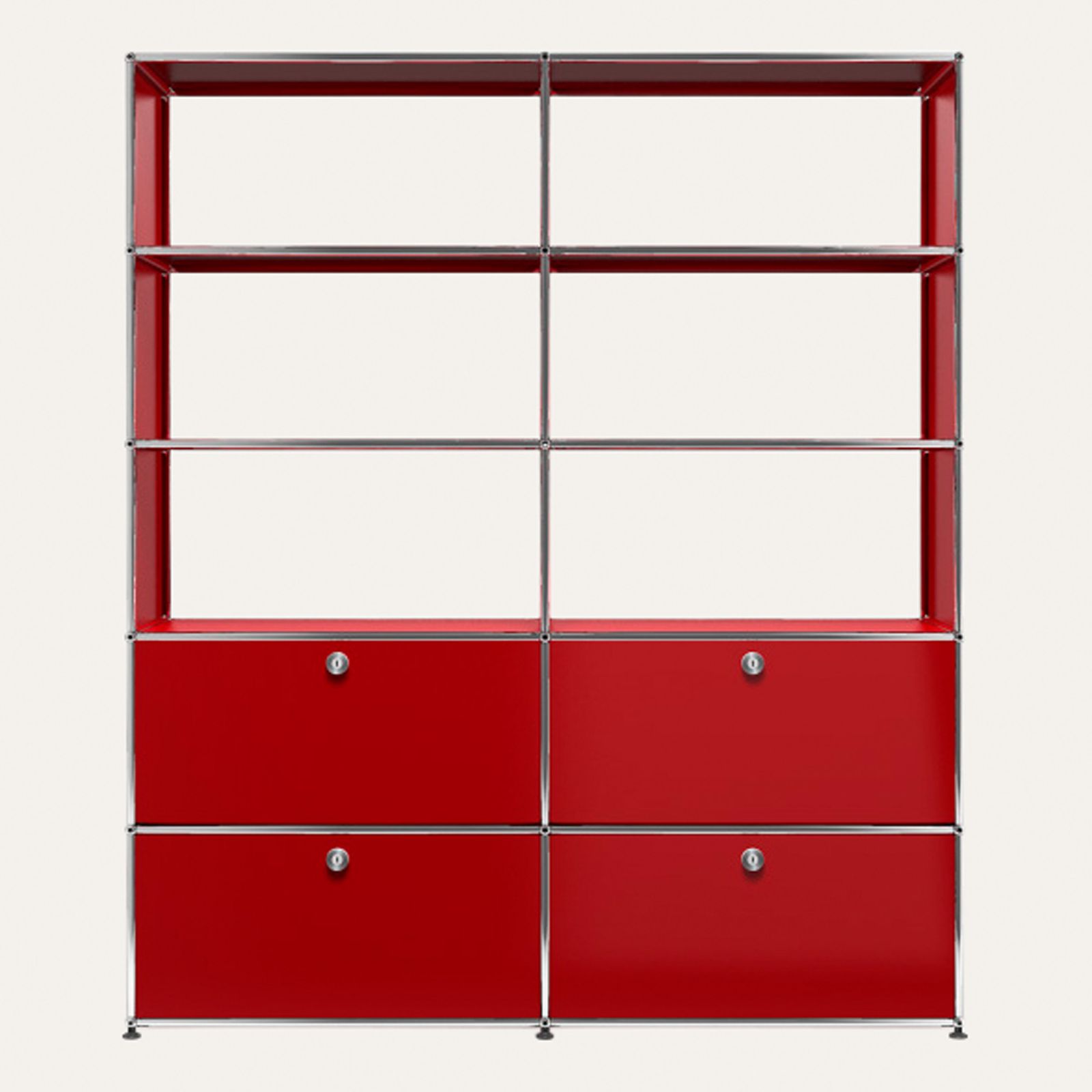
The R2 arrangement sees the modular USM Haller system formulated as a bookshelf with both closed and open storage. It's available in 14 standard surface colors.
Stacked Storage System by MUUTO
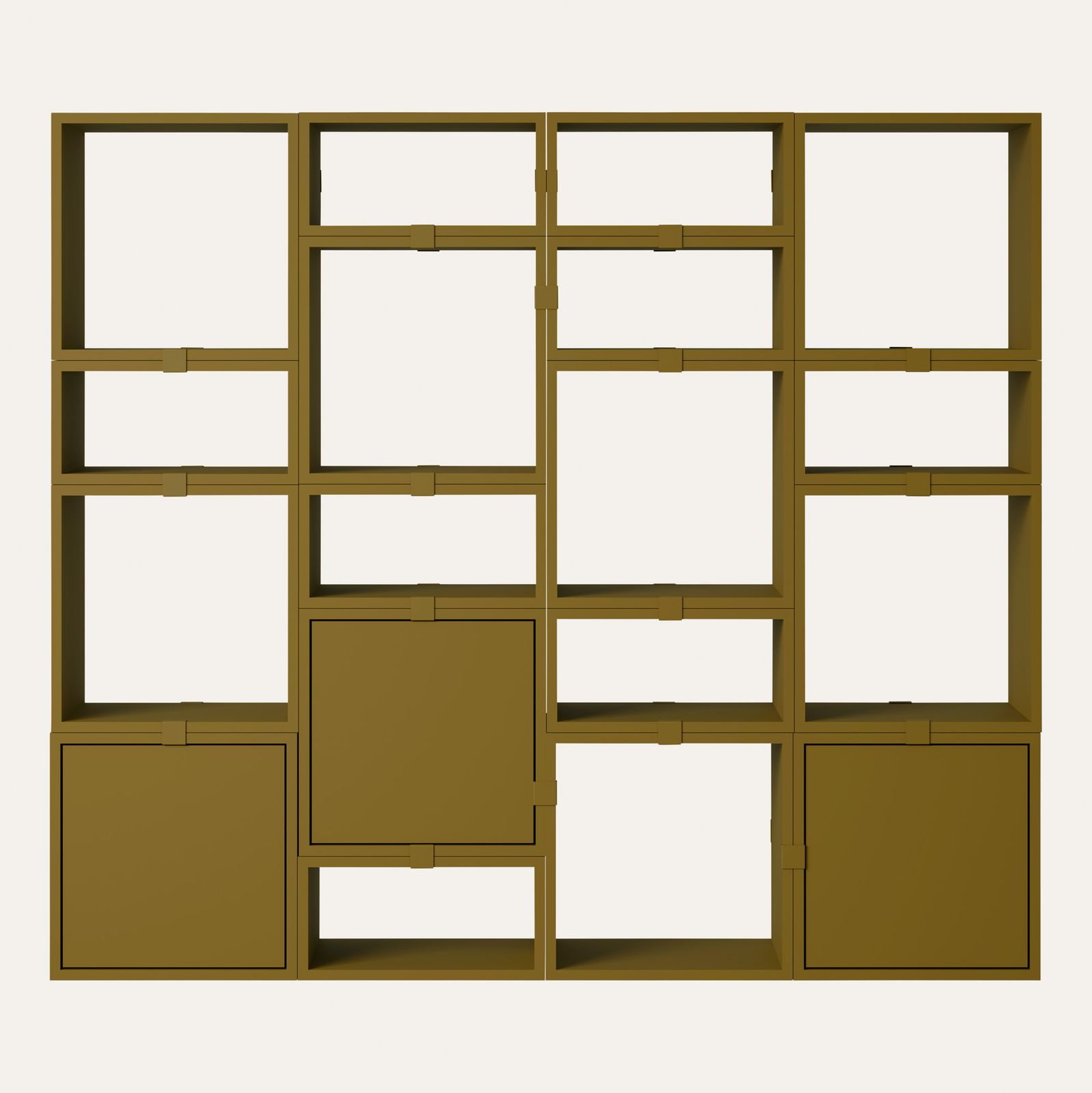
Being both versatile and functional, the Stacked Storage System can be arranged and rearranged for the exact aesthetic and functional needs of any space.
Modular Ceramics by Rino Claessens, Gallery Scene Ouverte
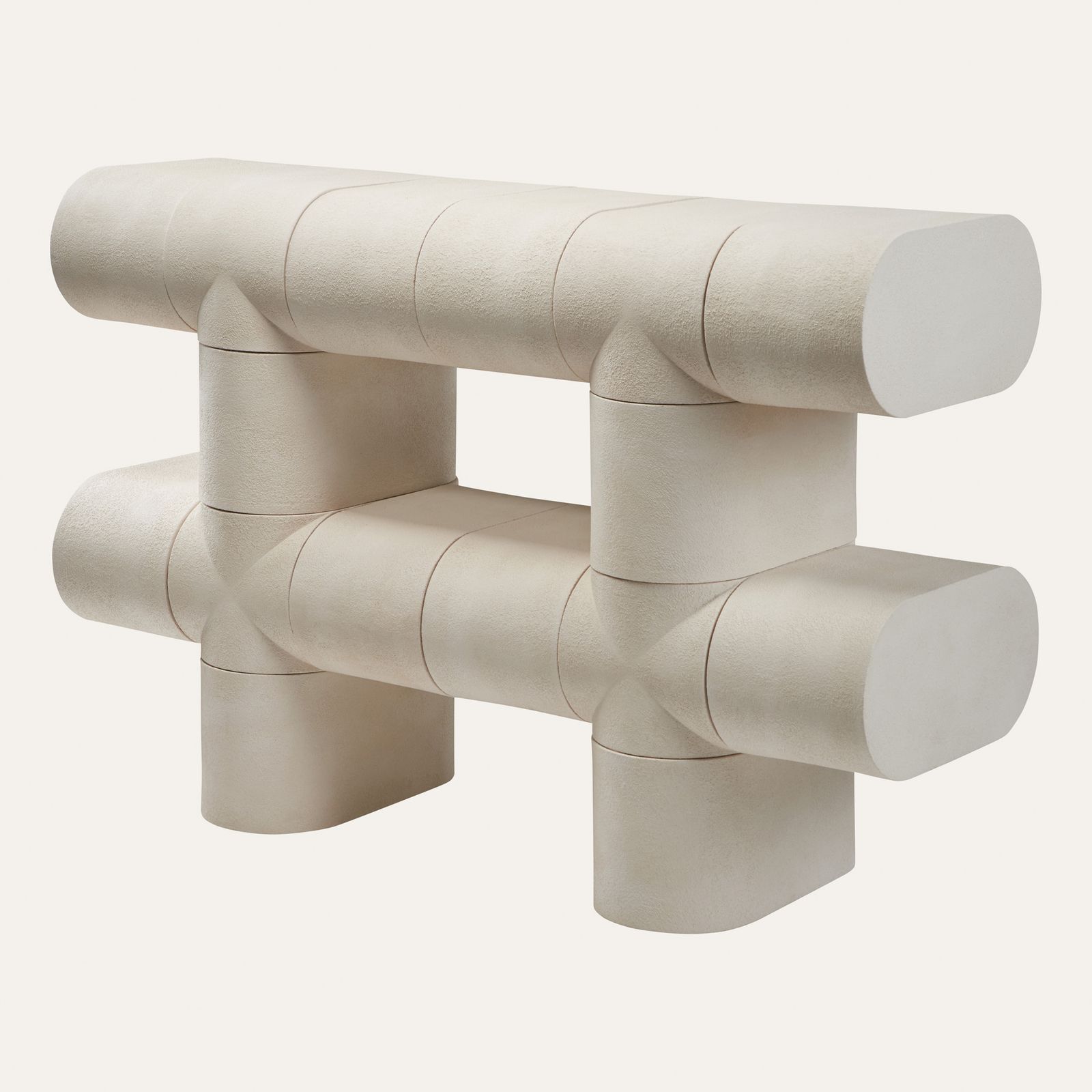
Modular Ceramics is a system that creates the freedom to make a large variety of objects in which the ceramic kiln is no longer the size limit. The system consists of four ceramic modules: a cross, a T-shape, a corner and a straight module.
USM Haller Shelving (EW1)
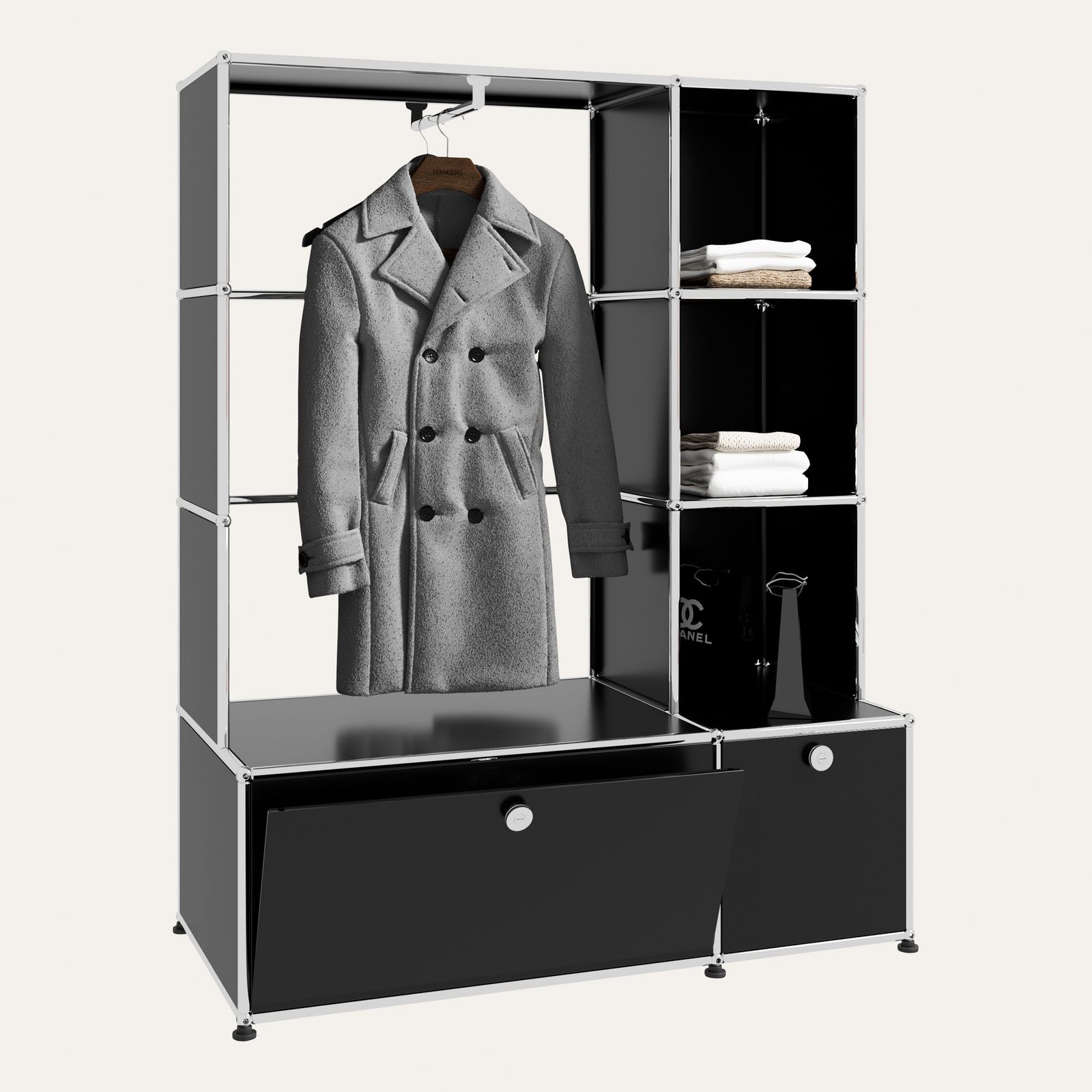
The EW1 configuration allows the USM Haller system to perform as a wardrobe. A rail provides space for hanging clothes, while open and closed shelves add adaptable storage space. It's available in 14 standard surface colors.
Cabinet+ by SKNYPL
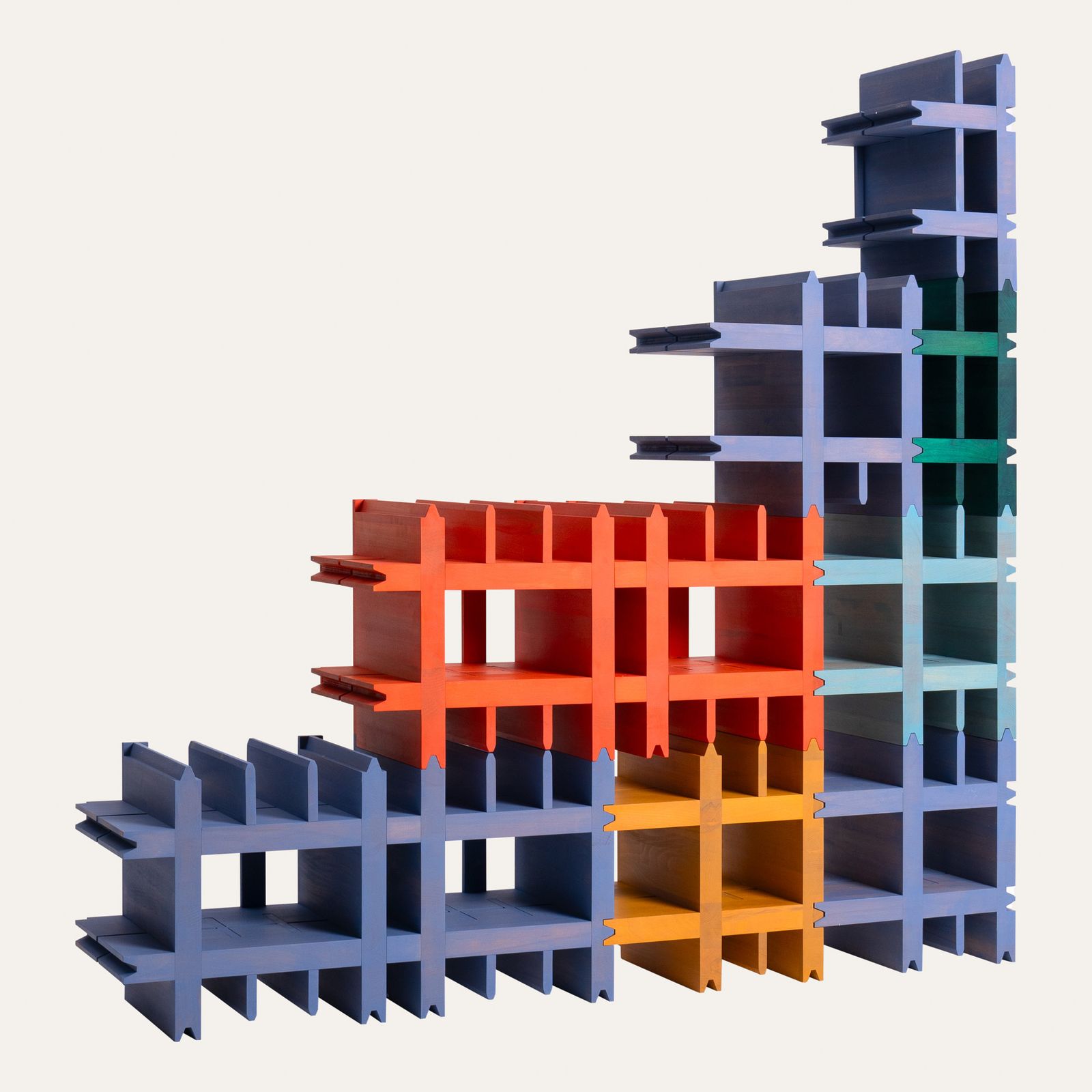
CABINET+ consists of four pieces of furniture: two stools, a coffee table, and a rack. When assembled, they transform into a sculptural large shelving unit. Prices for the parts of the set range from $734 to $4,361.
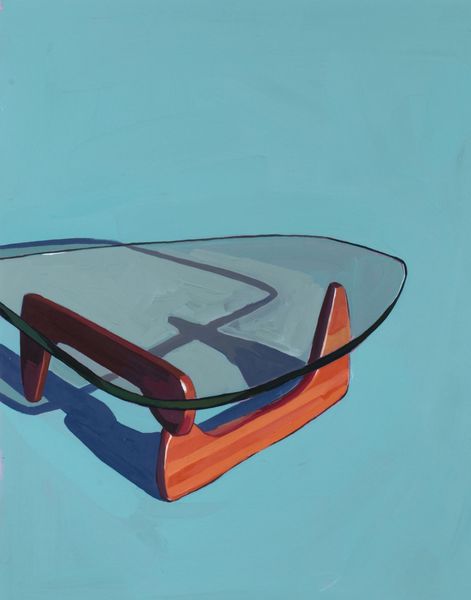
Noguchi’s IN-50: The Waiting Room Standard
See the full story on Dwell.com: Everyone Knows These 5 Classic Furnishings, But You Should Meet Their Contemporary Alternatives
Related stories: