Here’s One Way to Renovate the Home of a Famous Spanish Pirate
The great-great-grandson of Antoni Cuyàs modified the living area with a stainless-steel built-in that wraps the perimeter, forming a sofa, desk, cabinets, and shelving.
The great-great-grandson of Antoni Cuyàs modified the living area with a stainless-steel built-in that wraps the perimeter, forming a sofa, desk, cabinets, and shelving.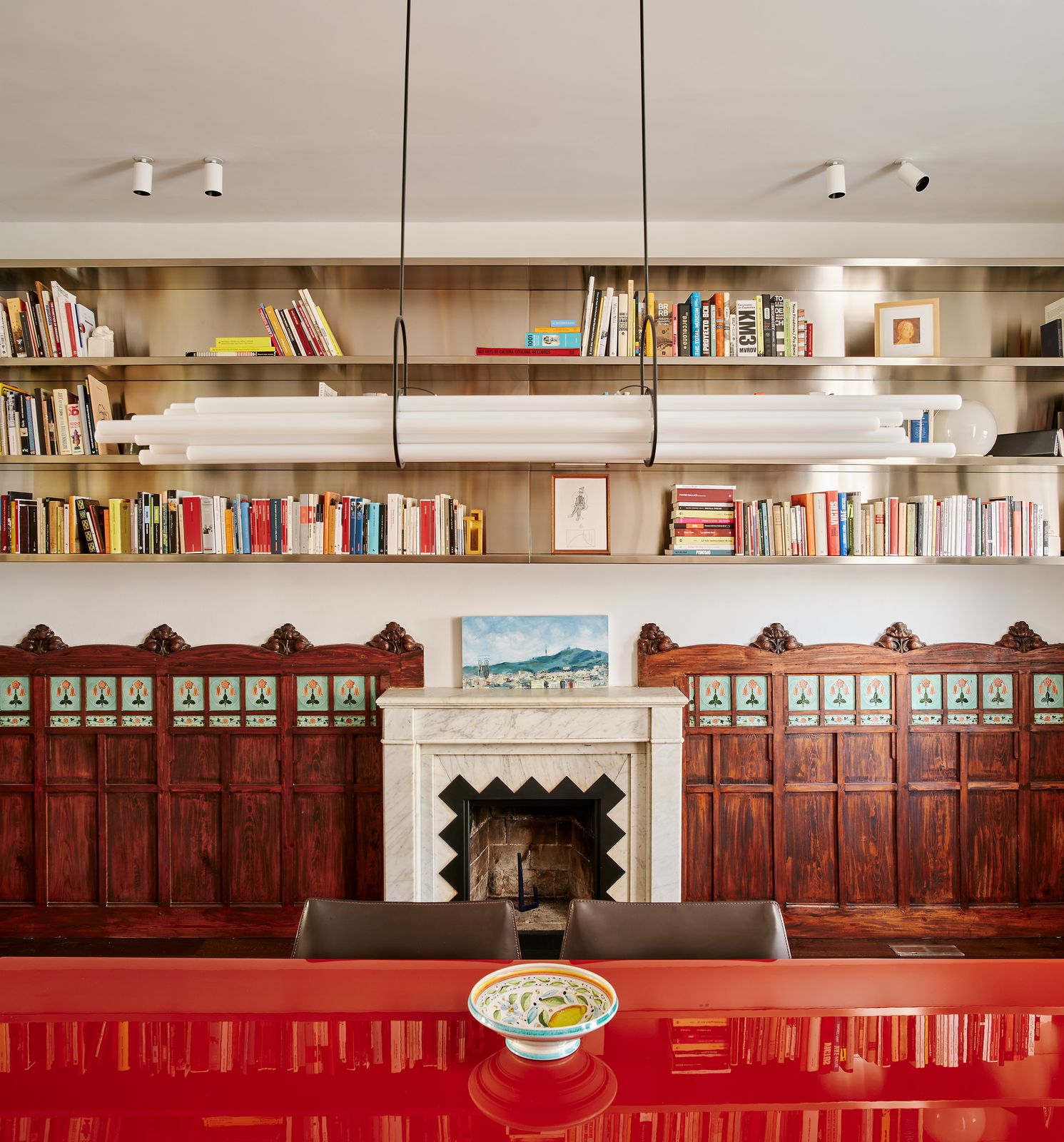
Houses We Love: Every day we feature a remarkable space submitted by our community of architects, designers, builders, and homeowners. Have one to share? Post it here.
Project Details:
Location: Mataró, Spain
Architect: Raul Sanchez Architects / @raulsanchezarchitects
Footprint: 1,076 square feet
Photographer: José Hevia
From the Architect: "In 1820, at just eighteen years old, Antoni Cuyàs, originally from Mataró, Spain, set off for Argentina with little more than basic knowledge of navigation. Not many years later, after a meteoric career, he had become the most feared corsair among Brazilian ships, which, according to chronicles of the time, rarely escaped Antoni’s cannon fire. Having amassed an enormous fortune while still very young, he abandoned life at sea and developed both personal and financial ties with the country’s ruling classes, becoming a frequent advisor to the presidents of the era. After a marriage that produced no descendants, and wishing to spend his final years in his native Mataró, he returned in 1865. There he purchased two houses on the Rambla, joined them together, and commissioned a group of Italian artists working in the area to design him a residence reminiscent of the palaces he had frequented in Argentina. Toward the end of his life, he met an orphaned boy who shared his surname and decided to adopt him, making him his sole heir. Over the years the house endured a turbulent fate, stripped of many of its most valuable elements, although the Cuyàs family retained ownership of it.
"By 2023, Manuel Cuyàs, the pirate’s great-great-grandson, and his wife, Nuria, (Argentinian, as fate would have it), a designer and cultural worker, were tired of living in spaces trapped in a distorted past that did not suit their working routine (both work from home). They decided to renovate three rooms that still retained original elements: the entrance hall, the dining room, and the pirate’s room, the latter listed by the heritage authorities. The requirements were simple: to be able to fully enjoy all the spaces, to use the room both as a living room and a workspace, to keep the dining room exclusively for dining, to give the entrance hall a meaningful role within the ensemble, and to restore some of the badly mistreated grandeur the house once possessed.
"A large plinth made of stainless steel anchors the entire perimeter of the room, accommodating workspaces, the sofa area, and storage, establishing a continuous element throughout the room that unifies the intervention. Above it, the original wallpapers are preserved, family paintings returned to their place, and the polychrome ceiling once again presides over the room, free from installations and cables. Below, the original terra-cotta floor has been recovered and treated to prevent its constant disintegration through a complex process of resin application and consolidation. The more common, non-original tiles along the perimeter were removed to facilitate the passage of all installations, which then rise concealed behind the steel plinth. This perimeter frame is finished with micro-mortar, highly flexible and capable of adapting to the movements of a very old structure. The cracks in ceilings and walls, the imperfections in the wallpaper and the floor, remain as they are to reflect the home’s age, and even the channels carved into the walls to bring electricity to the wall lights are left unfinished and untouched.
"The relationship between the painting of the pirate in his later years, proudly displaying his sword (which is preserved in the entrance hall), and the mirror facing it has been maintained."
"The room is now even climate-controlled, although it would be difficult to guess where the system is hidden. The considerable technical complexity of the intervention ultimately recedes, allowing the room to recover its former splendor—not as a museum piece anchored to an idealized past that most often never existed, but as a space that acknowledges its past and history while carrying them into the present."
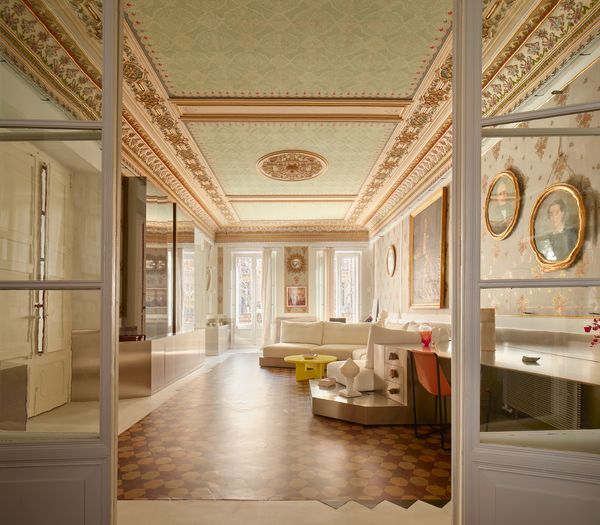
Photo: José Hevia
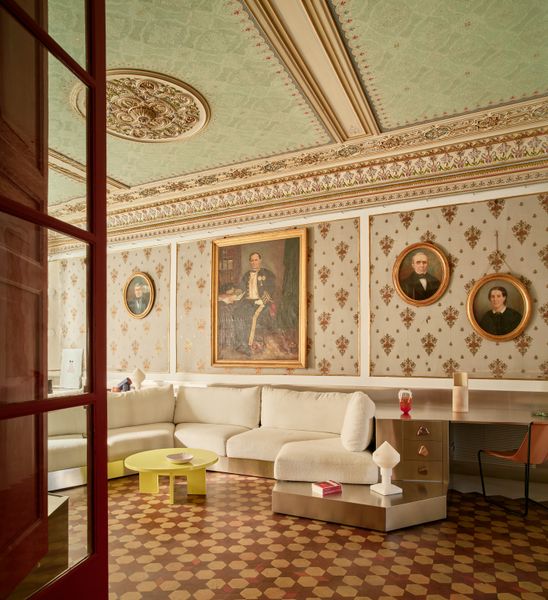
Photo: José Hevia
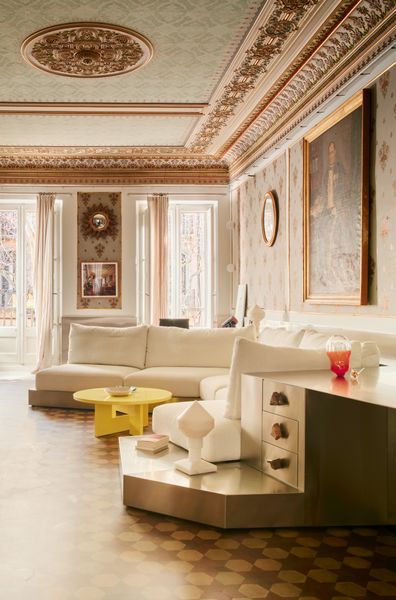
Photo: José Hevia
See the full story on Dwell.com: Here’s One Way to Renovate the Home of a Famous Spanish Pirate
Related stories: