How Do You Safeguard Your Home From Hurricanes? This Long Island Family Raised Theirs 12 Feet
After Hurricane Sandy flooded their 850-square-foot East End home, they embarked on a years-long renovation that included a material refresh, better views, and a storage area for water toys.
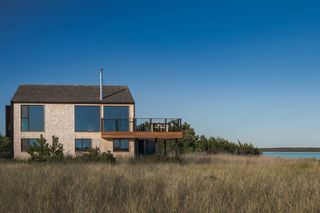
After Hurricane Sandy flooded their 850-square-foot East End home, they embarked on a years-long renovation that included a material refresh, better views, and a storage area for water toys.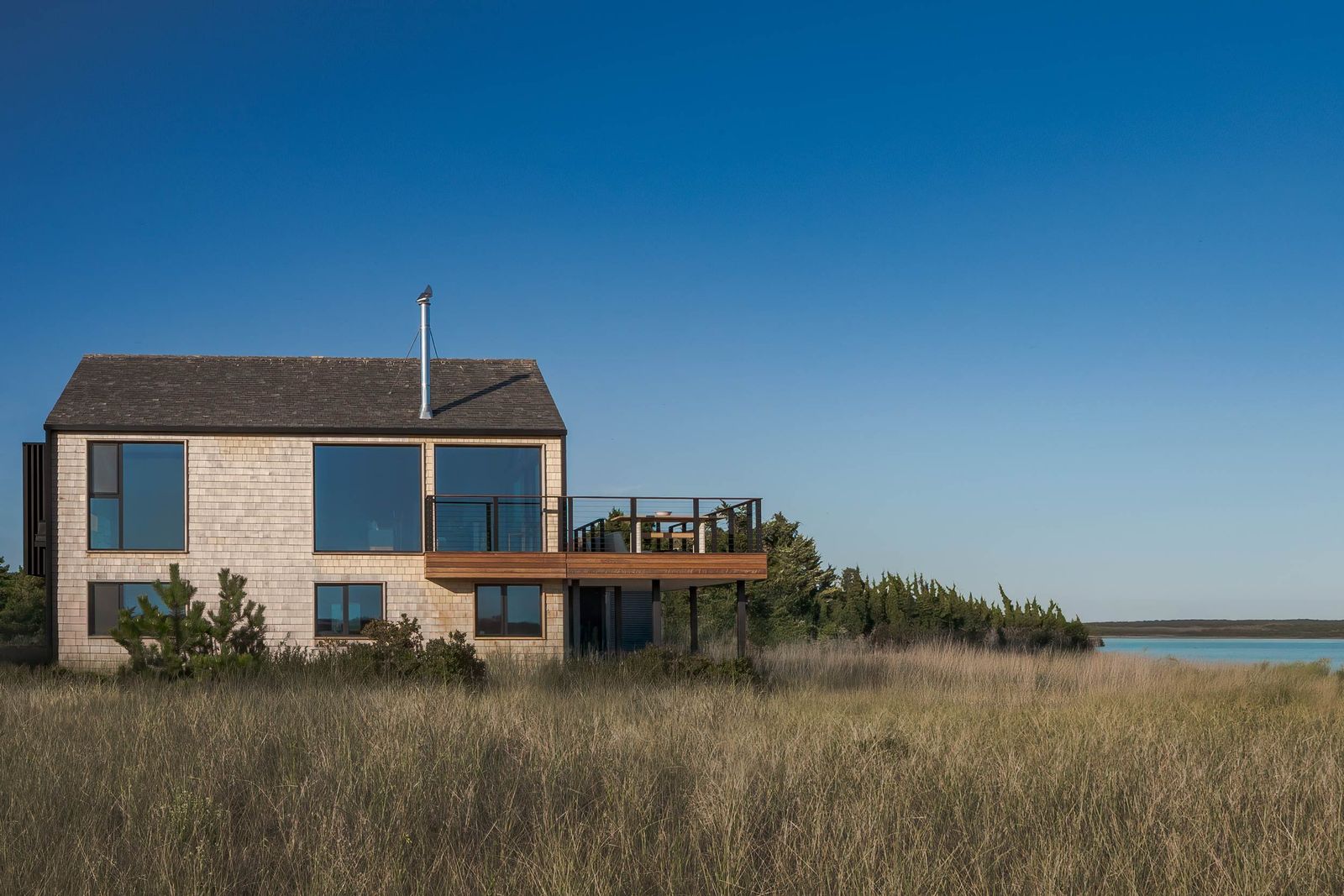
The rugged coastline and relaxed communities of the East End of Long Island have long drawn residents seeking quiet, scenic retreats. However, increasingly severe storms and hurricanes have threatened these waterfront homes. Now residents are figuring out how to adapt to the changing climate while retaining the charm that drew them there in the first place. How do you welcome the beauty of the natural environment while staying safe from it?
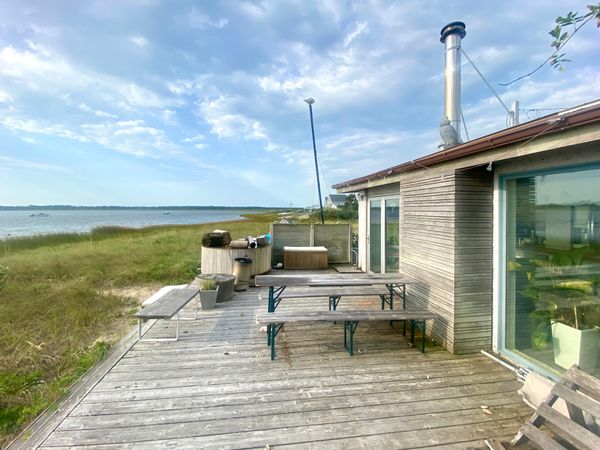
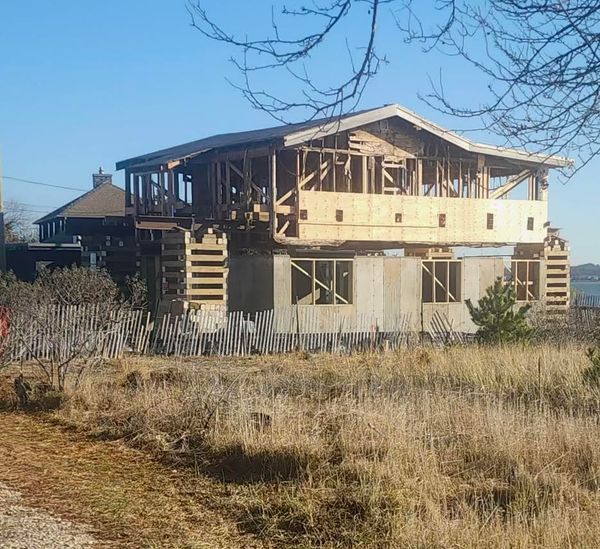
That’s precisely the dilemma that Daniel and Julie faced after buying a home in Lazy Point in 2011. After getting through Hurricane Irene unscathed, next came Hurricane Sandy, and two feet of floodwaters rushed into their 1950s house. They had to immediately address damaged drywall, broken mechanical equipment, and mold. "That’s the price you might have to pay for access to a pretty wild coastline," Daniel says. Realizing they wouldn’t survive another event without extensive renovations, they began a years-long process of planning and getting local permits approved in order to prepare for the next big one.
Their ground floor was only four feet above sea level while FEMA’s newest guidelines stipulate a minimum standard of 10 feet. Working with architect John Berg, they raised their home 12 feet above sea level and in the process upgraded the structure to withstand heavy wind and rain. Since new construction wasn’t permitted on the property, Berg raised the house and rotated it 90 degrees to get the height and orientation he wanted to maximize light and views, per his clients’ requests.
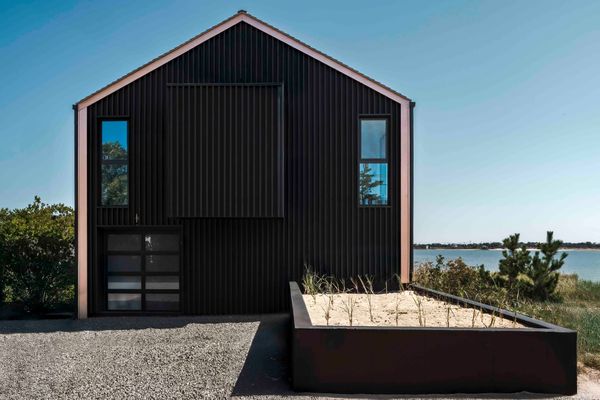
Black-stained hemlock clads the front of the house for a more modern look.
Photo by Simon Lawrence Howell
See the full story on Dwell.com: How Do You Safeguard Your Home From Hurricanes? This Long Island Family Raised Theirs 12 Feet
Related stories: