In Praise of Architectural Follies
While they’re not necessarily necessary, these contemporary takes on outdoor diversions might be just what we need right now.
While they’re not necessarily necessary, these contemporary takes on outdoor diversions might be just what we need right now.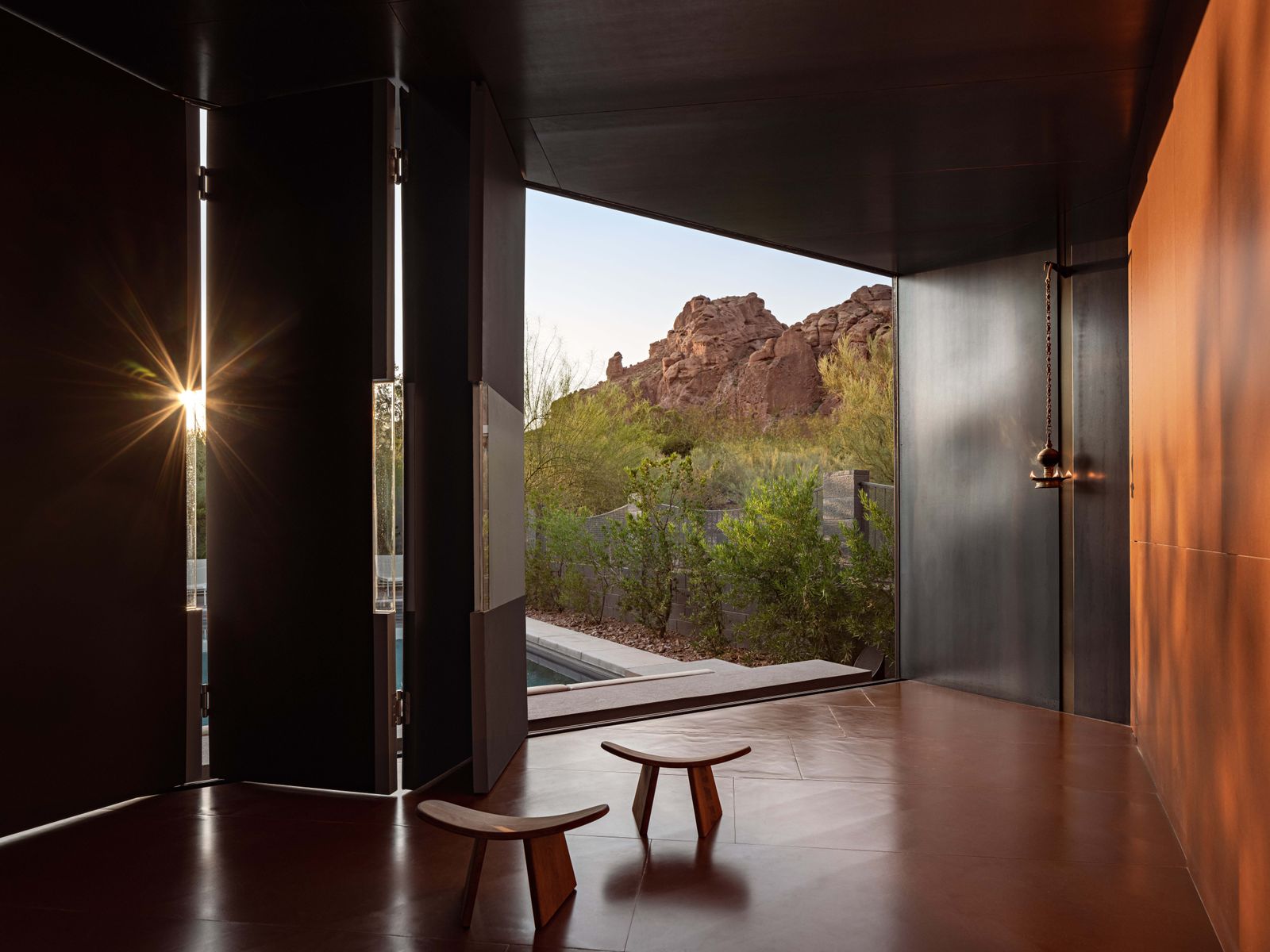
You don’t really need them, but they’re a delight to encounter. Such is the purpose, if there is one, to the folly. The architectural folly as it’s understood today has its roots in the manicured and mannered gardens of 18th-century Europe. Placed in the landscape, often shaped like tiny buildings, they are indeed architectural constructions—as opposed to, say, sculptures—but they’re extraneous, either completely useless or, at least, not strictly essential, made for surprise, admiration, or diversion. The tradition of these playful design dalliances continues to amuse in a contemporary context, but they come in forms particular to our moment—and may actually, accidentally, have utility: reflecting contemporary social obsessions. Here are some of our recent favorites.
An Incongruous Piece of Infrastructure
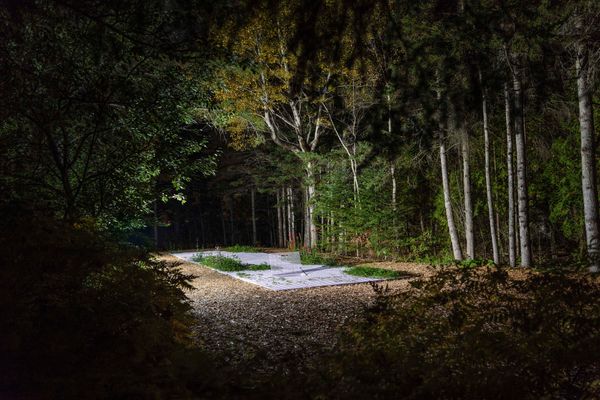
Photo by Max Walewski
The Jardins de Métis-Reford Gardens, a rambling 45-acre hillside sanctuary overlooking the St. Lawrence River in Quebec, is designed like a traditional English garden, with wild-seeming pockets of forest and vistas carefully engineered to provide distinct experiences in the landscape. But as you’re wandering through a spruce forest, you might come across a clearing—and what looks like a sidewalk grate. The incongruous bit of urban infrastructure was designed last year by Hermine Demaël and Stephen Zimmerer and their New York City–based architecture and landscape practice. Titled Peek-a-Boo, the grate functions as something of a planter bed in reverse. Below the steel slats is a pit planted with flowers, shrubs, and other greenery that crave water and therefore thrive set a few feet below the ground. Portions of the grate can be lifted by visitors, who can peer at the plantings, but over time, the flora will overtake them, making their discovery all the more surprising.
An Enlightened Meditation Pavilion
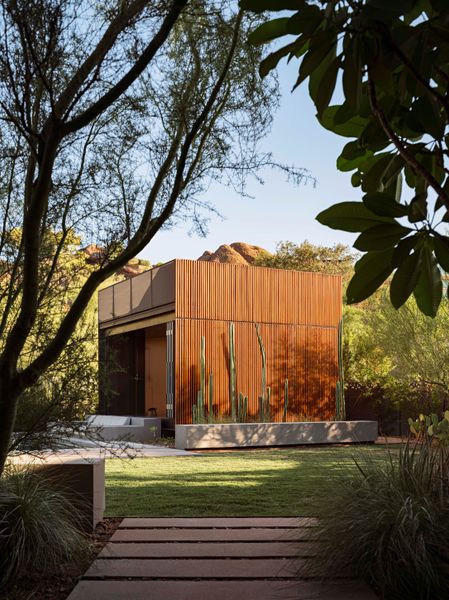
Photo: Jason Roehner
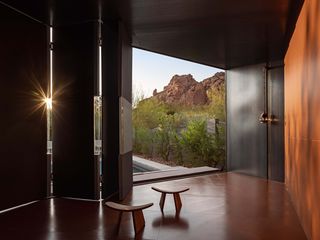
You don’t need a structure in your backyard strictly for meditation; as practitioners will make clear, you can meditate anywhere. But for architect Wendell Burnette, designing a dedicated pavilion for the act was a chance to experiment. Raised two feet and adjacent to a pool, the 150-square-foot trapezoidal jewel box is clad in a shade screen that’s actually made from ordinary copper pipe and looks a bit like it has reached a state of enlightenment that allows it to peacefully levitate. It houses a meditation space with bifold doors that open to the pool.
"A building needs to function programmatically, but it should also seem poetic and be aspirational."
—Wendell Burnette
The structure also contains an incense room—a chamber with a skylight and narrow interior windows with gold leaf to reflect daylight from above or the flame of a hanging lantern. On the exterior a stair leads up to a rooftop deck where you can contemplate Camelback Mountain and the stars above. The pavilion is oriented toward specific sight lines to the pool, the mountains, and the heavens for directing your drishti. You can gaze out at the world from it. Maybe even transcend it.
A Fire Tower That’s Not
Photo by Jason Keen
See the full story on Dwell.com: In Praise of Architectural Follies
Related stories: