Memory of the Earth: 4 Adaptive Reuse Projects Transforming Ceramic Factories
There is an ancestral gesture in shaping earth. Long before architecture was established as a discipline, clay was already being molded by hand and transformed by fire, turning raw matter into domestic utensils and cultural objects. Within the history of this craft, ceramic factories mark the transition from manual knowledge to serial production, expanding its scale without entirely severing its material origins. Scattered across different territories, these structures record the relationship between technique, landscape, and time. Over the decades, however, many of them lost their original function, replaced by more technological processes or absorbed by the urban development around them, entering an intermediate state between permanence and obsolescence.
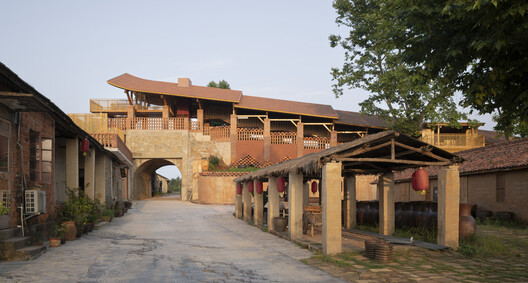
 Doumu Dragon Kiln and ICH Lounge in Qianshan, Anhui / Greyspace Architects © Jianbo Ke
There is an ancestral gesture in shaping earth. Long before architecture was established as a discipline, clay was already being molded by hand and transformed by fire, turning raw matter into domestic utensils and cultural objects. Within the history of this craft, ceramic factories mark the transition from manual knowledge to serial production, expanding its scale without entirely severing its material origins. Scattered across different territories, these structures record the relationship between technique, landscape, and time. Over the decades, however, many of them lost their original function, replaced by more technological processes or absorbed by the urban development around them, entering an intermediate state between permanence and obsolescence.