Background — The Noon Repose Pavilion is located on the bank of a rural river in Huizhou, a city in southern China, along the scenic route encircling Nankun Mountain and Luofu Mountain. Huizhou was once a place of exile for the Northern Song scholar Su Shi. During his years there, exile did not result in withdrawal from life, but rather intensified his attention to its everyday rhythms. In his writings, he identified what he called the "sixteen pleasures of life," one of which he described as "resting at noon on a simple rattan pillow." The pavilion takes its name from this phrase. It is not intended as a nostalgic reference, but as a way of anchoring contemporary experience to a different understanding of time—one that allows for pause, slackening, and repose. What is recalled here is not a historical figure, but a mode of living that remains possible in the present.
This website uses cookies to distinguish you from other users of our website. The use of cookies helps us to provide you with a specific service, to facilitate website use and to understand our visitors. By continuing to browse the site you are agreeing to our use of cookies.

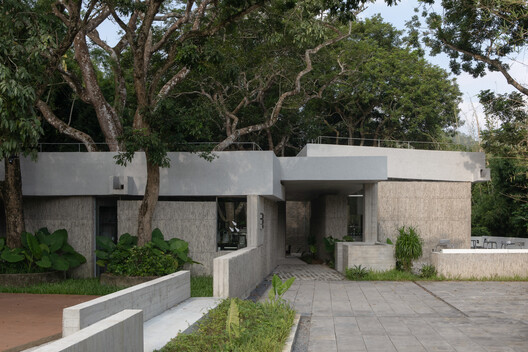
 © Arch-Exist