The Barcelona Feminist Co-op Queering Nuclear Family Norms
In the increasingly expensive city, La Morada models an affordable alternative to typical renting or buying that looks beyond the traditional household.
In the increasingly expensive city, La Morada models an affordable alternative to typical renting or buying that looks beyond the traditional household.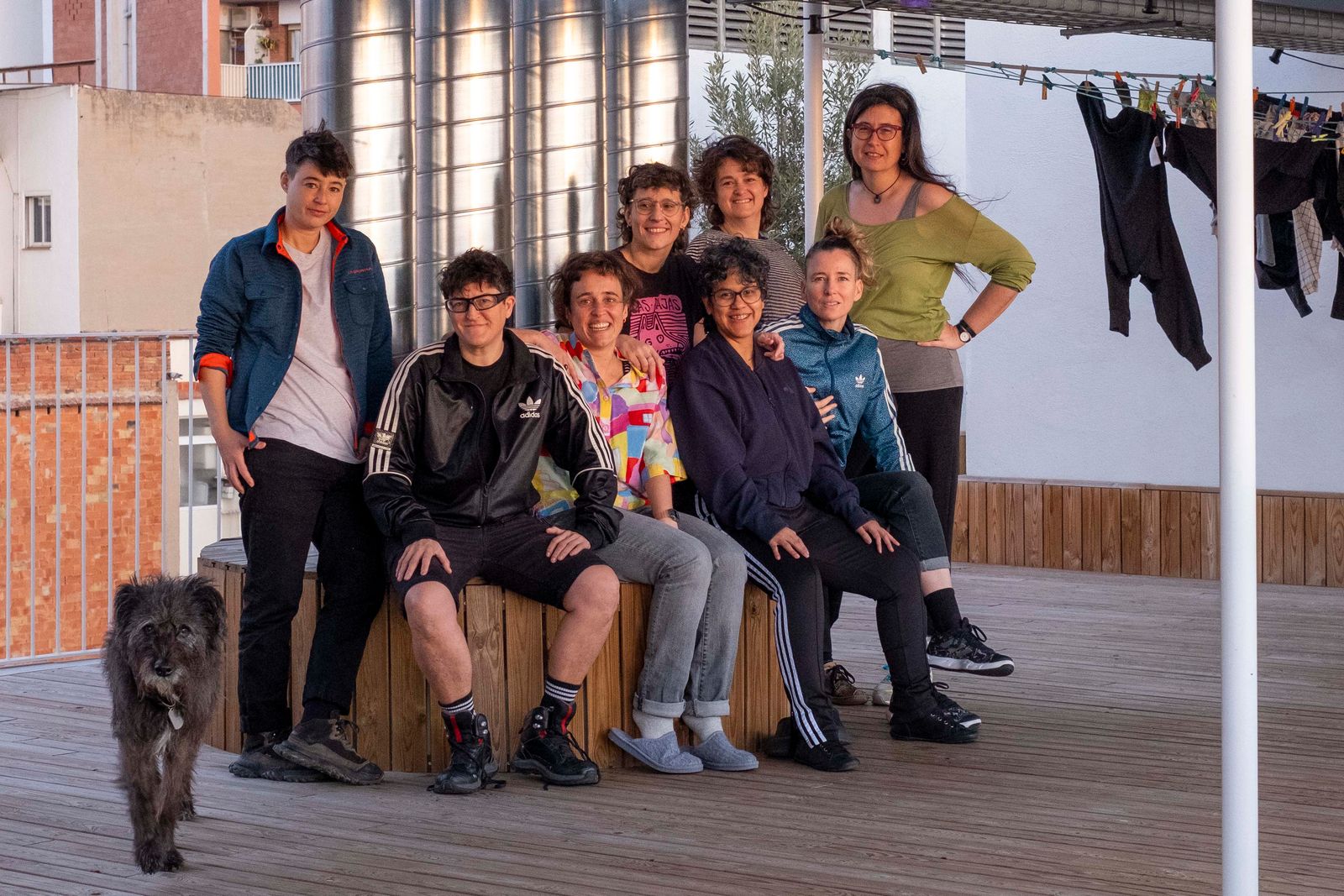
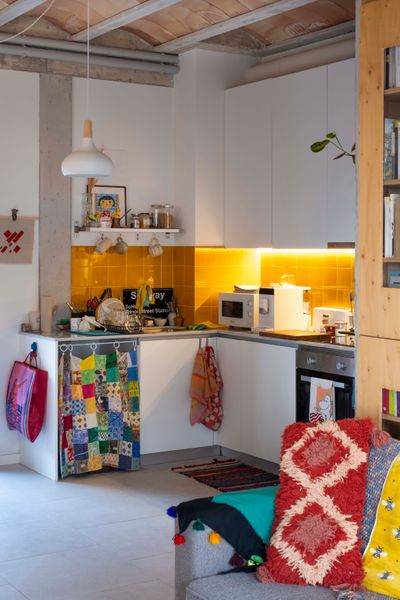
On any day at La Morada, one resident might ask another to grab them an item from the grocery store or invite the whole building over to take dinner leftovers. "There are always people going up and down from one apartment to another," says Silvia "Sfer" Fernández, a 48-year-old librarian who is one of 17 queer women and trans or gender-nonconforming adults who live in the 12-apartment feminist cooperative, as it’s described on its website, in Barcelona. (Two children and six pets—three cats, three dogs—also live there.)
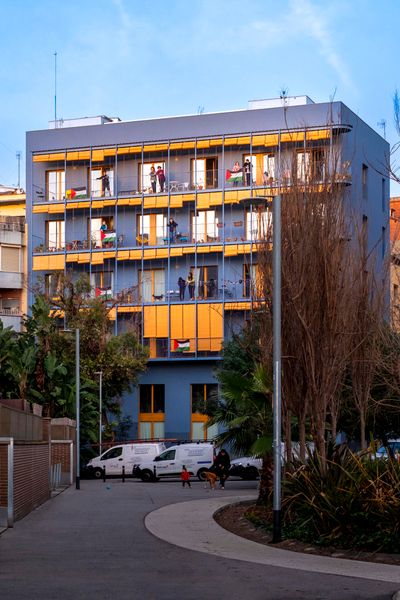
The five-story building is set in the historically working-class Les Roquetes neighborhood, which has a record of community organizing and self-built housing dating back to the 1960s. Its blue facade, clad in thermal insulation panels and rendering with decorative tile at the ground level, fits in with many of the area’s other colorful mortar render facades. In 2018, La Dinamo Fundació, a local nonprofit that supports new Catalan co-op developments to help address the region’s severe housing crisis, held an open call for social housing concepts for the plot. The group’s proposal for La Morada (which translates as "the dwelling") won. Local architecture cooperative Lacol, which specializes in cooperative housing projects, helped realize the group’s vision for a co-op that would address the pressing need for adequate and affordable housing in Barcelona and also buck traditional approaches to cohabitation organized around the nuclear family. Construction was completed in 2024, and by early last year, all of the residents had moved in.
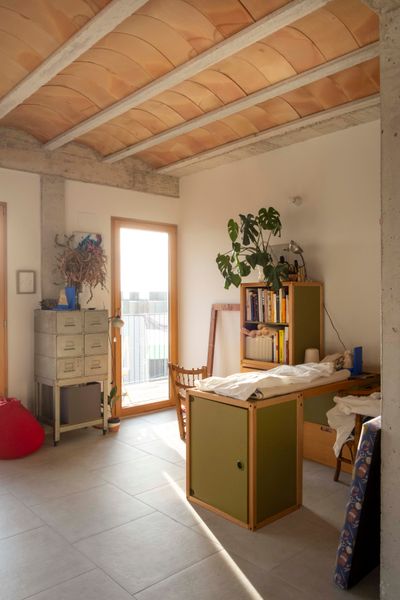
"I can live alone, but I can also live in a community. I think this combination is perfect."
—Sara Barrientos Carrasco, resident
See the full story on Dwell.com: The Barcelona Feminist Co-op Queering Nuclear Family Norms
Related stories: