The flagship centre for Lifeyoga is a first-of-its-kind meditative retreat for city dwellers in the heart of New Delhi
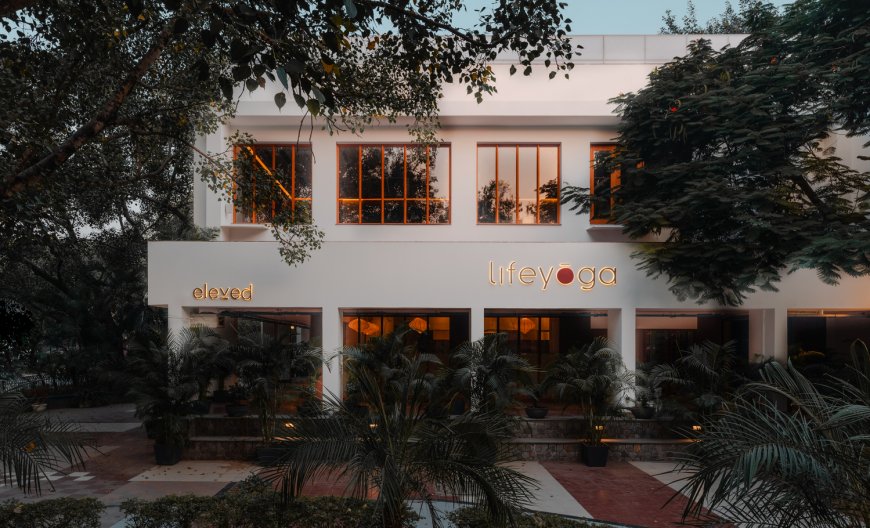
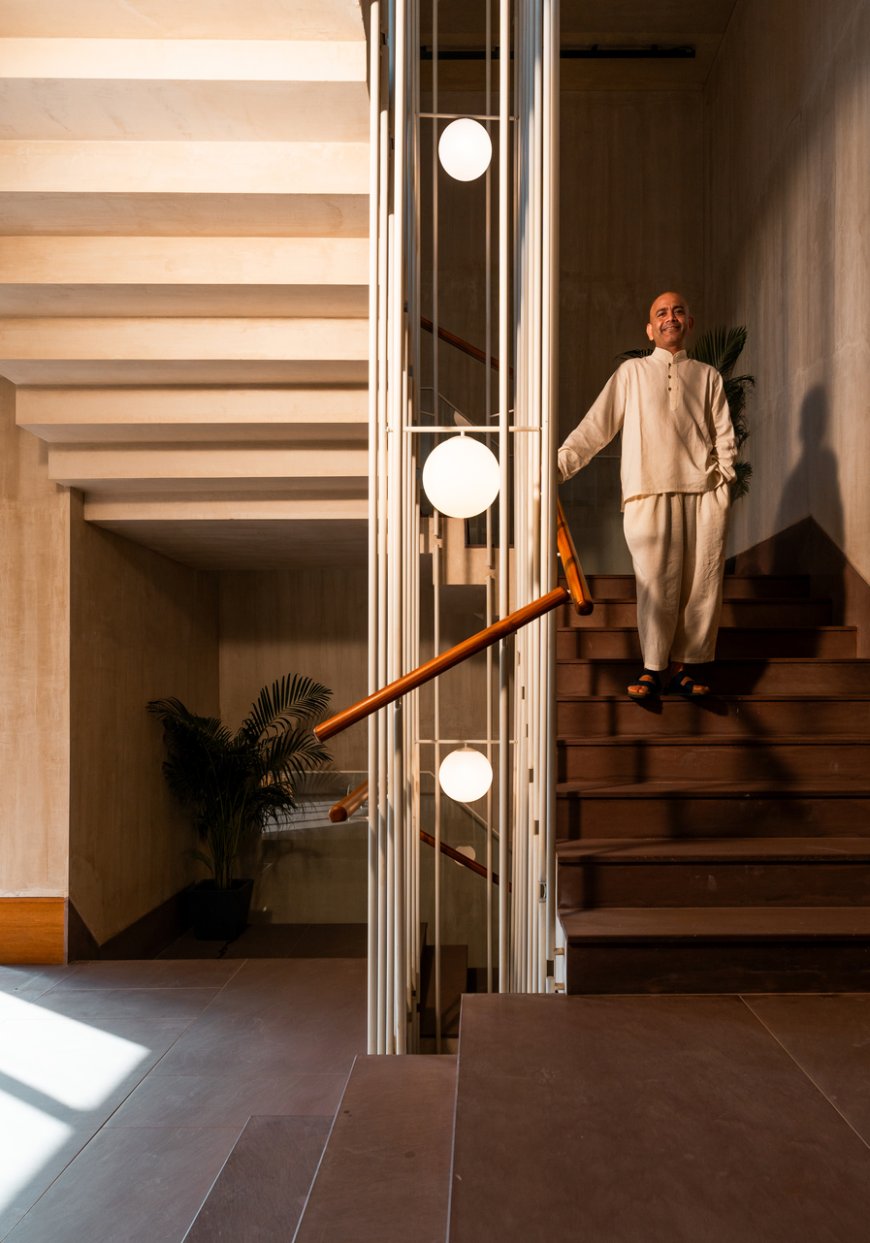
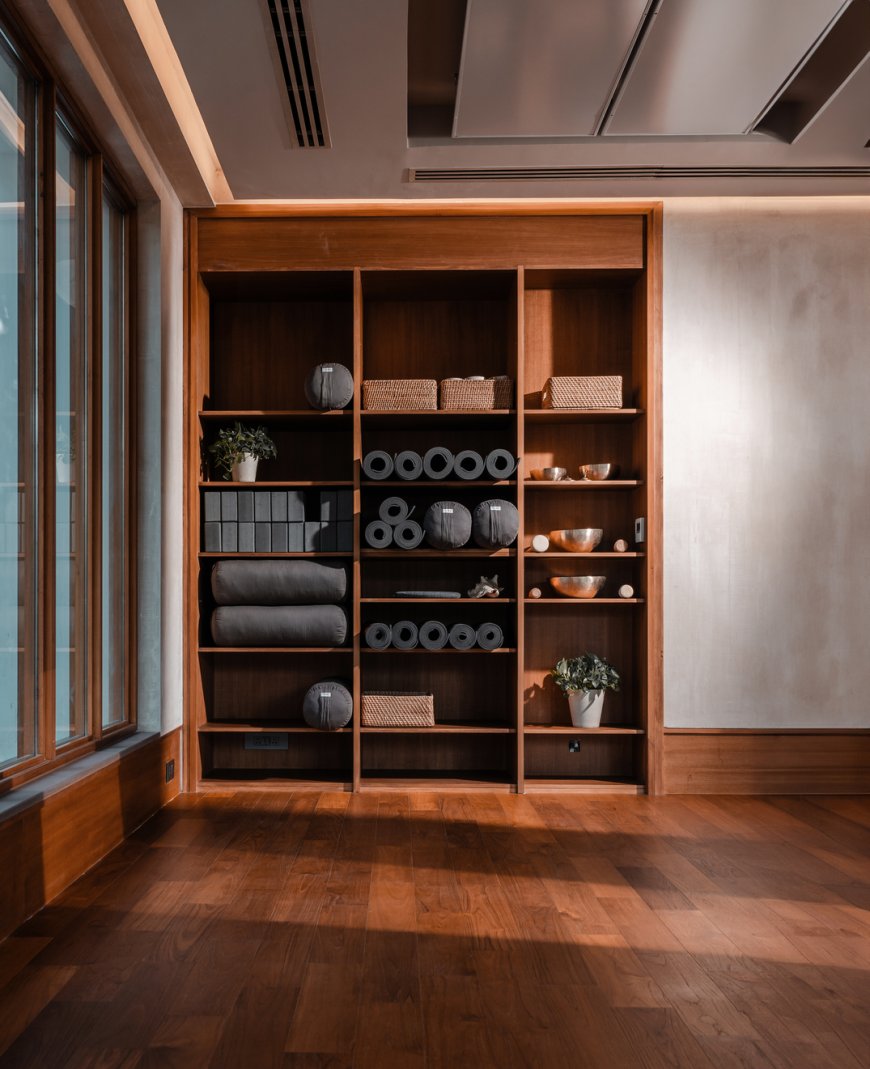
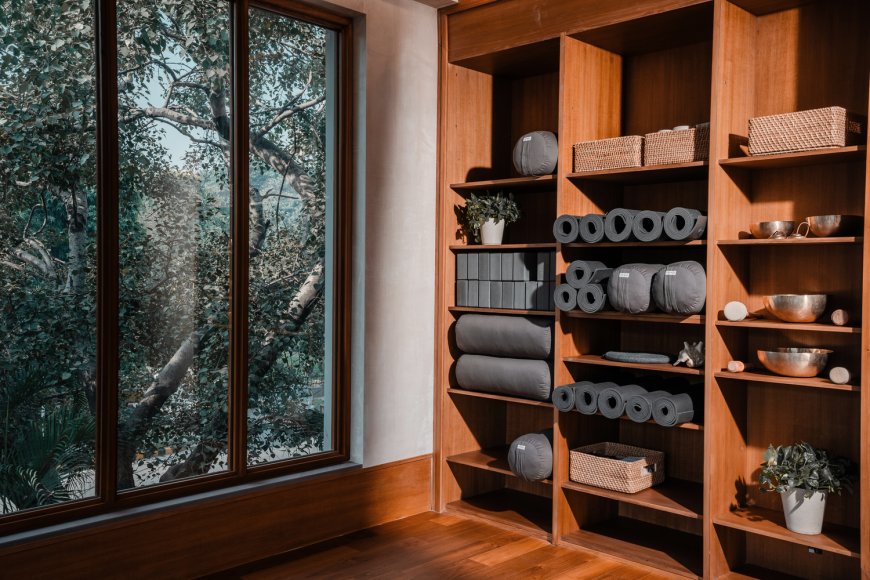
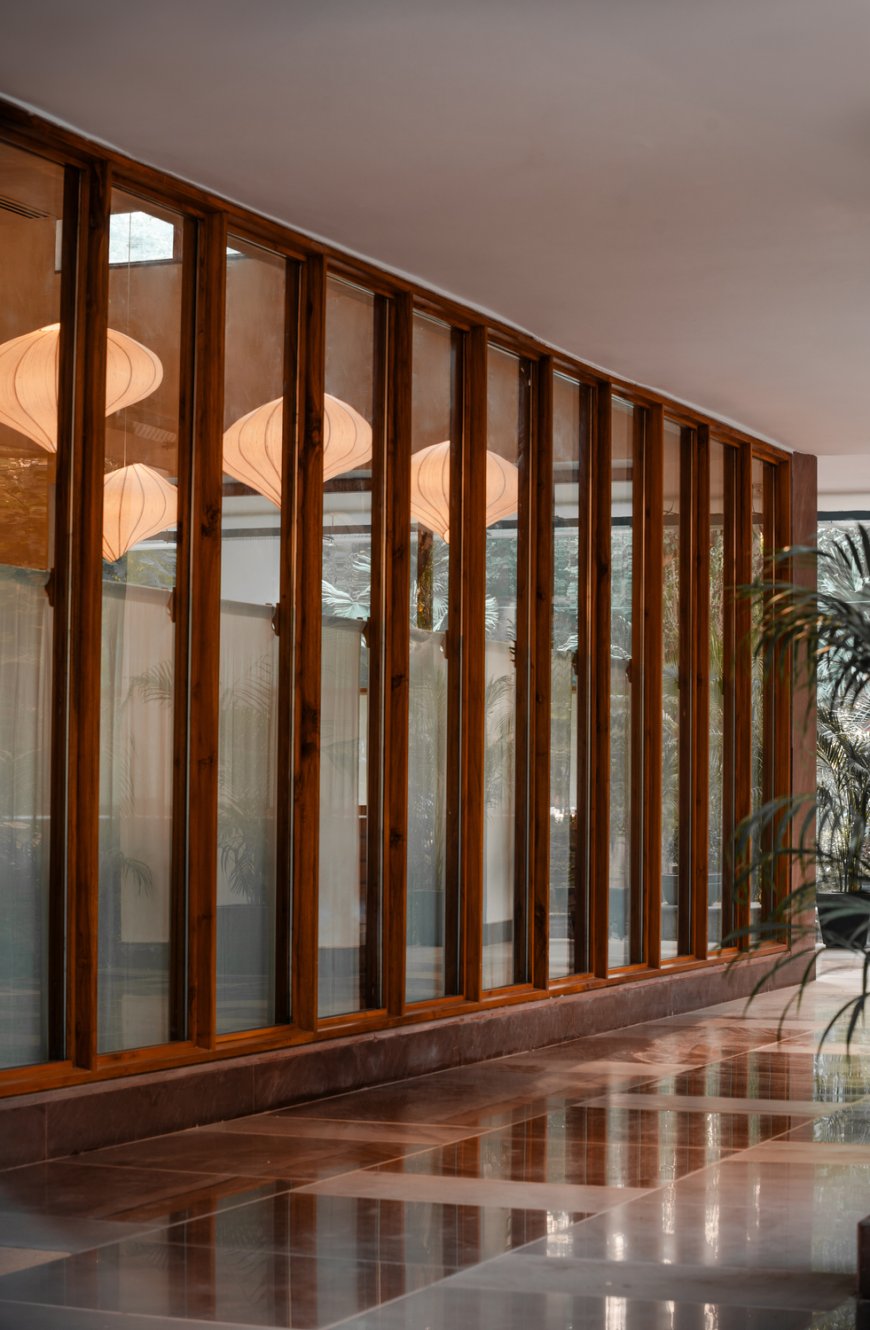
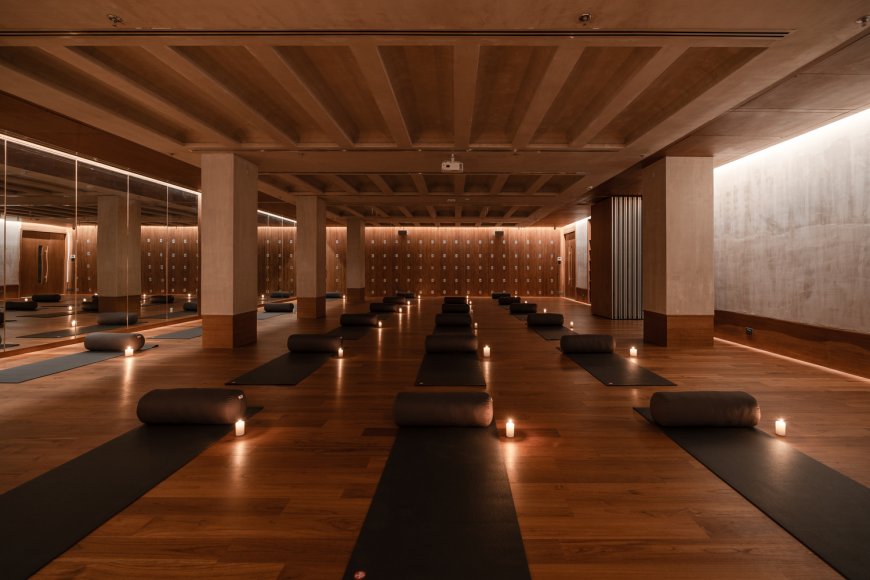
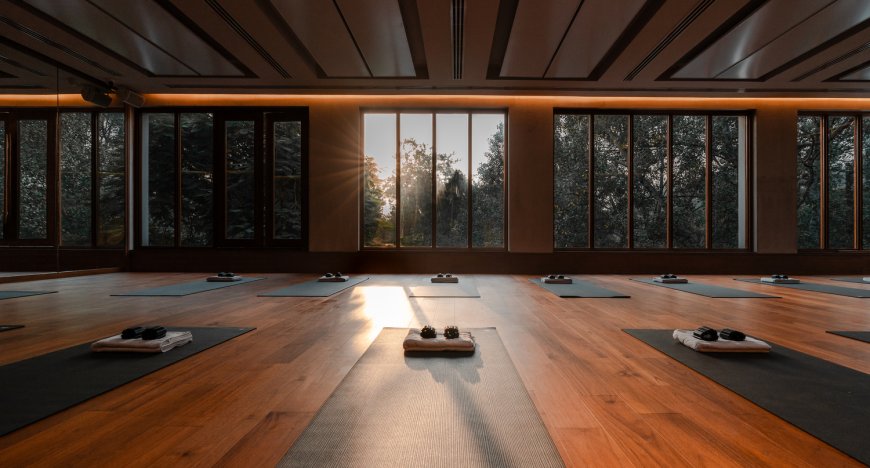
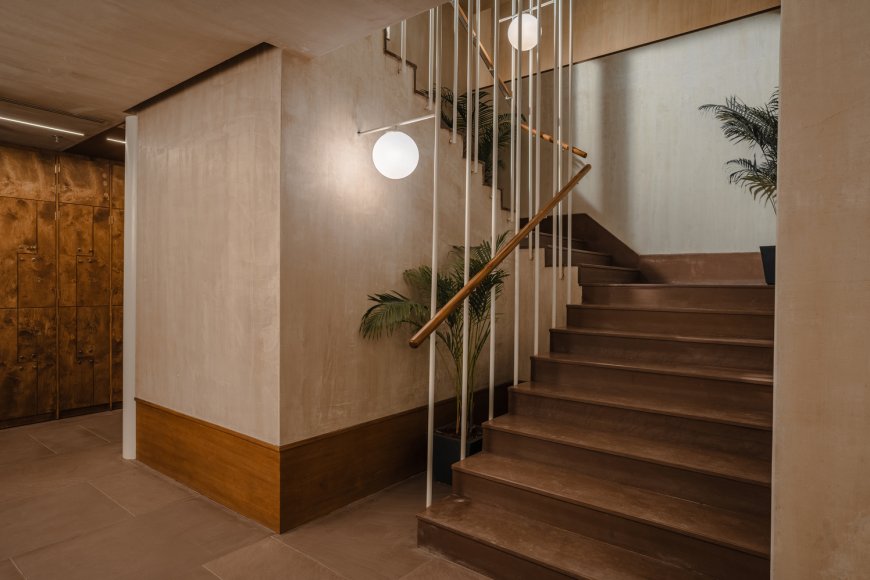
Nestled amidst the leafy environs of New Delhi’s diplomatic enclave of Chanakyapuri, the flagship centre for Lifeyoga is designed to facilitate a calming, meditative, and uplifting experience that is reflective of the inner journey of the practitioners of this ancient science. The clients– lifelong practitioners and teachers of yoga–envisioned an urban sanctuary rooted in ancient wisdom yet responsive to contemporary needs. Their belief that yoga now belongs to the world, while its roots lie firmly in the Patanjali Sutra, became a powerful guiding principle throughout the project’s design.
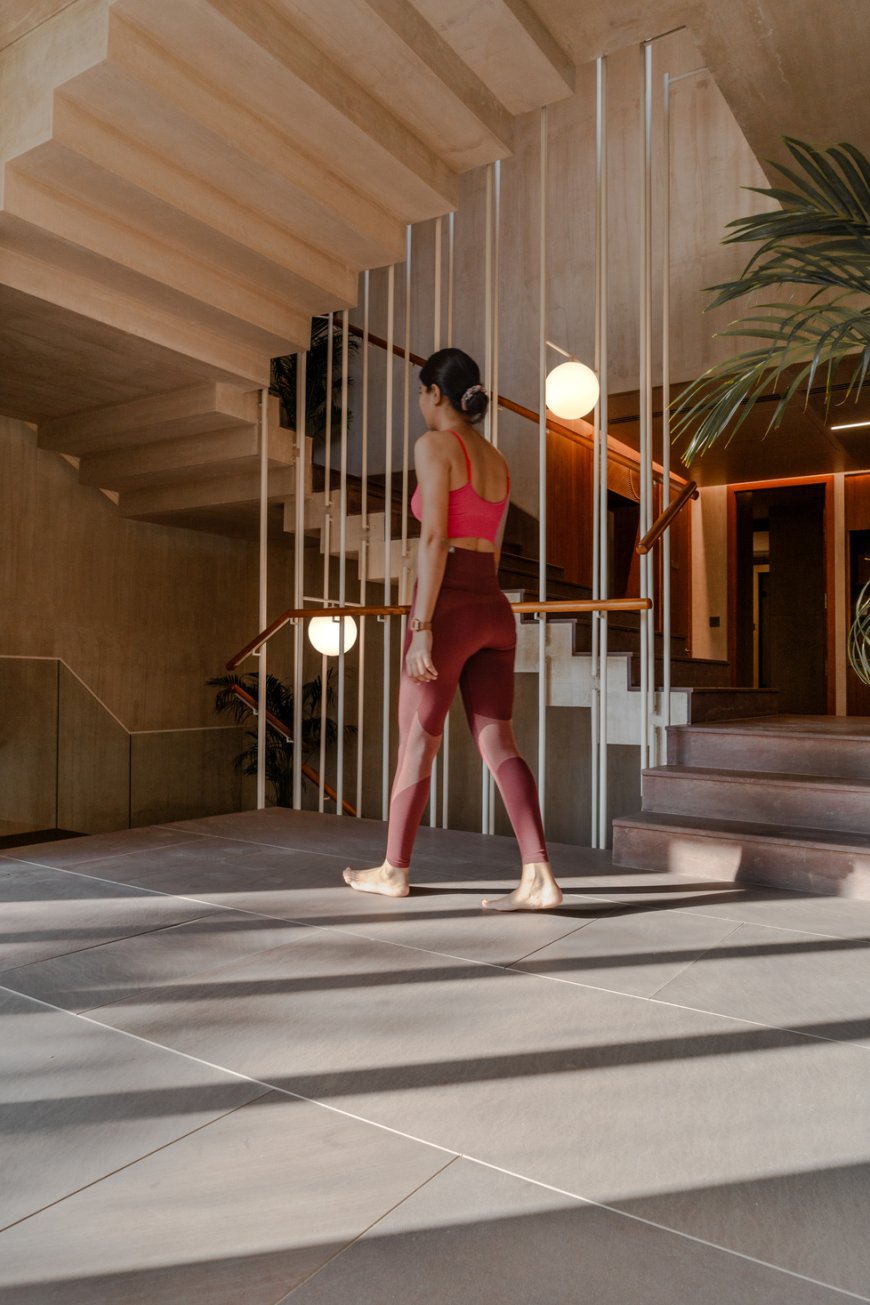
A key tenet of Studio Lotus’ design approach was to create a succession of spaces that progressively takes one inwards, shedding the chaos outside, and primes the body and spirit to truly immerse itself in the learning ahead. It is expressed in the facade and interiors as a restrained vocabulary of warm neutrals and earthy tones. Daylight has been crucial as an extension of the design vocabulary, along with the lush foliage of peepal and banyan trees that envelop the building on all sides.
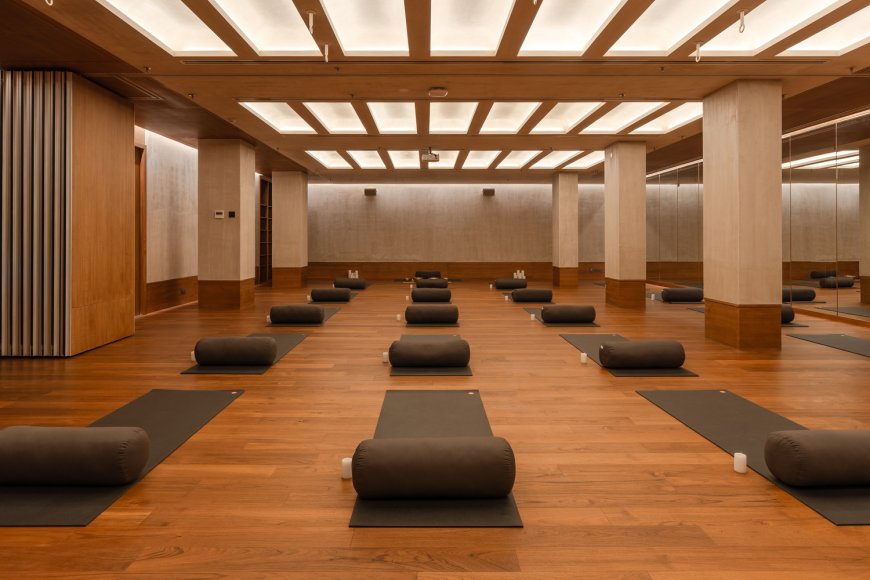
The centre spans three levels, each one characterised by a play of scale, volume, and light, corresponding to the brief’s diverse programmatic requirements. The planning allows for the circulation to be smooth and free-flowing. The ground level houses the reception that extends into a retail zone, and a restaurant, ‘Eleved’, serving Ayurveda-inspired fare. A low-height mezzanine with inbuilt ledges and floor furniture to efficiently navigate height constraints, hosts consultation areas and meditation rooms. The basement with its naturally lower daylight levels becomes an ideal space for placement of studios that facilitate the slower, deeper, more meditative practices of yoga. The therapeutic effects of lighting have been harnessed in diverse ways to promote relaxation and deepen focus. Integrated, adjustable, indirect lighting systems offer the flexibility to create a well-lit atmosphere or a dim and gentle ambience, depending on the nature of the practice. The air-conditioning too, is similarly discreet. Evenly distributed, low velocity single-slot ducts ensure that there are no drafts of cold air on the practitioners at any spot. The built in air purification system ensures that AQI levels are monitored and controlled to optimal levels at all times.
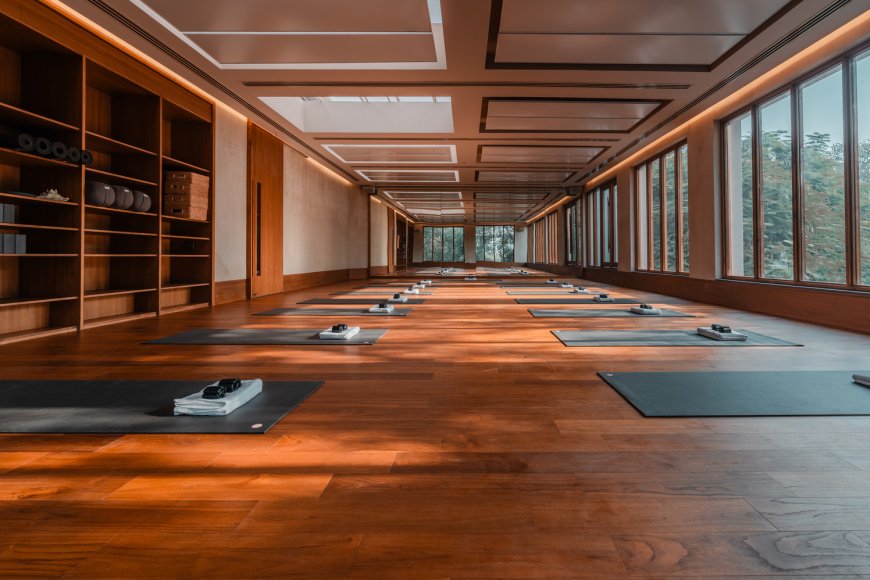
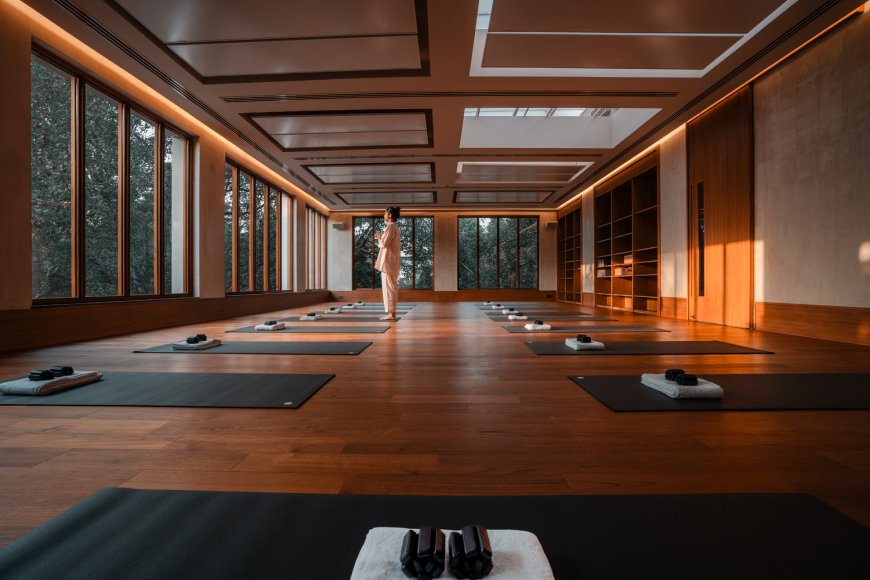
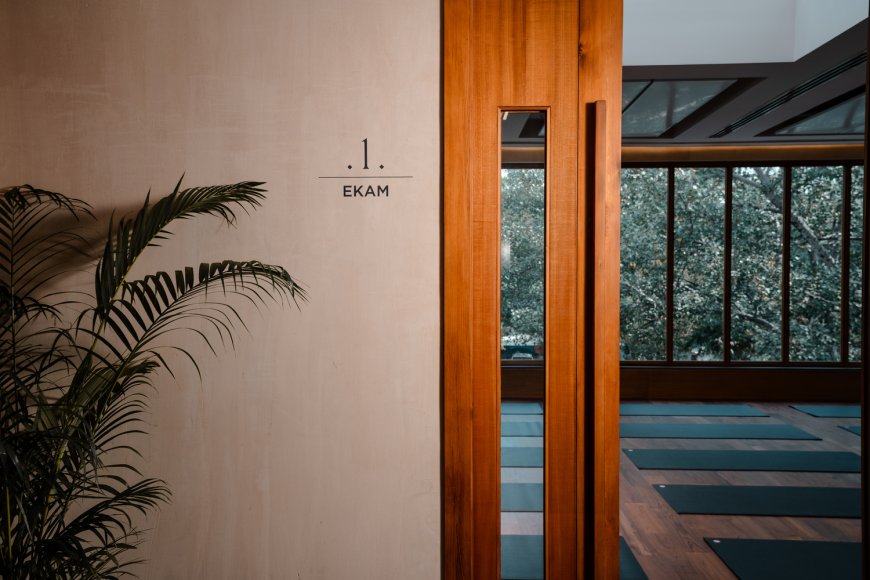
The main yoga studio located on the upper floor is conceptualised as a conservatory in response to development control regulations. The space hosts high-intensity training sessions and hot yoga classes. The hot yoga panels in white double up as lighting reflectors, and also as baffles to diffuse the light coming in from the overhead skylights, creating an evenly lit space. The facility caters to more than 12 diverse yoga styles and disciplines, and is equipped with built-in props ranging from hooks for aerial yoga to wall brackets for Iyengar yoga. The studios have adaptable partitions and vary in scale, from fitting small groups of five to six, to those mid-sized groups of about 25, and can even be merged to accommodate groups as large as 50.
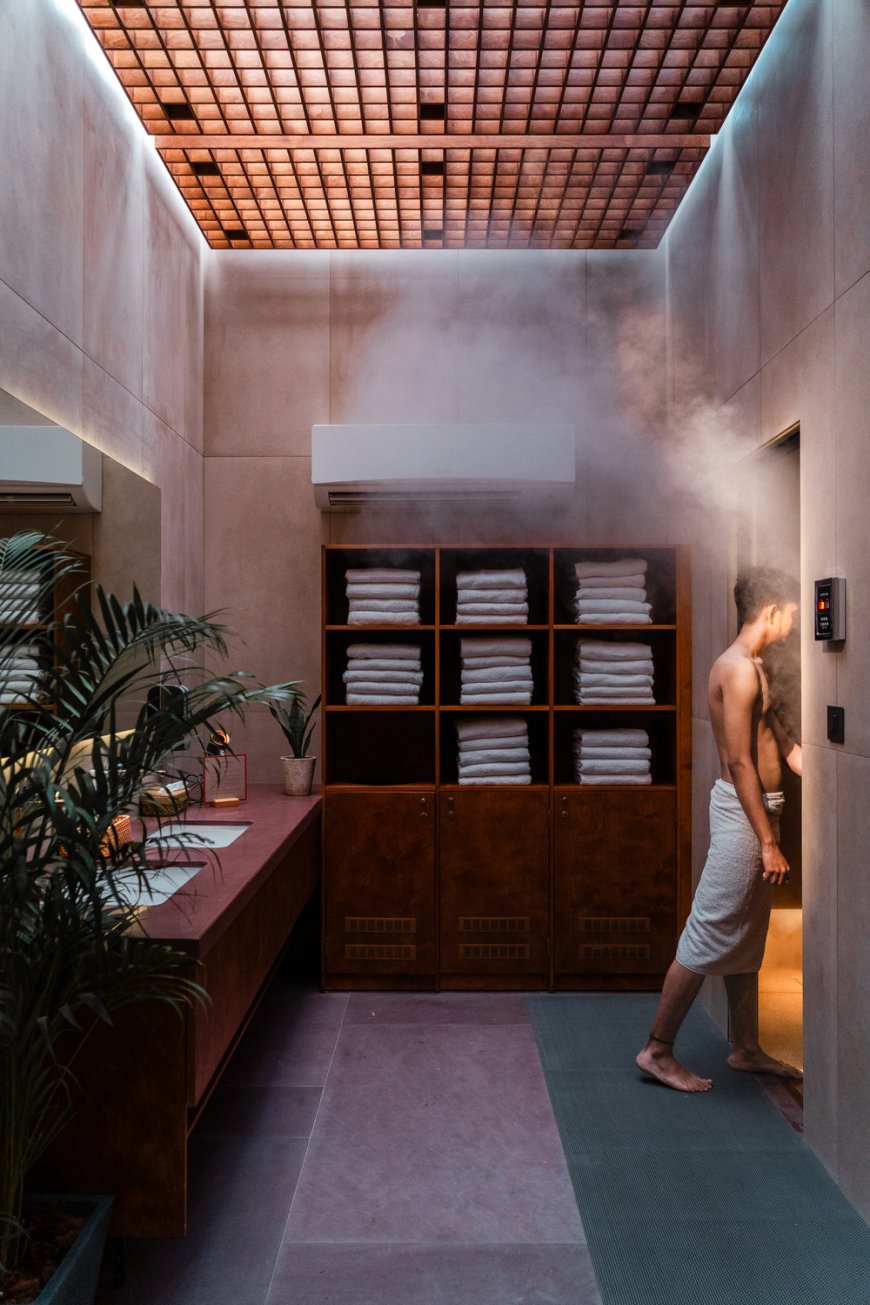
The materiality is intentionally tactile and evocative and spartan, with indigenously-sourced materials in various hues and textures weaving quietly into the volume. The wax-finished ivory walls, plastered using a mix of Plaster of Paris and cow dung that imparts it with microbicidal properties, create a tactile interplay with their even inconsistency. The earthy Mandana red sandstone in varied textures creates a contiguous ground plane that flows through the space. The furniture, panelling, and flooring all use local kikar (acacia) wood to further infuse warmth and a sense of regional character. Varying degrees of porosity are achieved through the use of translucent muslin cloth and handmade paper are used as dividers and screens, celebrating their inherent raw, organic qualities. Lining the wall-to-wall windows at Eleved, these screens extend up to the eye level, to create a visual barrier from external perceivable noise, and soften the light filtering in, while guiding lines of sight upwards to the foliage beyond. Some of them carry information on Ayurvedic and Yogic concepts. The furniture is custom designed by Studio Lotus and crafted by Lap & Dado.
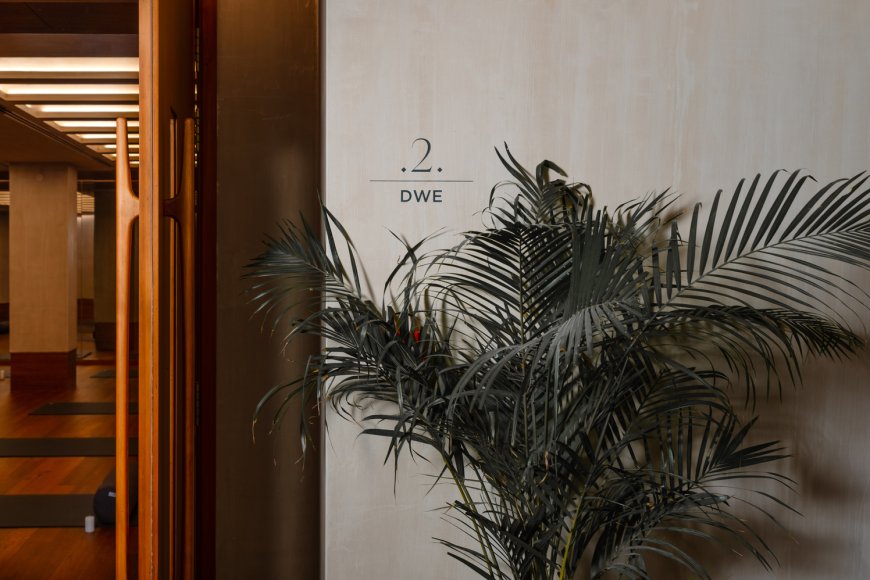
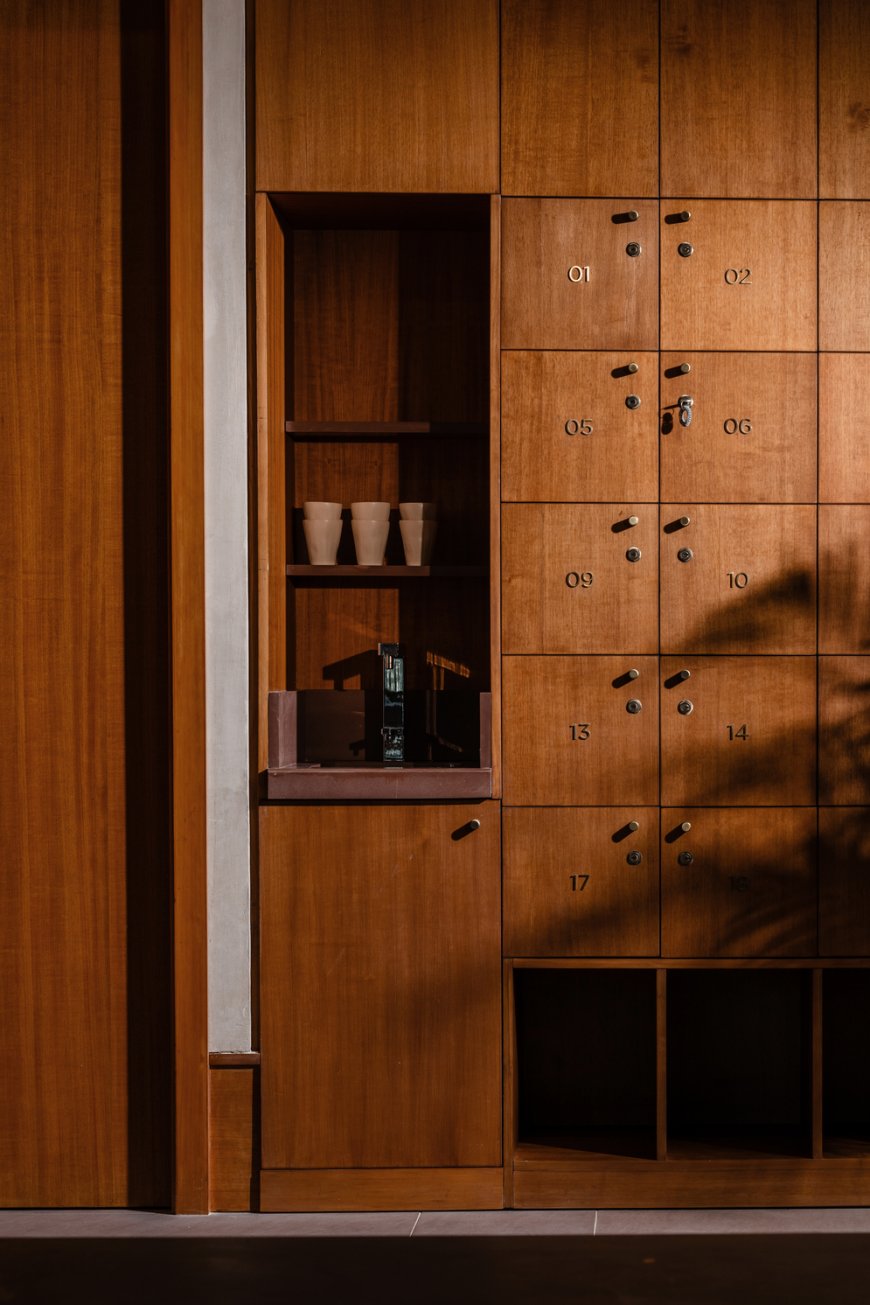
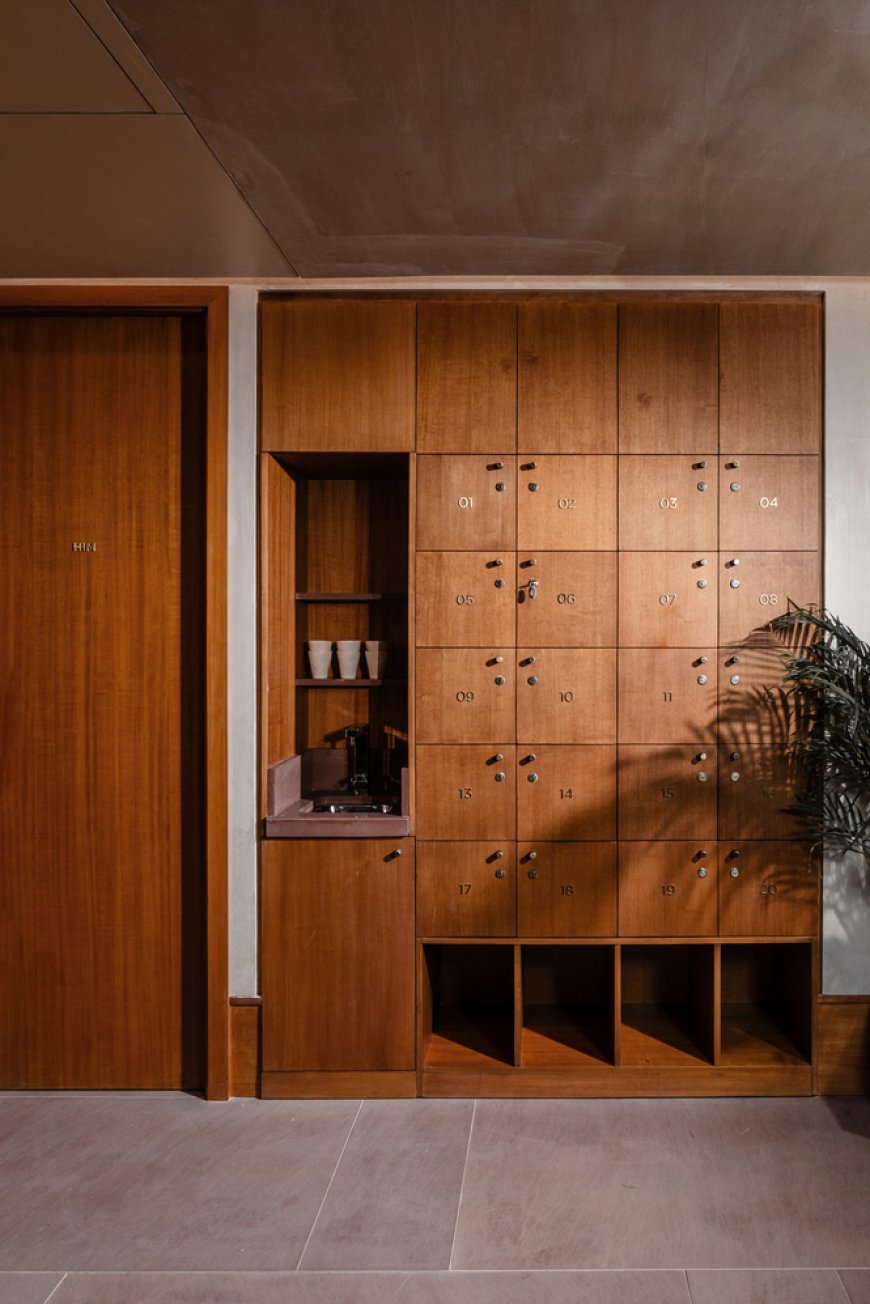
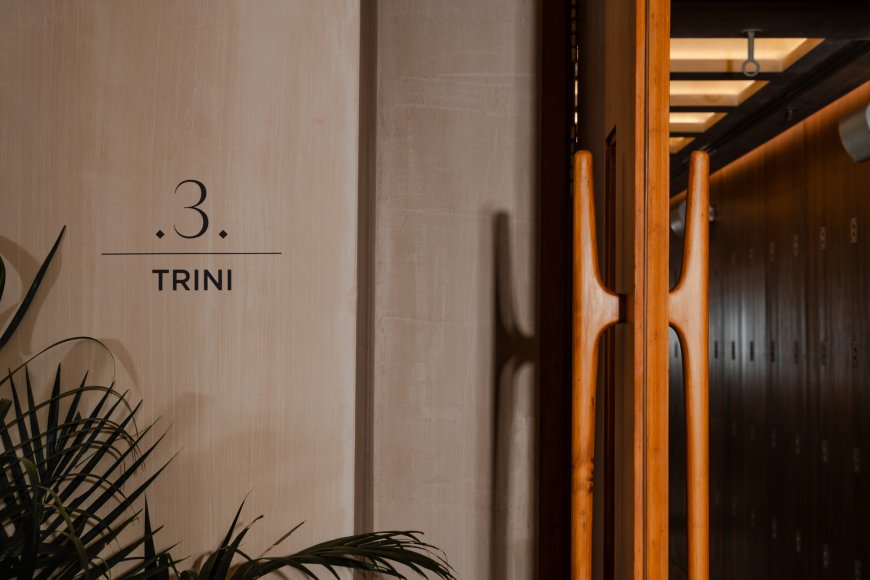
Signage is screen-printed onto the plaster walls, elevating the handcrafted quality of the space. There is tremendous attention to detail such as the lockers with interlocking form that have inbuilt charging points, given that students leave their digital devices outside the classrooms. The hand-carved door handles are not just ergonomic but also add a softness to an otherwise sparse space.
The overall design intent for the flagship wellness centre for Lifeyoga has been to create a calming, meditative, and uplifting experience that is reflective of the inner journey of the practitioners of this ancient science.