This Greek Architect Is Preserving Historic Houses by Any Means Necessary
Dionisis Sotovikis isn’t asking for your permission.
Dionisis Sotovikis isn’t asking for your permission.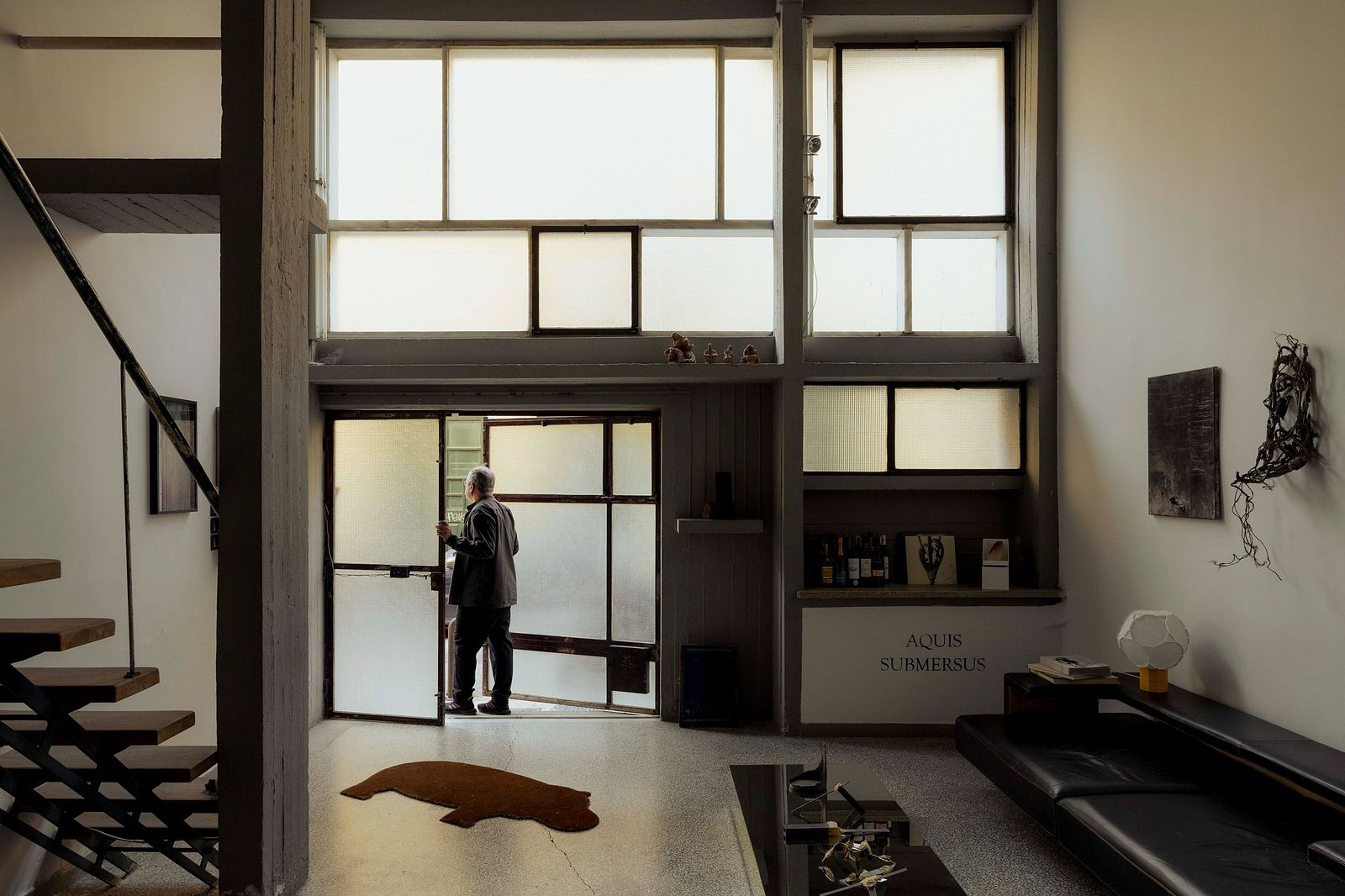
Dionisis Sotovikis doesn’t look like he breaks the rules. It’s November 2025, and as he leads me and a group of other design nerds on a tour of his Athens town house, he’s wearing the standard issue European architect uniform—dark button-down, casually tailored jeans, subtly atypical glasses. His résumé also fits the type. Before starting his own practice, he studied at the Architectural Association in London and then joined his family’s construction business. He founded his own architecture studio in 1999 and has made his reputation designing residential, cultural, and commercial projects that temper high-end brutalism with quiet finishes and just-so details. That said, when he talks about renovating his own home, he makes it sound like an exercise in passionate recklessness, which makes sense, regardless of what he’s wearing, because without his tenacity, the town house might not be there at all.
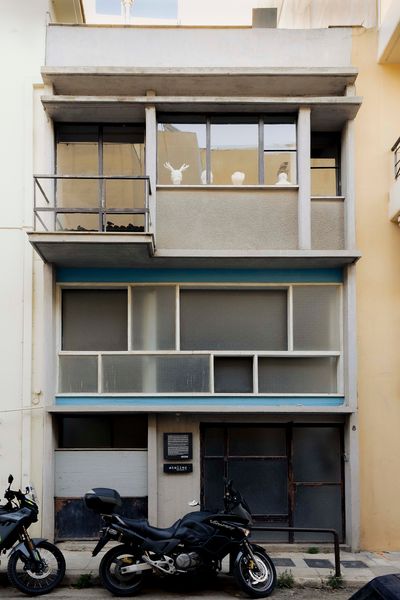
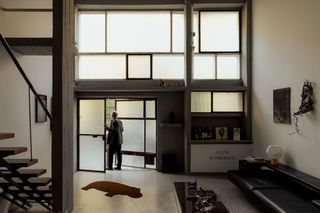
The house was built around 1956 for sculptor Ioanna Spiteris and the art critic Tonis Spiteris by Aristomenis Provelengios, a hero of Greek modernism who worked with Le Corbusier in the 1940s and 1950s. From the street, it’s four stories of metal-framed industrial windows and rough, concrete panels. Tonis once wrote on a mezzanine overlooking Ioanna’s double-height ground floor studio, and the couple lived in an apartment upstairs. By the turn of the century, it was in serious disrepair, but savable. "It was not well preserved, but the original elements were not destroyed," Sotovikis says. Still, the previous owner, the Teloglion Foundation of Art, which controlled the Spiteris estate, wanted to demolish it to build apartments. But Sotovikis and some friends connected to the Spiteris family convinced the institution to sell the building to him instead, and he began a renovation that is meticulously deferential to the original design—if not deferential to his neighbors.
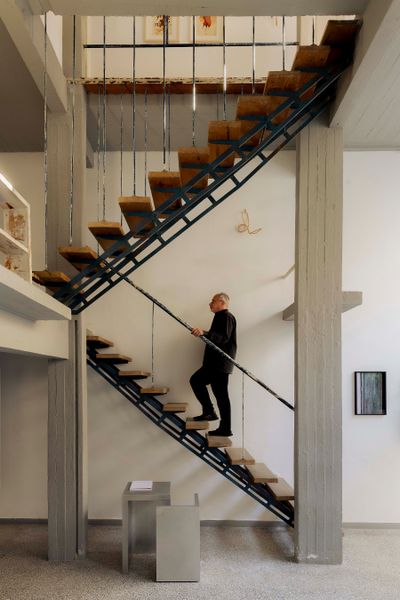
Sotovikis discreetly added a heating system, which the building previously lacked, and preserved Provelengios’s factory-forward elements, including the open stair and metal handrails throughout the house.
Photo: Sarah Rainer
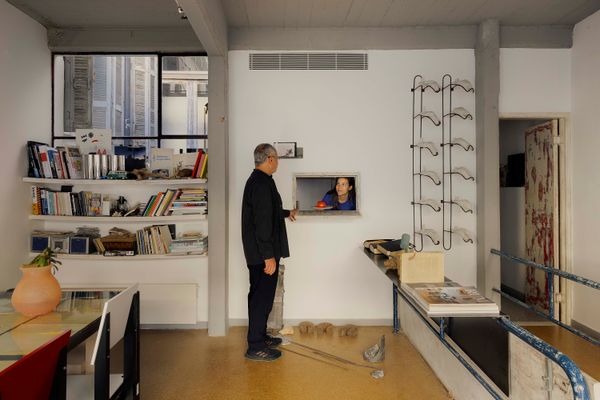
Photo: Sarah Rainer
See the full story on Dwell.com: This Greek Architect Is Preserving Historic Houses by Any Means Necessary
Related stories: