What Collectibles Crazes Can Tell Us About an Entire Era
The must-have objects of specific periods speak volumes about their societies—just look to Victorian fossil mania or the 1990s frenzy for Beanie Babies.
The must-have objects of specific periods speak volumes about their societies—just look to Victorian fossil mania or the 1990s frenzy for Beanie Babies.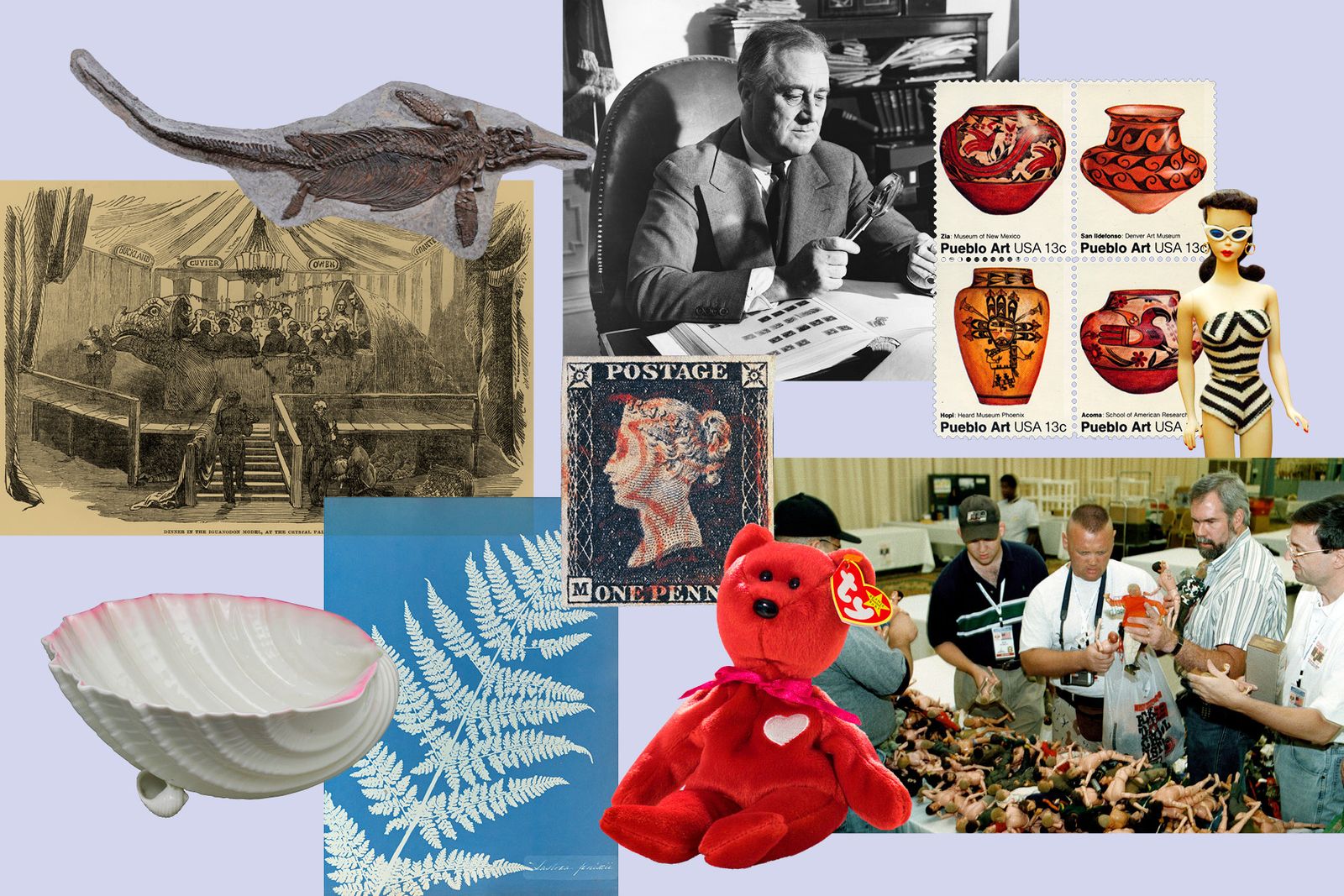
Welcome to Origin Story, a series that chronicles the lesser-known histories of designs that have shaped how we live.
The affection for particular objects is often subjective, but sometimes certain items grab hold of the public imagination. In the 17th and early 18th centuries, there was "conchlyomania," a fever for shells, which seized Europe; in the 1990s, there was the Beanie Baby bubble, which made miniature investors of many Americans. While the masses have always created crazes for specific things, these waves come and go and, whether it’s hoarding porcelain or packaged goods, they can reveal a lot about an era and its society.
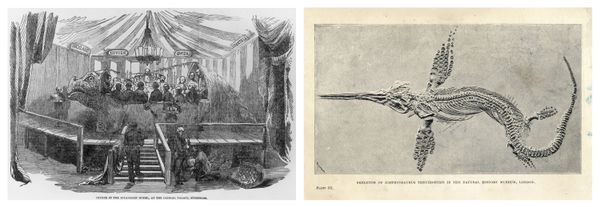
From left: A sketch of the 1853 New Year’s Eve dinner in a model of an iguanodon dinosaur at London’s Crystal Palace. British paleontologist Mary Anning discovered the first full Ichthyosaurus fossil in the early 19th century.
From left: Photo by Hulton Archive/Getty Images; photo by Florilegius/Universal Images Group via Getty Images
Fossil mania
In 1853, a group of esteemed Victorian gentlemen celebrated New Year’s Eve by eating a multicourse meal inside a cast of a dinosaur skeleton that was soon to be part of a showcase at London’s Crystal Palace exhibition hall. Dinosaurs were being discovered in England and, for the first time, dated and classified, and this stunt was a chance for British paleontologists to promote their findings—and helped ignite a craze for fossils.
The idea that creatures roamed the earth in prehistoric times inspired a frenzy in the Victorian imagination, at a time when the natural sciences were burgeoning. While paleontologists debated which bones fit together, skilled fossil collectors searched England’s beaches for extinct ammonites and trilobites to sell to wealthy enthusiasts for their expanding cabinets of curiosities. One of these avid fossil hunters was Mary Anning, who combed parts of the Jurassic Coast near her home and sold her first ammonite for half a crown, enough to buy some bread or tea and sugar for the week. She went on to make some major discoveries, some of which she sold to collectors with deep pockets; others she peddled in her shop in town for a pittance.
Fascination with fossils in Britain coincided with other natural-history-collecting frenzies—from "fern fever" to "shell mania"—and a trend toward more lavish decor in the average home, including objects like fine porcelain, itself translucent and delicate as a seashell. The natural world inspired decorative items like ornate fern terraria and elaborate bouquets handcrafted out of shells. What better way to blend art and science?
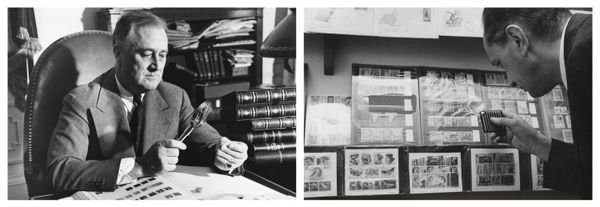
From left: President Franklin Delano Roosevelt was an avid philatelist. A visitor at the Milan Trade Fair of 1962 observes various stamp collections on display.
From left: Photo by Hulton-Deutsch/Hulton-Deutsch Collection/Corbis via Getty Images; photo by Fondazione Fiera Milano/Mondadori Portfolio via Getty Images
Stamps, stamps, stamps
In 1840, Britain introduced the first adhesive postage stamp—the Penny Black, featuring a portrait of Queen Victoria—and other countries followed suit, which meant that mail, precharged by weight rather than distance and paid on delivery, was suddenly affordable. This coincided with waves of emigration and immigration all over the world: letters to long-lost relatives became common. Soon enough, millions of small stamps were circulating, and postal services all over the globe were issuing new ones, with increasingly imaginative designs. In the U.S., there were stamps that commemorated a historic Europe–Pan America zeppelin flight and various U.S. national parks. Some were like miniature paintings. (There’s even a Georgia O’Keeffe Red Poppy stamp from 1996.)
In the 20th century, some stamp collectors, or "philatelists," started paying tens of thousands of dollars for rare stamps ($35,000 was the auction record for an American stamp, in 1967). But it was an accessible hobby: They could be purchased for pennies, or anyone could take a letter they’d received, steam its stamp off, and paste that stamp into a booklet. A whole social world was born around philately in the midcentury, when stamp collecting was at its apex: There were clubs and exhibitions and shops where you could buy and sell stamps, themselves visual representations of a new global world order. Stamp collecting was even a favorite pastime of one of the architects of that order: "I owe my life to my hobbies—especially stamp collecting," President Franklin Delano Roosevelt once said.
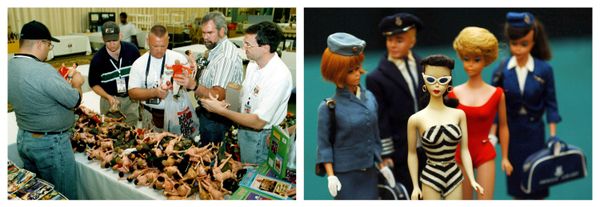
From left: Midcentury toys G.I. Joe and Barbie had lasting popularity, as seen by these enthusiasts at the 1999 International G.I. Joe Collectors’ Convention, and a collection of Barbie dolls at a Christie’s London auction in 2006.
From left: Photo by Mike Holmes/Georges De Keerle/EPIX/Liaison Agency via Getty Images; photo by Fiona Hanson/PA Images via Alamy
See the full story on Dwell.com: What Collectibles Crazes Can Tell Us About an Entire Era
Related stories: