The new extension to the De Nova secondary school illustrates how architecture can embody innovative approaches to learning. The existing educational campus—comprising a kindergarten, primary school, and secondary school, alongside facilities for music and arts education—had evolved over decades. What began as a cluster of pavilions from the 1950s and 1960s, with further additions in the 1970s and 1980s, had become a fragmented ensemble lacking overall cohesion.
This website uses cookies to distinguish you from other users of our website. The use of cookies helps us to provide you with a specific service, to facilitate website use and to understand our visitors. By continuing to browse the site you are agreeing to our use of cookies.

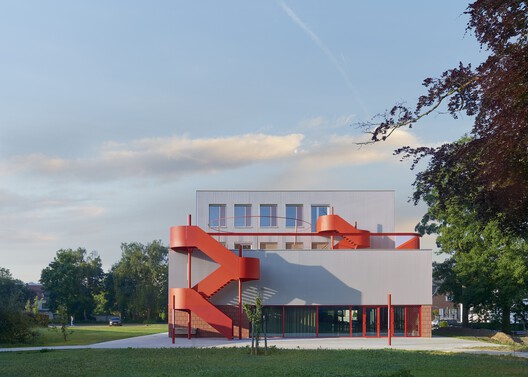
 © Andre Nullens