Massive Steel Panels Conceal (and Reveal) a Deceptively Airy Home in Tbilisi
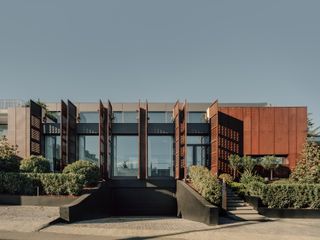
Flanges form an operable armored facade that can open to let in light and breezes.
Flanges form an operable armored facade that can open to let in light and breezes.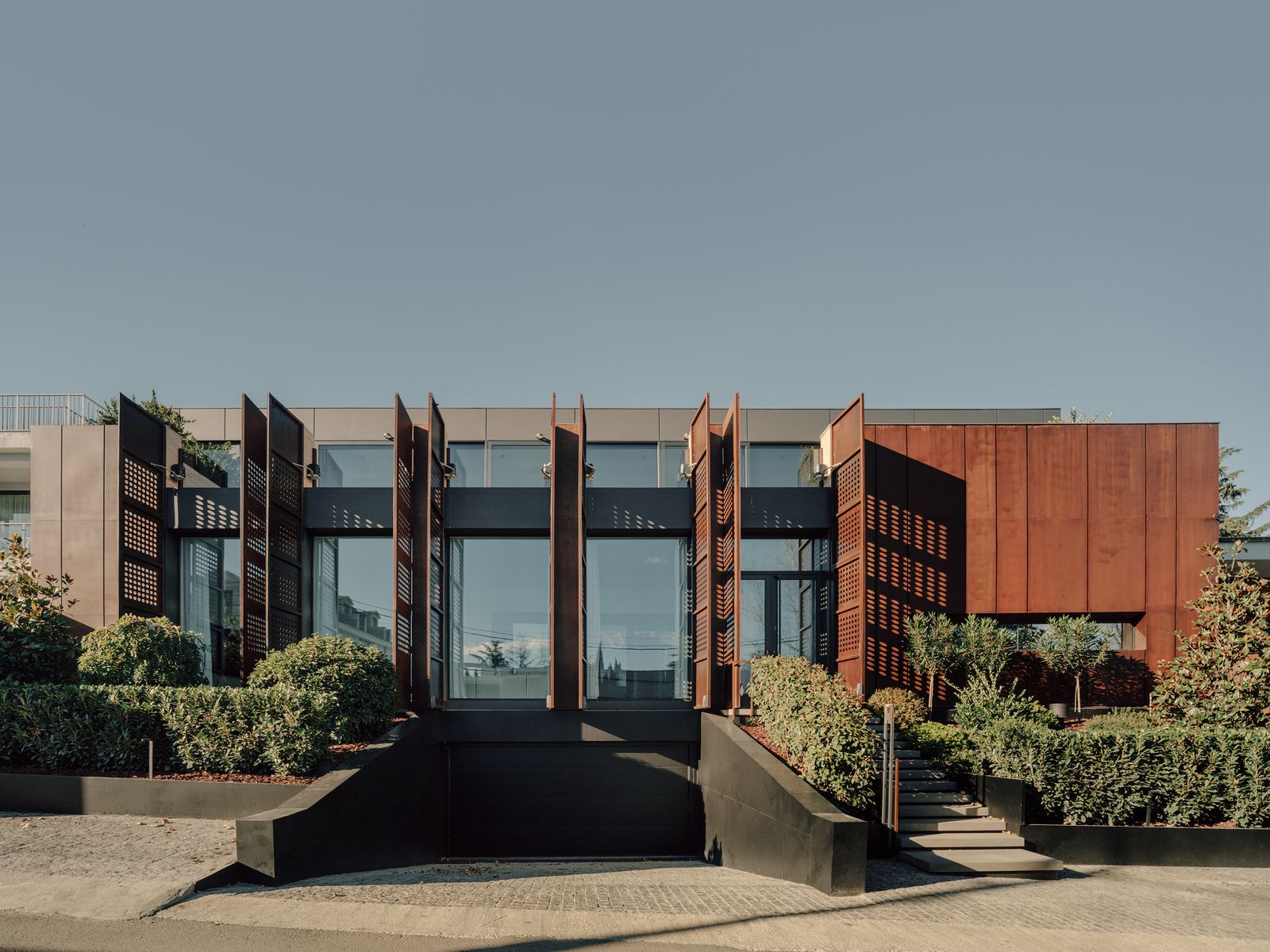
Houses We Love: Every day we feature a remarkable space submitted by our community of architects, designers, builders, and homeowners. Have one to share? Post it here.
Project Details:
Location: Tbilisi, Georgia
Architect: TIMM Architecture / @timmarchitecture
Footprint: 5,400 square feet
Photographer: Grigory Sokolinsky
From the Architect: "Located in the hillside district of Okrokana overlooking Tbilisi, the House of Iron Doors reinterprets the typical residential condition of the area through an architecture of enclosure and controlled openness. The surrounding neighborhood is characterized by individual houses hidden behind high perimeter fences, creating a fragmented streetscape defined more by walls than by architecture. Instead of replicating this condition, the project proposes a different strategy: the house itself becomes the perimeter. The building forms a protective architectural envelope that encloses the site and generates a private interior landscape.
"The street facade appears as a continuous rusted steel surface punctuated by a sequence of large perforated iron doors. These pivoting panels function as a dynamic environmental and spatial filter. When closed, the facade reads as a monolithic metal screen, offering privacy and protection from the street. When opened, the panels transform the building into a porous structure that allows light, air, and views to penetrate the interior spaces. The perforations create constantly shifting patterns of light and shadow throughout the day, giving the otherwise solid envelope a sense of movement and temporal variation.
"Behind this outer layer, the house organizes its spaces around an inward-oriented courtyard. All primary living areas are directed toward this internal garden rather than toward the surrounding streets and neighboring plots. This strategy allows the interior to maintain openness and transparency while preserving privacy from the outside. The courtyard becomes the spatial and environmental center of the house, providing daylight, greenery, and visual continuity across different levels of the dwelling.
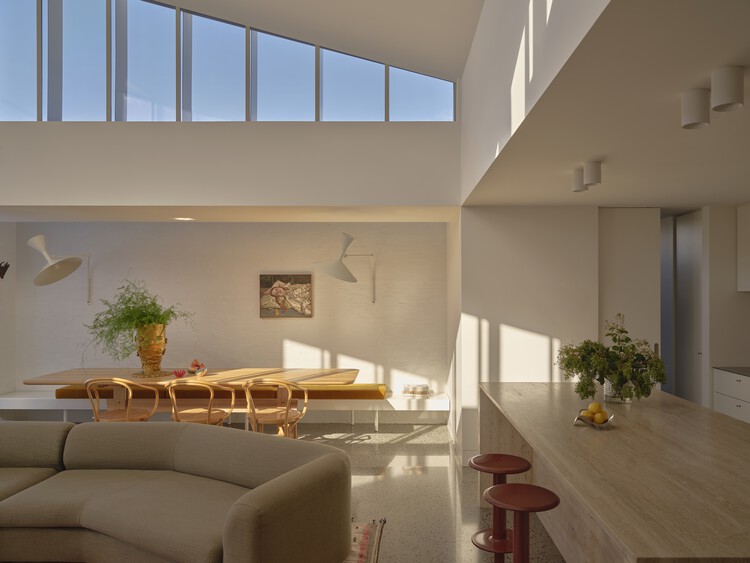
"The ground level contains the main living spaces, including the living room, dining area, and kitchen, arranged in a linear sequence along the courtyard edge. Large sliding glass openings allow the interior to extend directly into the outdoor garden. Above, the private rooms continue the same spatial logic, maintaining visual connections to the internal landscape while remaining protected by the outer metal skin. A secondary layer of exterior panels functions as adjustable sun-shading devices for the interior rooms. These movable elements regulate daylight and reduce solar gain while simultaneously shaping the visual identity of the building. Their rhythmic placement along the facade establishes a strong architectural character that changes depending on their position and the angle of the sun."
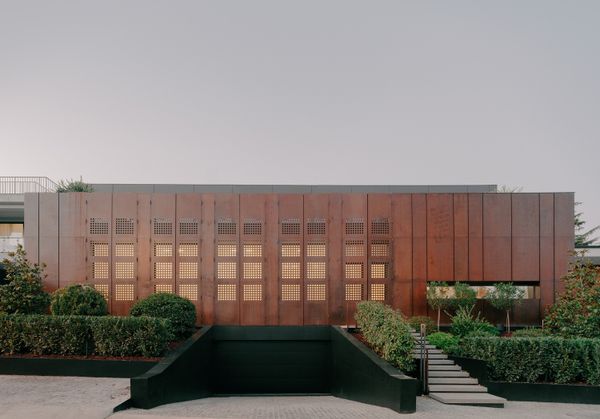
Photo by Grigory Sokolinsky
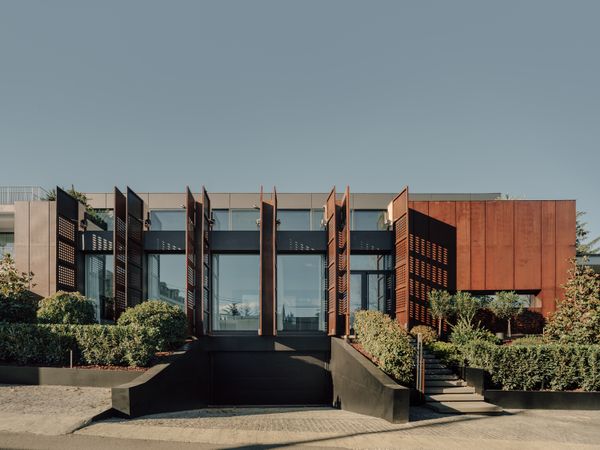
Photo by Grigory Sokolinsky
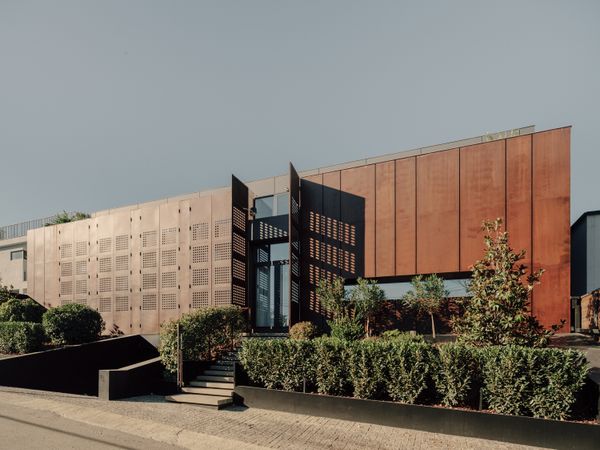
Photo by Grigory Sokolinsky
See the full story on Dwell.com: Massive Steel Panels Conceal (and Reveal) a Deceptively Airy Home in Tbilisi