From the Archive: This Tribeca Pad Was One of New York’s First Houses Warmed by Geothermal Energy
Built in 2000, the five-story building served as both office and family home for architect John Petrarca.
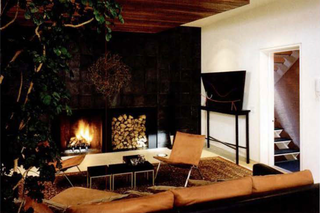
Built in 2000, the five-story building served as both office and family home for architect John Petrarca.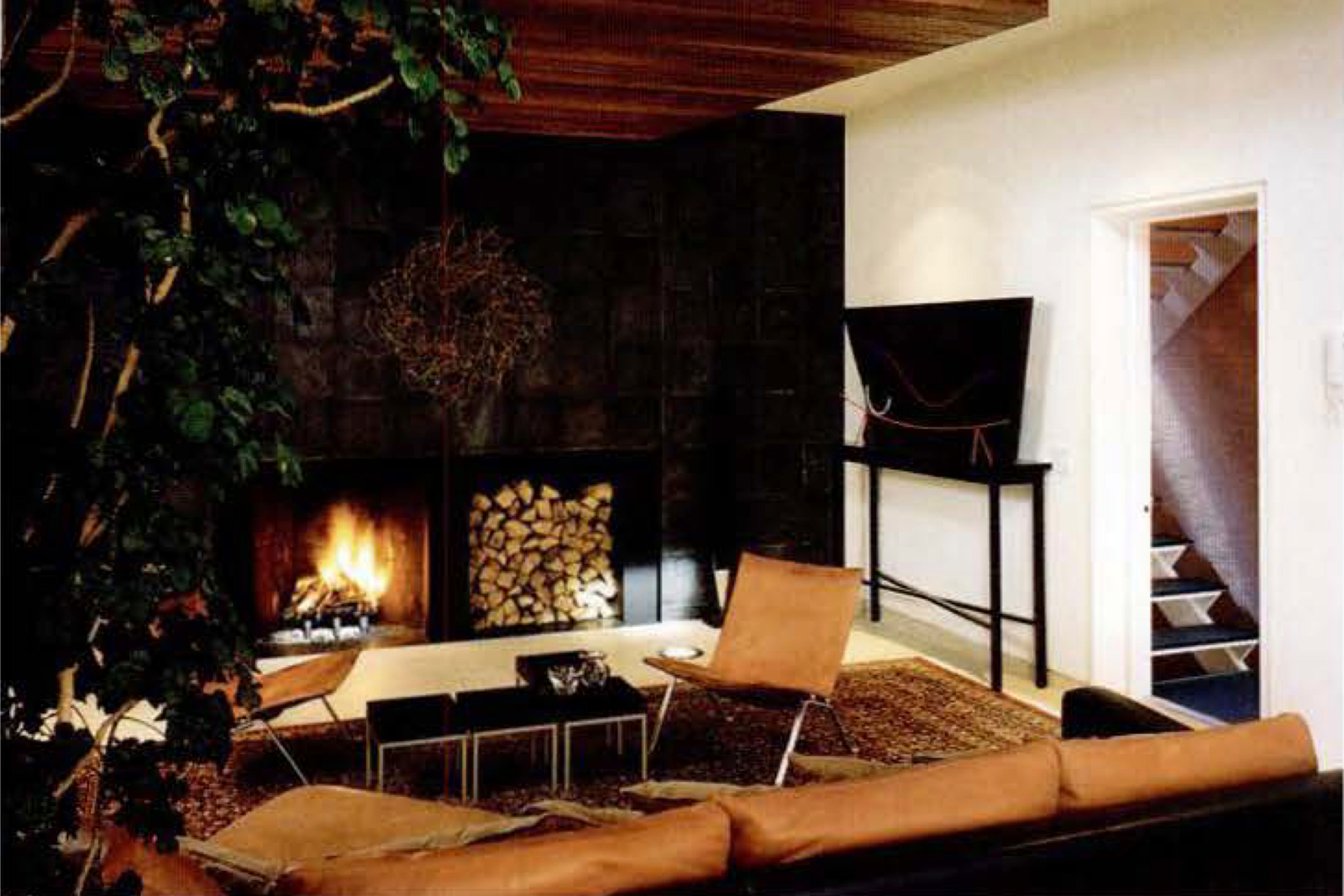
Welcome to From the Archive, a look back at stories from Dwell’s past. This story previously appeared in the June 2003 issue.
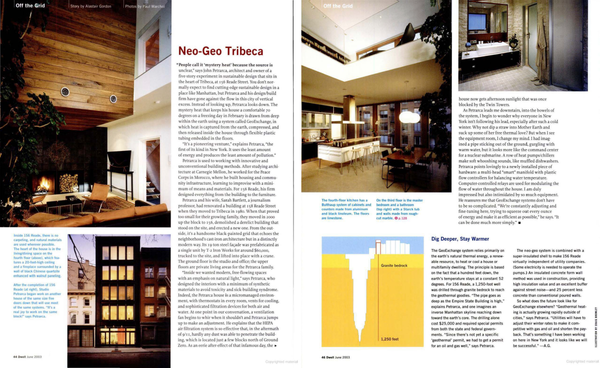
"People call it ‘mystery heat’ because the source is unclear," says John Petrarca, architect and owner of a five-story experiment in sustainable design that sits in the heart of Tribeca, at 156 Reade Street. You don’t normally expect to find cutting-edge sustainable design in a place like Manhattan, but Petrarca and his design/build firm have gone against the flow in this city of vertical excess. Instead of looking up, Petrarca looks down. The mystery heat that keeps his house a comfortable 70 degrees on a freezing day in February is drawn from deep within the earth using a system called GeoExchange, in which heat is captured from the earth, compressed, and then released inside the house through flexible plastic tubing embedded in the floors.
"It’s a pioneering venture," explains Petrarca, "the first of its kind in New York. It uses the least amount of energy and produces the least amount of pollution."
Petrarca is used to working with innovative and unconventional building methods. After studying architecture at Carnegie Mellon, he worked for the Peace Corps in Morocco, where he built housing and community infrastructure, learning to improvise with a minimum of means and materials. For 156 Reade, his firm designed everything from the building to the furniture.
Petrarca and his wife, Sarah Bartlett, a journalism professor, had renovated a building at 158 Reade Street when they moved to Tribeca in 1980. When that proved too small for their growing family, they moved in 2000 up the block to 156, demolished a derelict building that stood on the site, and erected a new one. From the outside, it’s a handsome black-painted grid that echoes the neighborhood’s cast-iron architecture but in a distinctly modern way. Its 19-ton steel facade was prefabricated as a single unit by T-2 Iron Works for around $60,000, trucked to the site, and lifted into place with a crane. The ground floor is the studio and office; the upper floors are private living areas for the Petrarca family.
"Inside we wanted modern, free-flowing spaces with an emphasis on natural light," says Petrarca, who designed the interiors with a minimum of synthetic materials to avoid toxicity and sick-building syndrome. Indeed, the Petrarca house is a micromanaged environment, with thermostats in every room, vents for cooling, and sophisticated filtration devices for both air and water. At one point in our conversation, a ventilation fan begins to whir when it shouldn’t and Petrarca jumps up to make an adjustment. He explains that the HEPA air filtration system is so effective that, in the aftermath of 9/11, hardly any dust was able to penetrate the building, which is located just a few blocks north of Ground Zero. As an eerie after-effect of that infamous day, the house now gets afternoon sunlight that was once blocked by the Twin Towers.
As Petrarca leads me downstairs, into the bowels of the system, I begin to wonder why everyone in New York isn’t following his lead, especially after such a cold winter. Why not dip a straw into Mother Earth and suck up some of her free thermal love? But when I see the equipment room, I change my mind. I had imagined a pipe sticking out of the ground, gurgling with warm water, but it looks more like the command center for a nuclear submarine. A row of heat pumps/chillers make soft whooshing sounds, like muffled dishwashers. Petrarca points lovingly to a newly installed piece of hardware: a multihead "smart" manifold with plastic flow controllers for balancing water temperature. Computer controlled relays are used for modulating the flow of water throughout the house. I am duly impressed but also intimidated by so much equipment. He reassures me that GeoExchange systems don’t have to be so complicated. "We’re constantly adjusting and fine tuning here, trying to squeeze out every ounce of energy and make it as efficient as possible," he says. "It can be done much more simply."
See more from the Dwell archive on US Modernist.
Related Reading:
From the Archive: The Tropical Modernist Whose Lush Spaces Blended British and Sri Lankan Heritage
From the Archive: With Rammed Earth Walls and Flagstone Flooring, This Desert Home Matched Its Site