How the "Garden City" Changed Urban Planning
The early-20th-century movement sought to merge the benefits of town and country. It still has a lasting influence.
The early-20th-century movement sought to merge the benefits of town and country. It still has a lasting influence.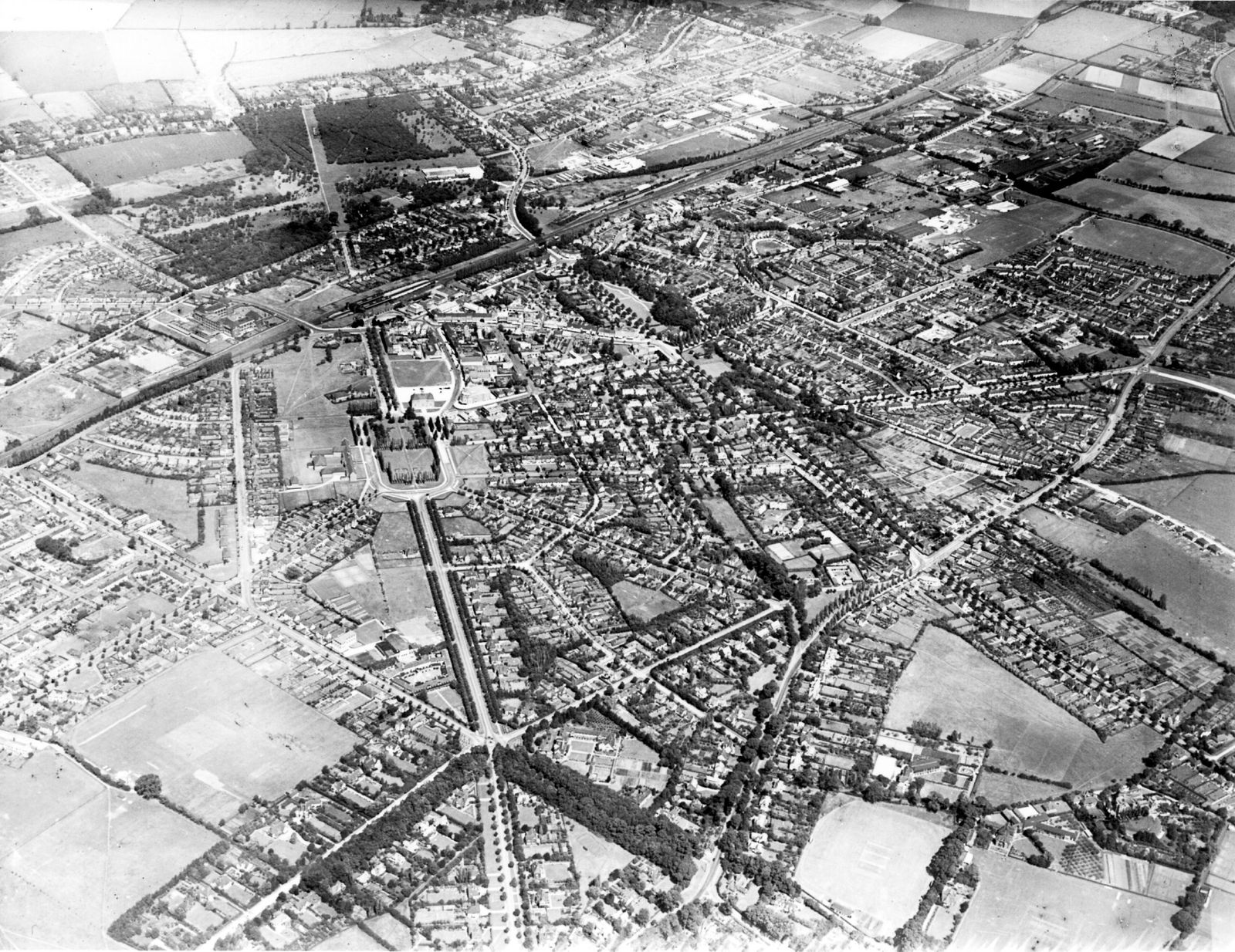
Welcome to Origin Story, a series that chronicles the lesser-known histories of designs that have shaped how we live.
In his 1898 book To-Morrow: A Peaceful Path to Real Reform, English urban planner Ebenezer Howard diagnosed urban life as both unsustainable and undesirable. In cities, he argued, smog was heavy and buildings constructed before the Industrial Revolution buckled under the weight of a rapidly growing population. People were unhealthy and unhappy, even if they didn’t know it. Howard’s alternative vision, known as the garden city, was neither strictly urban nor rural but a hybrid: compact, walkable satellite towns encircled by farmland, designed to promote community engagement and public health.
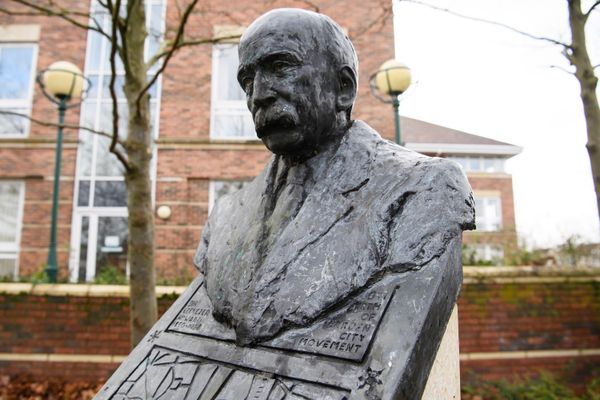
A bust of Arts and Crafts architect and urban planner Raymond Unwin in Letchworth, England, which he helped build with Barry Parker based on Ebenezer Howard’s garden city ideals.
Photo by Leon Neal/Getty Images
Howard said garden cities would be connected by rail, and each would be home to around 30,000 people. At the core of the design was a radial plan, with civic buildings and commercial areas surrounding a central green space, and housing integrated into tree-lined streets. Land would be owned not by individuals but by the community and managed for the benefit of residents, ensuring that rising property values funded public improvements. In this sense, Howard’s concept was as much a social reform project as a physical design strategy. It wrestled with questions that remain relevant: how to balance public and private space and how to design cities that are less dependent on cars to reduce pollution and shape healthier patterns of urban life. Those same queries inform contemporary urban planning concepts like car-free streets and neighborhoods or the 15-minute city (defined by its residents’ ability to access most core amenities within a quick walk or bike ride).
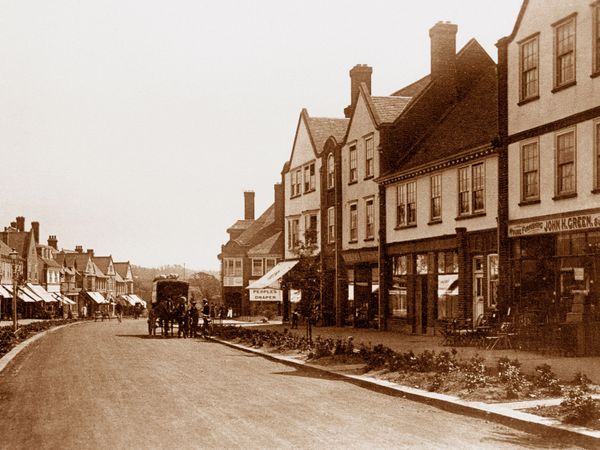
A 1909 street view of Letchworth.
Photo by The Keasbury-Gordon Photograph Archive/KGPA Ltd. via Alamy
Letchworth, the first garden city, founded in 1903 in Hertfordshire, England, translated Howard’s diagrams into built form. Designed by Arts and Crafts architects Barry Parker and Raymond Unwin, it brought together modest houses and generous private gardens, laid out along curving streets that followed the contours of the land. Beyond the town itself was a permanent agricultural greenbelt—farms and fields meant not only to supply the community but also to act as a hard edge, stopping the city from sprawling endlessly into the countryside. A publishing house, a corset factory, and a steel foundry made their headquarters in town, reinforcing Howard’s goal of economic self-sufficiency. A second English garden city, Welwyn Garden City, refined the model in 1920, with more formal street planning, neo-Georgian architecture, and a single community-owned store meant to service all the households in town. Both towns demonstrated the appeal of low-density housing, green space, and separation from congested urban centers, and yet they also revealed tensions between the idea of the movement and the reality of the towns themselves. Even as the garden city model promised healthier environments and better housing, planners often treated the new communities as spaces where working-class life could be regulated—through housing design, recreation, and daily routines—in ways that reflected middle-class ideals of discipline and respectability.
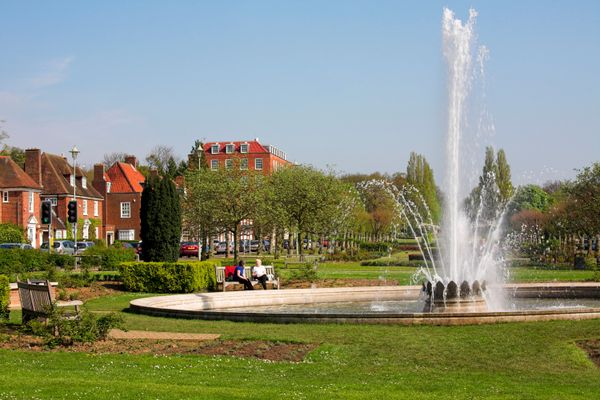
Coronation Fountain is a central landmark in Welwyn Garden City, the second garden city founded by Howard in England.
Photo by Chris Pancewicz via Alamy
See the full story on Dwell.com: How the "Garden City" Changed Urban Planning
Related stories: