How They Pulled It Off: Turning a WWII Bunker on the Cornwall Coast Into a Novel Rental
A couple strove for authenticity—the door hinges and a blast wall inside are original—but added creature comforts that make it great for unwinding on the weekend.
A couple strove for authenticity—the door hinges and a blast wall inside are original—but added creature comforts that make it great for unwinding on the weekend.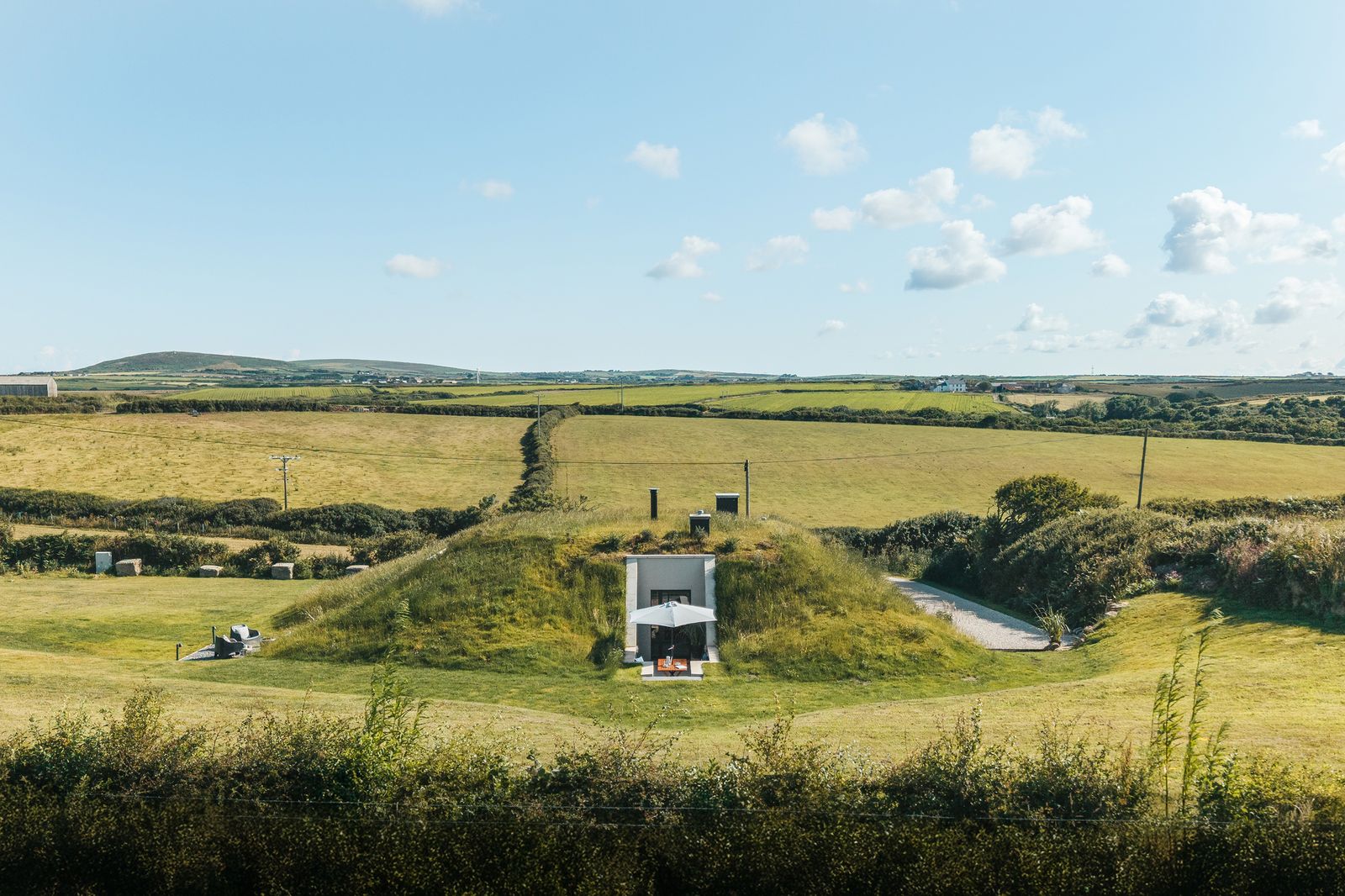
Welcome to How They Pulled It Off, where we take a close look at one particularly challenging aspect of a home design and get the nitty-gritty details about how it became a reality.
In 2020, plenty of us made unusual lockdown purchases: gym equipment, standing desks, pasta makers. For retired architect Nick Purchase and his partner, Tim Hubbard, it was an underground World War II bunker close to their home in Cornwall, which they bought with an ambitious vision: to turn the run-down concrete structure into a brutalist vacation rental, with two bedrooms and two bathrooms.
The former communications bunker, which cost Purchase and Hubbard around £290,000 (or $330,00 USD), had been built in the 1940s and used to transmit secret messages to the U.S. during the war. Cut into the hillside and buried under grass, it was designed to blend into the rugged, windswept scenery of the Penwith peninsula along Cornwall’s west coast.
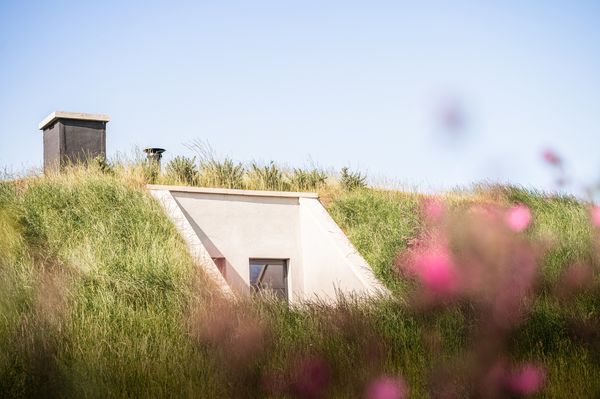
Retired architect Nick Purchase and his partner, Tim Hubbard, purchased a World War II bunker on the west coast of Cornwall to turn into a vacation rental.
Courtesy of Morse © Unique Homestays
"We bought it because we had a vision of how it could be restored," explains Hubbard, who is a garden writer and retired radio presenter. "We wanted it to be as authentic as possible as a World War II underground concrete building, yet also a comfortable 21st-century home." For Purchase, working with concrete was a first. "I love concrete. There’s a town in France, Royan, with a concrete cathedral. To be offered a building that’s already concrete and to convert it—keeping its authenticity— was a challenge that I was desperate to experience."
But when the couple bought it, the bunker was a long way from being habitable, let alone being somewhere where people would want to spend their holidays. After almost half a century of disuse, the protective waterproof coating which had once covered the structure had started to degrade, allowing moisture inside. It was dark, being built underground, and wasn’t connected to water or electricity.
In recent years, it had been used as a cattle store. Its previous owner had planned to convert it himself, securing planning permission, installing a septic tank, and raking out some of the straw and muck, but the rest would be up to Purchase and Hubbard. The question was: how do you turn a crumbling underground bunker into a comfortable, cozy holiday home?
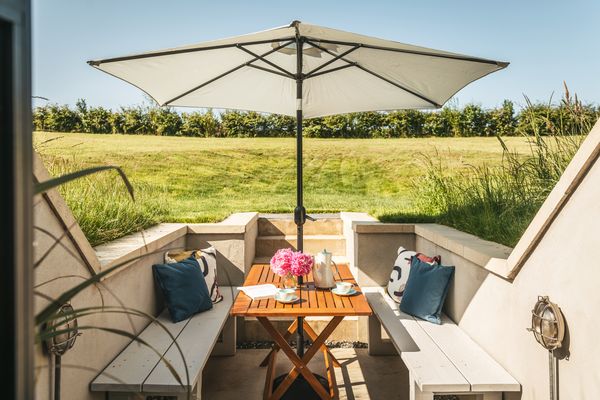
Nick and Tim created three terraces, facing south, east and west. "You can always find somewhere to sit that’s sheltered," says Nick.
Courtesy of Morse © Unique Homestays
How they pulled it off: Turning a bunker into a home
- The ‘invisible’ work: Because a water supply and wastewater must be at least 165 feet apart, Purchase and Hubbard spent £20,000 buying adjacent land to drill a borehole for their own water supply. Electricity was also a "major job." They had to buy an easement to take power from an electricity pylon (£2,000), put it into a distribution box (£15,000), and dig six-foot-deep trenches for copper earth cabling to transport the electricity to the bunker (£20,000). To repair and reseal the fragile structure, the whole bunker was uncovered, stripped back, tanked with a cement-based waterproof coating, insulated and, once water and electrics were sorted, reburied. "You don’t see any of this," says Purchase. "It’s amazing how much time and money is spent trying to make it look as if you’ve done nothing."
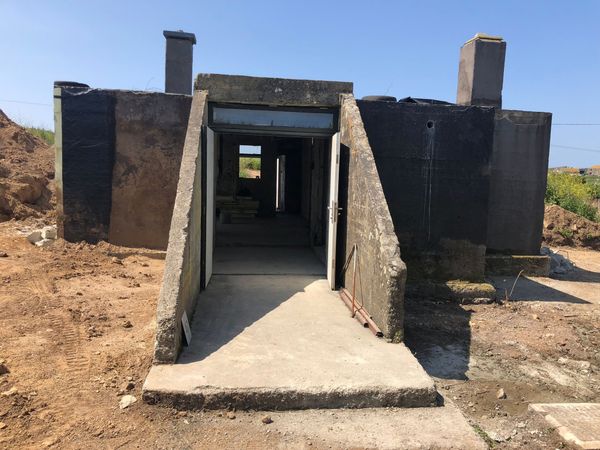
To repair the structure and make sure it was watertight, the bunker had to be uncovered and stripped back.
Courtesy of Morse © Unique Homestays
See the full story on Dwell.com: How They Pulled It Off: Turning a WWII Bunker on the Cornwall Coast Into a Novel Rental
Related stories: