Lebanon's World Heritage Sites Endangered Amid Ongoing War
Following over two years of systematic destruction of life, habitat, and essential facilities in the Gaza Strip, a new front of war in Southwest Asia was announced on February 28th, 2026. Since then, US-Israeli military attacks have had a human and infrastructural impact on Lebanon, Syria, Iraq, and Jordan. In the months since, the attacks have only intensified, reaching the deepest ground advance into Lebanese territory in 26 years and leading to mass displacement in the southern part of the country. This latest stage of the conflict marks the sixth Israeli invasion of Lebanon since 1978, resuming a nearly 50-year history of Israeli military interventions in the country. While a ceasefire agreement was supposed to take effect on 27 November 2024 and expire on 2 March 2026, evidence of the destruction of towns and World Heritage Sites shows that it was never truly respected. UNESCO has consistently issued condemnations of "unlawful attacks against cultural property," the latest one responding to the "ongoing escalation of hostilities" on May 29th, 2026.
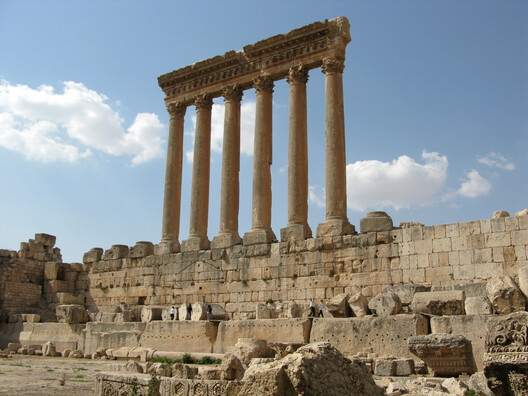
 It was a colossal temple dedicated to the cult of Zeus, located in Heliopolis of Roman Phoenicia (Baalbeck of modern Lebanon). The columns were 30 meters high with a diameter of nearly 2.5 meters, the biggest in the classical world. The Baalbek temple complex. UNESCO World Heritage site. Heliopolis, Baalbek, Beqaa Valley, Lebanon, September 2008. Image © Vyacheslav Argenberg via Wikimedia Commons, licensed under the CC BY 4.0 international license
Following over two years of systematic destruction of life, habitat, and essential facilities in the Gaza Strip, a new front of war in Southwest Asia was announced on February 28th, 2026. Since then, US-Israeli military attacks have had a human and infrastructural impact on Lebanon, Syria, Iraq, and Jordan. In the months since, the attacks have only intensified, reaching the deepest ground advance into Lebanese territory in 26 years and leading to mass displacement in the southern part of the country. This latest stage of the conflict marks the sixth Israeli invasion of Lebanon since 1978, resuming a nearly 50-year history of Israeli military interventions in the country. While a ceasefire agreement was supposed to take effect on 27 November 2024 and expire on 2 March 2026, evidence of the destruction of towns and World Heritage Sites shows that it was never truly respected. UNESCO has consistently issued condemnations of "unlawful attacks against cultural property," the latest one responding to the "ongoing escalation of hostilities" on May 29th, 2026.