Material Intelligence: How Steel Resists Weather, Corrosion, and Time
Produced on an industrial scale since the 19th century, steel has profoundly transformed the way we build. The combination of iron and small amounts of carbon has given rise to a material capable of combining mechanical strength, relative lightness, and constructive precision, making possible some of the major achievements of modern engineering and architecture. From skyscrapers and bridges to facades, roofs, and industrialized systems, few materials have had such a significant impact on shaping the built environment.
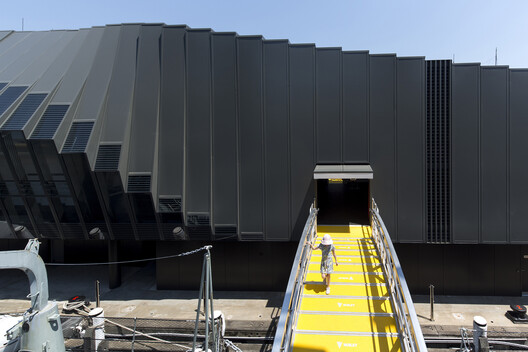
 The Waterfront Pavilion – Australian National Maritime Museum / FJMT Studio. Image © Brett Boardman
Produced on an industrial scale since the 19th century, steel has profoundly transformed the way we build. The combination of iron and small amounts of carbon has given rise to a material capable of combining mechanical strength, relative lightness, and constructive precision, making possible some of the major achievements of modern engineering and architecture. From skyscrapers and bridges to facades, roofs, and industrialized systems, few materials have had such a significant impact on shaping the built environment.
However, the quality of a material cannot be measured solely by its initial structural performance or its appearance at the time of delivery. Although buildings are often evaluated when they are completed, their true performance only reveals itself over time. Photographs record impeccable facades, newly installed surfaces, and spaces ready for use. The following decades, however, expose these constructions to solar radiation, rain, humidity, salinity, air pollution, and thermal variations. It is in this continuous contact with the environment that material choices are effectively put to the test.