These Midcentury Town Houses in Chicago Are More Desirable Than They’ve Ever Been
Units designed by I. M. Pei and Harry Weese still attract young families wanting to raise their kids in an urban environment.
Units designed by I. M. Pei and Harry Weese still attract young families wanting to raise their kids in an urban environment.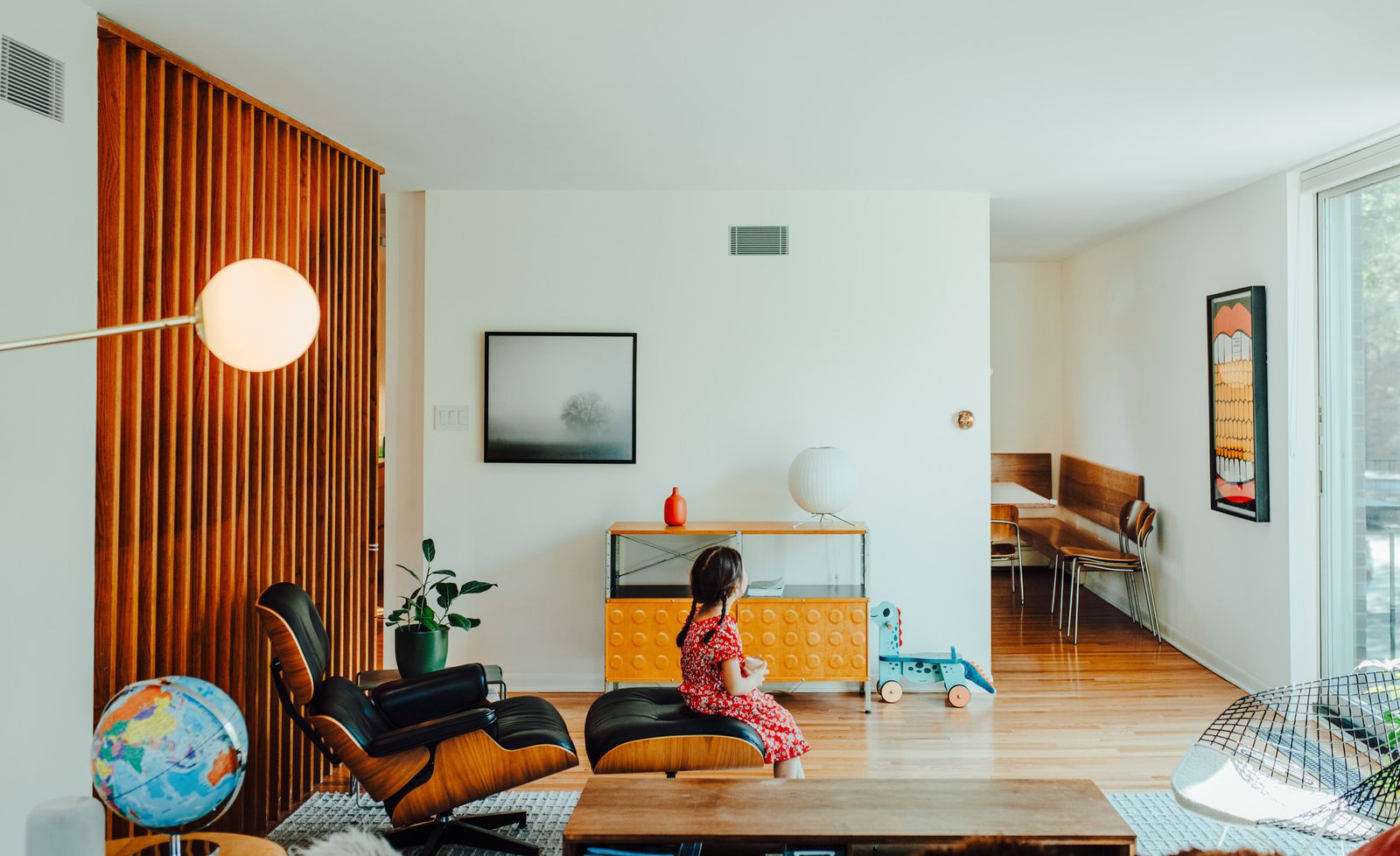
Twentieth-century urban renewal had a great track record of producing freeways, less so desirable places to live. But near the University of Chicago, on the South Side of the city, one plan from the late 1950s by architects I. M. Pei and Harry Weese embraced its context, generating midcentury-modern town houses still celebrated for their congenial and efficient urban family life.
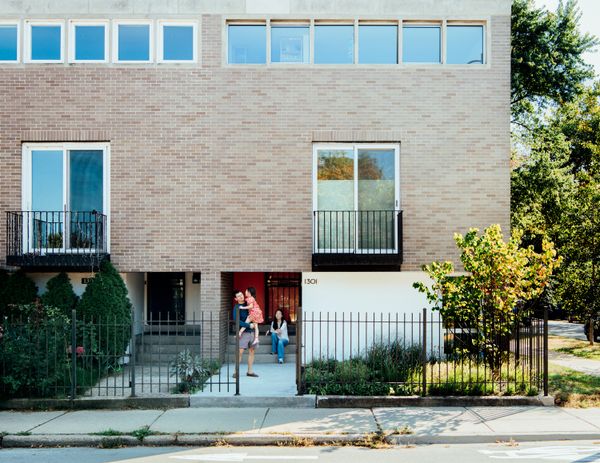
Tech entrepreneurs Sue Khim and Silas Hundt and their young children are among the many families living today in town houses designed by architects I. M. Pei and Harry Weese in the late 1950s as part of an urban renewal plan on the South Side of Chicago. The couple worked with Alex Krikhaar of Vinci Hamp Architects on a preservation-minded renovation. "It was one of the few remaining houses that had not been touched," says Krikhaar. The stepped, recessed entrance—referred to in plans as the "porch"—is a place to connect with the neighborhood.
Photo: Kevin Serna
"Part of the romance of being here," says tech entrepreneur Sue Khim, who moved into one of the town houses with her family in September of 2024, "is that our kids play in an alleyway and almost every single family here has kids." Today as when they were built, the roughly 150 town houses in Hyde Park by Pei and Weese feature airy, open staircases, lushly planted courtyards, and tactile buff brick with limestone trim. Arranged in horizontal bars a block long, the town houses include rear entrances that face each other across green spaces, creating semienclosed courtyards that feel cloistered and communal and are now strewn with lawn furniture, grills, and, in one case, an entire small playground.
Zooming out, the network of courtyards and quiet streets in Hyde Park is prime tricycle track, and the prestigious schools and cultural amenities of the university (as well as the tight-knit social networks therein) have long made the area a sought-after destination for people committed to raising city kids.
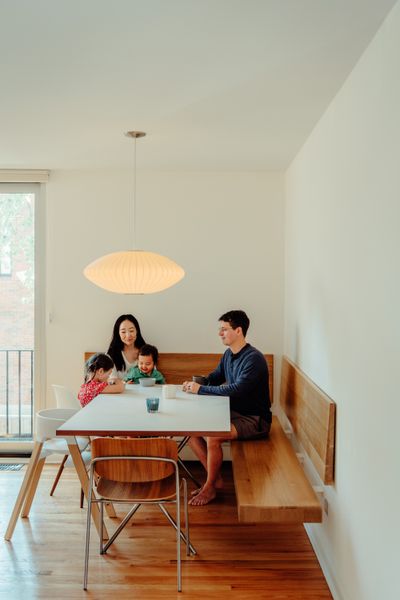
The dining area includes cantilevered oak benches. The Nelson Saucer Bubble pendant, Nelson X-Leg table for Herman Miller, and Eames Molded Plastic side chair are from Design Within Reach.
Photo: Kevin Serna
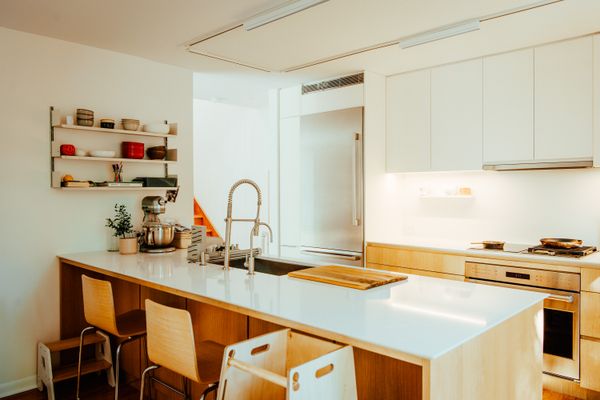
The galley kitchen features white oak drawers and Caesarstone counters and cabinets. The kitchen faucet, filtered water faucet, and mounted soap dispenser are from Baril. The gas and induction cooktops and electric oven are from Wolf, and the refrigerator is from Bosch. The range hood is from Zephyr, and the lighting fixtures are from Lightology.
Photo: Kevin Serna
See the full story on Dwell.com: These Midcentury Town Houses in Chicago Are More Desirable Than They’ve Ever Been
Related stories: