What Should Transitional Housing for Young Adults Facing Homelessness Look Like?
In Sacramento, a microcabin community serving 18- to 24-year-olds called on local builders and designers to turn modest sheds into dignified launchpads.
In Sacramento, a microcabin community serving 18- to 24-year-olds called on local builders and designers to turn modest sheds into dignified launchpads.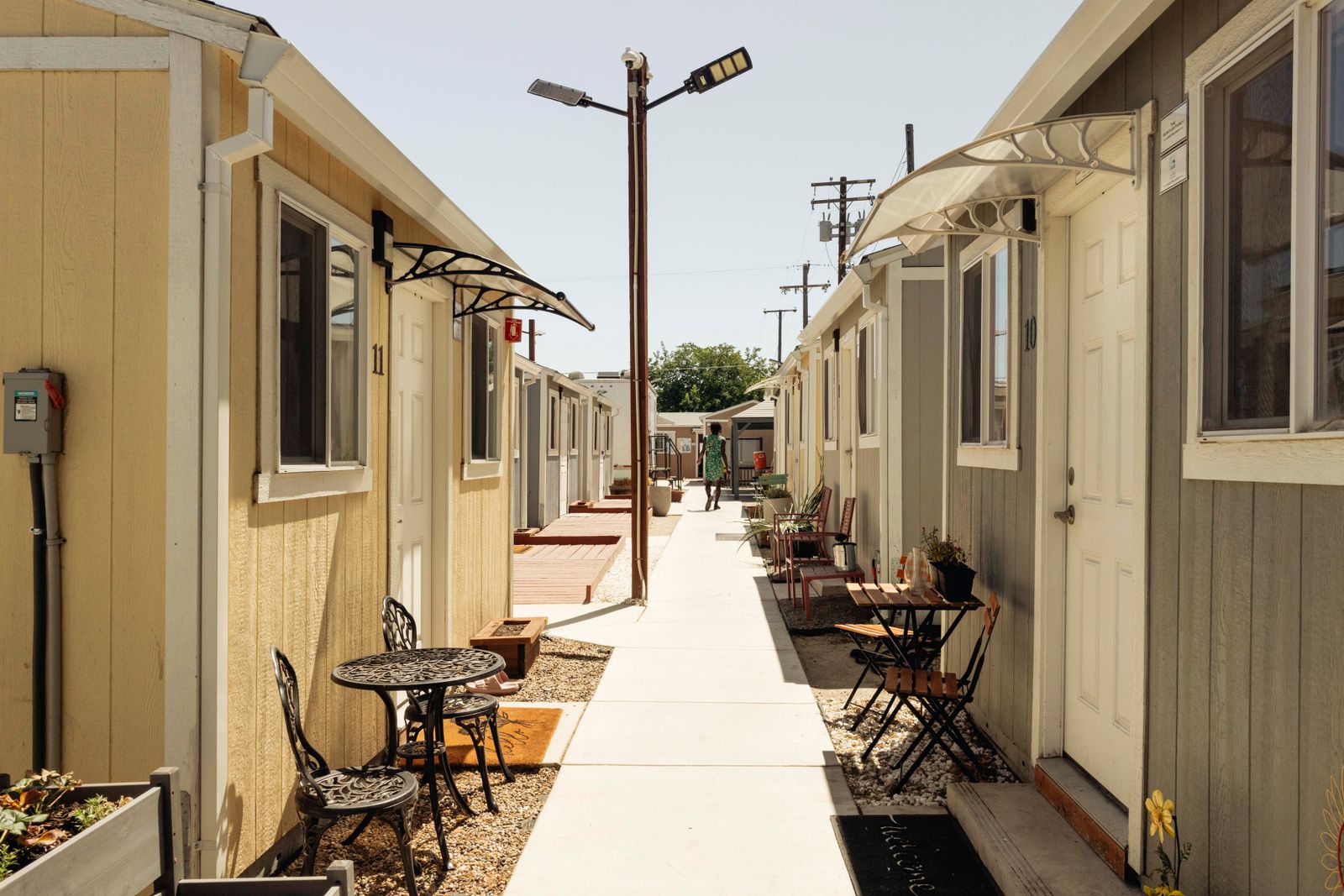
Semaj Algere never imagined she’d experience homelessness at 23. In 2024, after periods of sleeping in her car and cycling through unstable living situations, she decided to seek help. A call to the 211 helpline, which connects people with resources for needs like housing, food, healthcare, and mental health support, led her to the Grove, a transitional-housing community serving 18- to 24-year-olds in Sacramento, California. She wanted lasting change, she says, starting with a stable place to stay and resources for finding long-term housing and resuming her education.
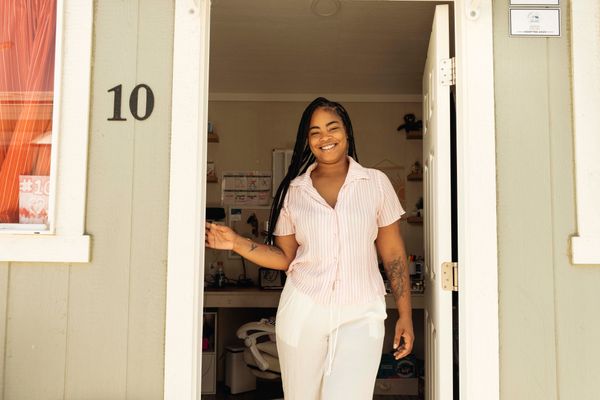
The Grove, a 50-cabin transitional housing community serving 18- to 24-year-olds in Sacramento, California, underwent a two-phase, donations-based "beautification" in late 2024 and spring 2025 that brought together 31 companies in the local housing and building industries. Semaj Algere, pictured, lives in one of the cabins.
Photo: Rozette Halvorson
Algere’s story is far from uncommon. In California’s capital, youth homelessness is increasing rapidly, in line with national trends. Nearly 17 percent of people experiencing homelessness in the city are 24 or younger, according to a 2024 study from Sacramento Steps Forward, a local nonprofit focused on addressing homelessness. Cities across the country are increasingly turning to the construction of tiny home villages as a short-term solution for the homelessness crisis, and while a growing number of architects have experimented with ways to make these emergency housing shelters and microhomes feel well designed and dignified, many of the structures still rely on bare-bones layouts that can feel institutional, cold, and impersonal.
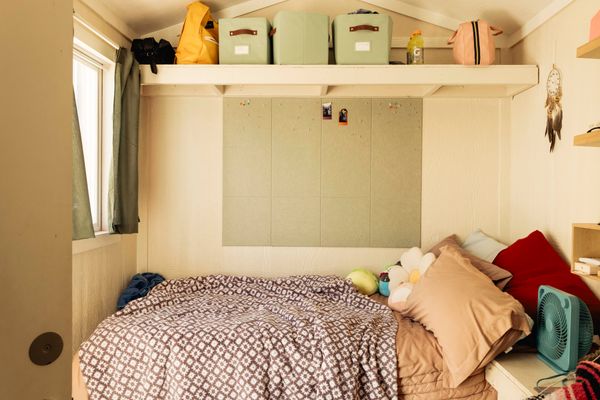
Algere’s cabin is outfitted with a sage-green bulletin board that complements new curtains and storage bins and bedding that fits with the color palette.
Photo: Rozette Halvorson
The Grove, operated by the nonprofit First Step Communities, was no exception. The site’s 50 prefabricated Tuff Shed cabins, packed onto a formerly vacant lot behind a church in the Del Paso Heights neighborhood, were identically austere: white walls, thin mattresses, plastic storage buckets, and not much else. But in spring 2024, the Grove organized a two-day "cabin beautification" campaign with HomeAid Sacramento, a nonprofit that builds and renovates housing for people experiencing homelessness. Thirty-one local companies in the housing and building industries "adopted" the site’s cabins, customizing them in spring 2025 to better suit the lives, routines, and goals of teens and young adults in the transitional housing community.
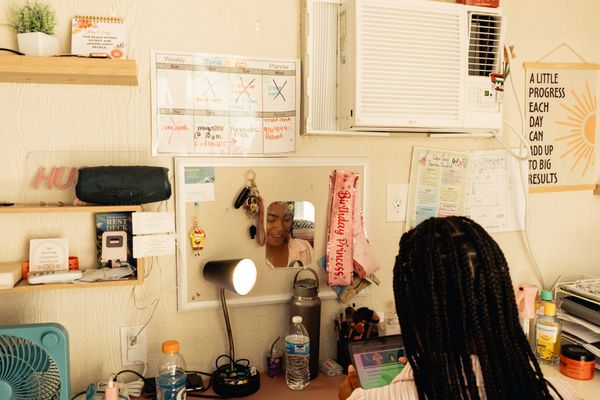
The decor is on par with that of a standard dorm or young adult apartment.
Photo: Rozette Halvorson
See the full story on Dwell.com: What Should Transitional Housing for Young Adults Facing Homelessness Look Like?
Related stories: