Designing Comfort Through Texture, Warmth, and Ceiling Systems
Before we rationally understand a space, we perceive it sensorially. Light, proportion, texture, color, and materiality all influence how the body interprets an environment, shaping whether it feels welcoming, cold, intimate, or impersonal. Visual and chromatic elements can directly affect the perception of depth, atmosphere, and scale within interiors, particularly in contemporary buildings characterized by large spans and continuous surfaces. Among the architectural elements that shape this experience, the ceiling may be one of the most underestimated, despite its profound influence on how space is perceived and inhabited.
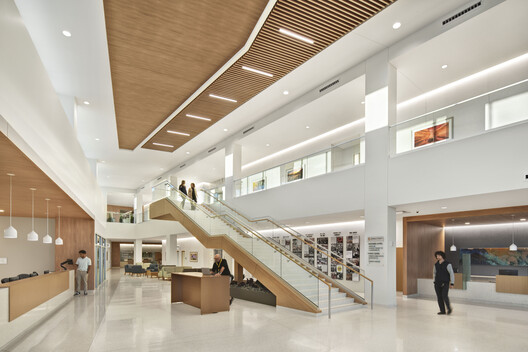
 Culinary Health Fund . Image Courtesy of Longboard
Before we rationally understand a space, we perceive it sensorially. Light, proportion, texture, color, and materiality all influence how the body interprets an environment, shaping whether it feels welcoming, cold, intimate, or impersonal. Visual and chromatic elements can directly affect the perception of depth, atmosphere, and scale within interiors, particularly in contemporary buildings characterized by large spans and continuous surfaces. Among the architectural elements that shape this experience, the ceiling may be one of the most underestimated, despite its profound influence on how space is perceived and inhabited.