Rooms That Appear: Sliding Partitions and Conditional Domestic Space
Sliding doors are often discussed through efficiency. They save the swing radius of a conventional door, allow compact rooms to function more easily, and help small apartments borrow a few extra centimeters of usable space. Yet in many interiors, their more interesting role is not only spatial economy. Sliding partitions transform the reading of the room itself. A bedroom, study, guest room, dining area, or workspace can appear when a panel is closed, disappear when it is opened, and remain ambiguous when the boundary is translucent or partial.
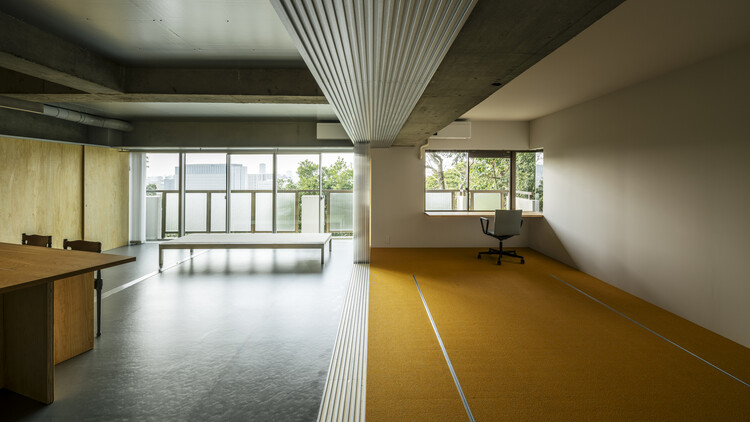
Sliding doors are often discussed through efficiency. They save the swing radius of a conventional door, allow compact rooms to function more easily, and help small apartments borrow a few extra centimeters of usable space. Yet in many interiors, their more interesting role is not only spatial economy. Sliding partitions transform the reading of the room itself. A bedroom, study, guest room, dining area, or workspace can appear when a panel is closed, disappear when it is opened, and remain ambiguous when the boundary is translucent or partial.