Dolly Parton Never Left Her Childhood Home Behind. We Shouldn’t Either
The legendary performer didn't run away from her humble beginnings, instead carrying them with her, not as a burden, but as a north star.
The legendary performer didn't run away from her humble beginnings, instead carrying them with her, not as a burden, but as a north star.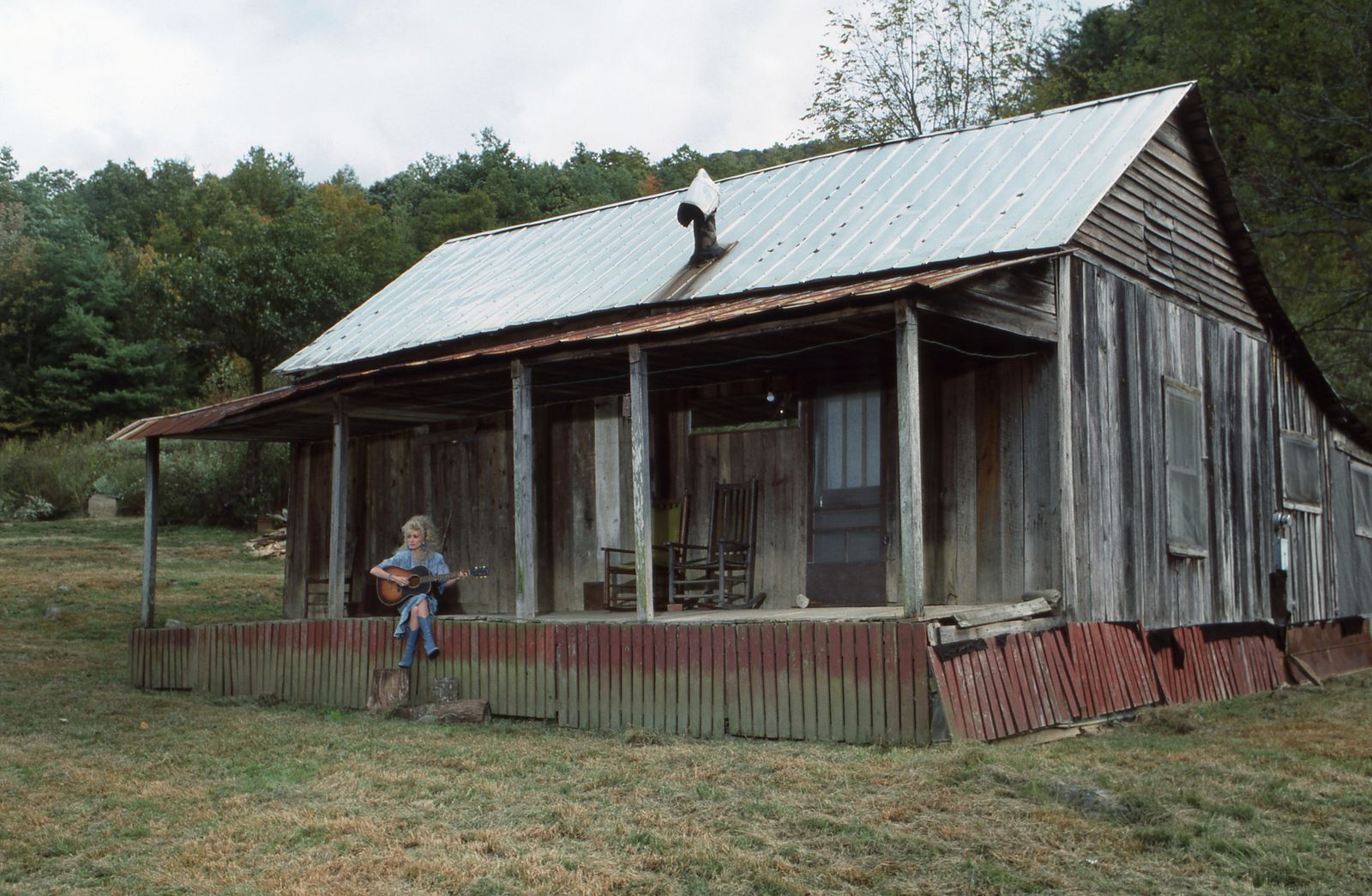
Alongside parents, neighbors, and teachers, the houses where we grow up help raise us. The childhood home sets the bar: Part of the ongoing dialogue around the housing crisis stems from young people today who grew up in middle-class suburban tract homes feeling betrayed by the fact that those same homes (and lives) are not attainable to them. Not unrelatedly, some of us spend our lives running away from our housing roots, searching for something entirely different—maybe better, more lavish, or more urban; we go no-contact with the conditions that raised us in hopes that we can build a life that we define for ourselves. Even in rejecting our pasts, the houses of our youth form us.
This is why, in the wake of her death Tuesday, I can’t stop thinking about Dolly Parton’s childhood home. The famed country music star, actress, and philanthropist was brought up alongside her 11 siblings in a one-bedroom cabin among East Tennessee’s Smoky Mountains. It’s a place that, at this point in time, approaches a mythology of sorts: She grew up without running water or electricity; the daughter of a field laborer and homemaker, her mother, she told Rolling Stone, made everything by hand—clothes, curtains, bedding. Of course that wasn’t the end of her story—when she died, she was worth around $450 million. While some might choose to see it as a rags-to-riches story, the cliché narrative is too reductive. The house that built Dolly Parton isn’t one that she ran away from, or that made her stardom all the more appealing; rather, it was something that she continued to carry with her, not as a burden, but as a north star.
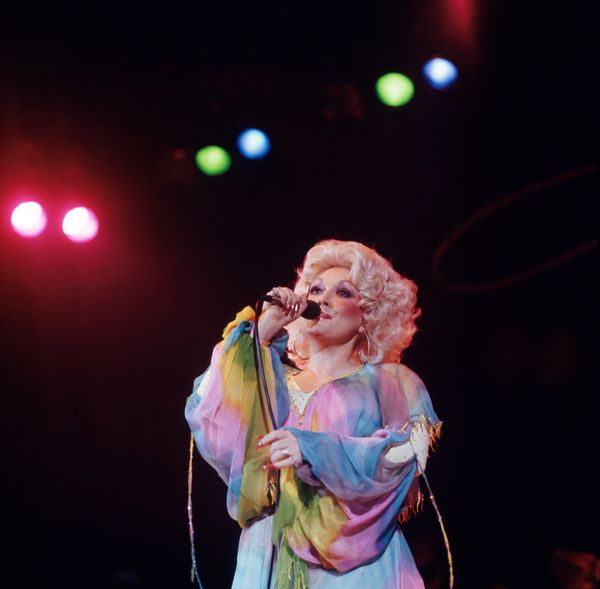
Dolly Parton performing on stage in 1978.
Photo by David Redfern/Redferns via Getty Images
You can find photos of the house online: a simple building with a pitched roof overhang to provide a covered porch. But most of these photos are actually of a replica built at her Tennessee theme park, Dollywood. There, you can take a short stroll through her history, where a wood-burning stove, kitchen table, and simple cooking accoutrements populate the main room; newsprint and floral papered walls are used for insulation. Some of the replica’s furnishings come from Dolly’s real Sevier County childhood home, which is not open to the public but was renovated by Parton after she purchased it in the 1980s.
Dolly, however, was insistent that this upbringing wasn’t purely poverty; she has referenced a quote from her mother, who, per Rolling Stone, told her as a child that, "We are rich in love and kindness and understanding." Parton’s song "Coat of Many Colors" tells the story of her mother making her a coat from colorful rags and getting made fun of at school for wearing it. "But they didn’t understand it / And I tried to make them see / That one is only poor / Only if they choose to be." Her house, her upbringing, returns again and again in her music, a photo of it even gracing the jacket of her 1973 album My Tennessee Mountain Home. In the title track, she sings of the crickets heard from her porch, children playing—it’s not a place or circumstance of strife but of serenity.
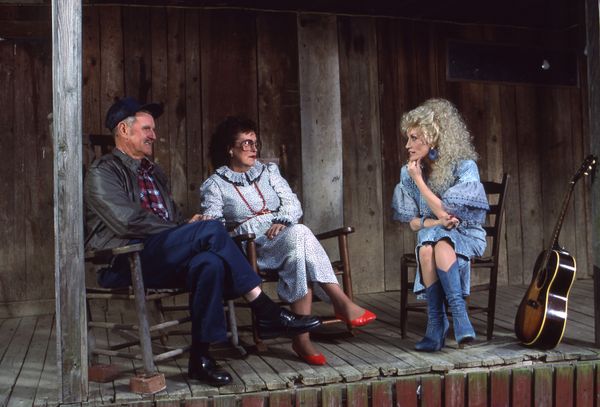
Dolly photographed at Dollywood with her father, Robert, and mother, Avie, in 1987.
Photo by John Seakwood/Disney General Entertainment Content via Getty Images
I think of these songs, her love for her childhood home, in a time when American rhetoric repeats bootstrapping tropes, where so much angst is spent on an ideal of "making it." Our collective obsession with abandoning a past self—and past circumstances—has arguably left many generations unmoored, searching for some hint that we’ve attained success. What if, instead, we attempted to go forward and carry those pieces with us? Rather than running away from it, what if we tried to return? It reminds me of a quote from art critic Dave Hickey in Country Music Magazine, where he wrote about Joplin, Missouri, upon seeing Parton perform there in 1974: "It’s one of those places that, no matter where you’re from, you never enter without feeling that you’re coming back to something." I’m not sure if Dolly ever "made it" so much as she has always been coming back to something, each time with a new story, a new way of seeing and singing her home into being.
Top image of Dolly Parton at Dollywood in 1987 by John Seakwood/Disney General Entertainment Content via Getty Images
Related Reading:
Bobby Berk’s New Show May Be About Decluttering, but It Left Me Wanting More
Could the Listening Bar Boom Help Solve Our Need for More Third Spaces?