Forget Fine Wine or Exotic Cars. They’re Putting Their Money On Niche Portable Structures
Small architectural rarities are a growing asset class for a wealthy set, which is using them for everything from tennis court pavilions to art installations for their winery estates.
Small architectural rarities are a growing asset class for a wealthy set, which is using them for everything from tennis court pavilions to art installations for their winery estates.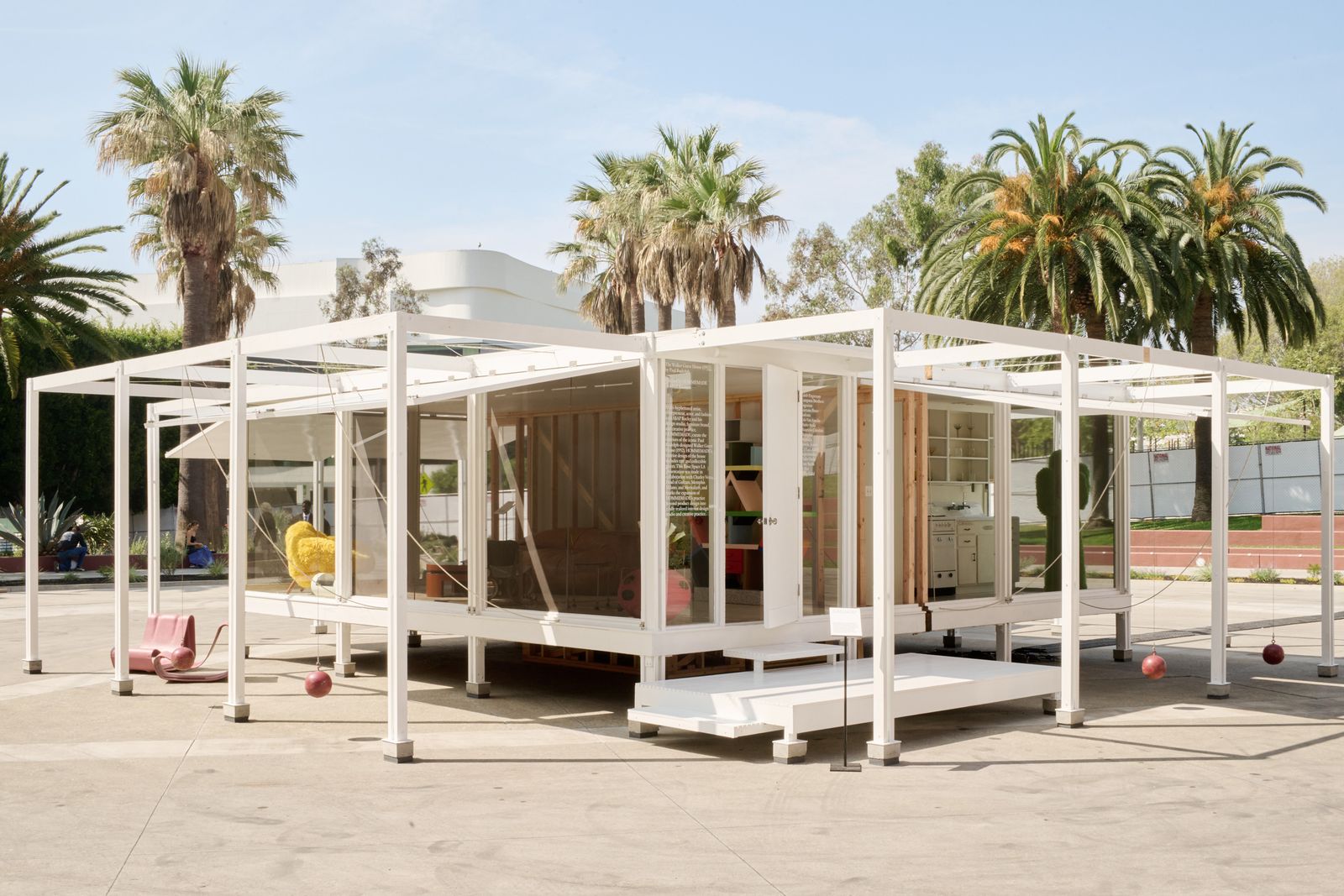
In late March, in the sun-dappled courtyard of Los Angeles’s famous Pacific Design Center, design fans found themselves temporarily transported to the white sand beaches of Sanibel Island in Southwest Florida.
On display amid a wide collection of sculptures and furniture was the Walker Guest House, the white-framed beachfront home designed by architect Paul Rudolph in 1951. The curated fashion and design platform Basic.Space was hosting a real-world shopping experience, including an auction for the important modernist beach house, celebrated for its external frame, movable series of panel walls, and red cannonball counterweights that give it the appearance of a spider scurrying across Gulf Coast shores.
In recent years, the market for rare, small homes and pavilions has boomed, driven by well-heeled collectors who are developing an appreciation for unique architectural baubles. Previous iterations of the Serpentine Pavilion—an annual summer commission for a temporary structure in London’s Kensington Gardens—by starchitects such as Zaha Hadid and Bjarke Ingles have fetched mid-six figures or more, with others having second lives as beachfront restaurants, event spaces, and even a concert venue. Property developer Victor Hwang purchased the 2002 Toyo Ito-designed Serpentine Pavilion, using it as a promotional piece for developments in London and St. Tropez. Irish property developer Patrick McKillen bought and moved a Frank Gehry Serpentine piece to his estate and winery in the south of France.
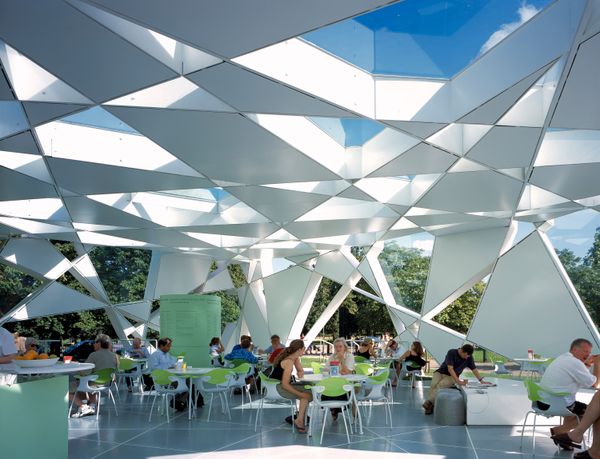
Developer Victor Hwang purchased architect Toyo Ito’s 2002 Serpentine Pavilion, using it to promote properties.
Photo by View Pictures/Universal Images Group via Getty Images
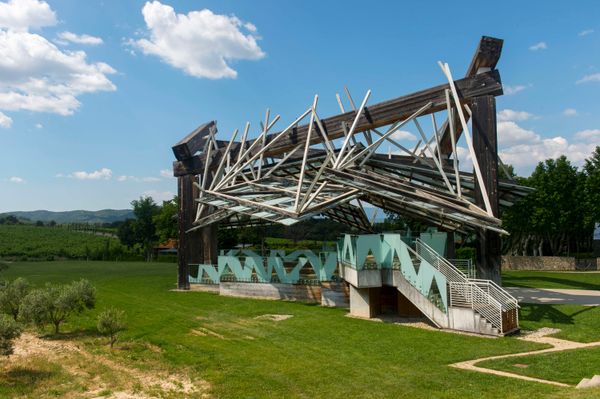
Patrick McKillen, another developer, bought Frank Gehry’s Pavilion de Musique, a Serpentine pavilion, for his winery estate in France.
Photo by Wolfgang Kaehler/LightRocket via Getty Images
The work of French industrial designer Jean Prouvé comes up for auction often, his demountable prefab structures fetching significant sums. A small cadre of collectors, including artist Richard Price, have bought Prouvé designs; fashion designer Azzedine Alaia slept inside a Prouvé gas station assembled inside his apartment. In 2021, a six-by-nine-foot demountable home that had been used as a pool house sold for $441,000 at a London auction, about 15 percent higher than expected, and last May in New York City, the Croismare School, Prouvé’s largest such structure, was up for auction at the European Fine Art Fair; it’s still seeking a buyer.
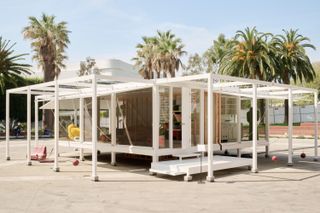
At last year’s Basic.Space event, another Prouvé gas station fetched $1 million at auction. The buyer, who prefers to remain anonymous, told Dwell that they hadn’t sought out a Prouvé piece in particular, but once they saw it on display, they found it intriguing; it currently sits in the yard of their Palm Beach home functioning as a pavilion for the tennis court, stocked with magazines and bottles of fresh-squeezed orange juice. The collector doesn’t make a habit of seeking out prefabs, but when sought after artworks can fetch tens if not hundreds of millions of dollars, a more interactive, functional piece of design—which ended up being relatively easy to move and maintain—seemed pretty fun and somewhat low cost. It also reminded them of Burning Man and the power of temporary, movable structures. "It felt super cool and edgy, and if I wanted to I could put it up or take it down somewhere in a few days or sell it," they say. "From the community standpoint, it’s something I can share a little bit."
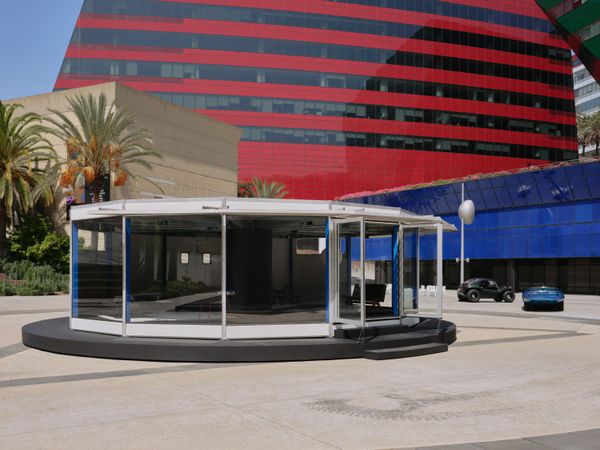
Basic.Space auctioned off one of Jean Prouvé’s prefab gas stations, which an anonymous buyer is now using as a pavilion for their tennis court in Florida.
Photo by Elizabeth Carababas, courtesy Basic.Space
See the full story on Dwell.com: Forget Fine Wine or Exotic Cars. They’re Putting Their Money On Niche Portable Structures