How Real-Time Tools Are Transforming Architectural Practice
Architecture has always depended on systems of representation to make ideas visible before they exist. But where Filippo Brunelleschi's fifteenth-century linear perspective once organized space according to human perception, today's architects face an unprecedented saturation of imagery. AI generates atmospheres in seconds, and projects circulate continuously long before construction begins. But the abundance of images does not necessarily produce greater clarity and as architectural workflows become faster and more fragmented, visuals sometimes circulate detached from the decisions, constraints, and intentions that generated them. The real value of modern visualization is no longer just about rendering a final image—it is about how design and visual communication are understood collectively throughout the entire process.
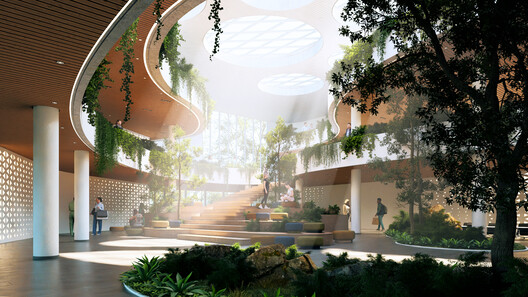
 Courtesy of Lumion
Architecture has always depended on systems of representation to make ideas visible before they exist. But where Filippo Brunelleschi's fifteenth-century linear perspective once organized space according to human perception, today's architects face an unprecedented saturation of imagery. AI generates atmospheres in seconds, and projects circulate continuously long before construction begins. But the abundance of images does not necessarily produce greater clarity and as architectural workflows become faster and more fragmented, visuals sometimes circulate detached from the decisions, constraints, and intentions that generated them. The real value of modern visualization is no longer just about rendering a final image—it is about how design and visual communication are understood collectively throughout the entire process.



.jpg?1578004263#)