
Is Well-Designed Wellness Gear Worth the Hype? I Tried It to Find Out
Self-optimization has taken over our homes. I tested everything from compression boots to water filters to figure out if it really matters whether the stuff that keeps you feeling good is good looking, too.
Self-optimization has taken over our homes. I tested everything from compression boots to water filters to figure out if it really matters whether the stuff that keeps you feeling good is good looking, too.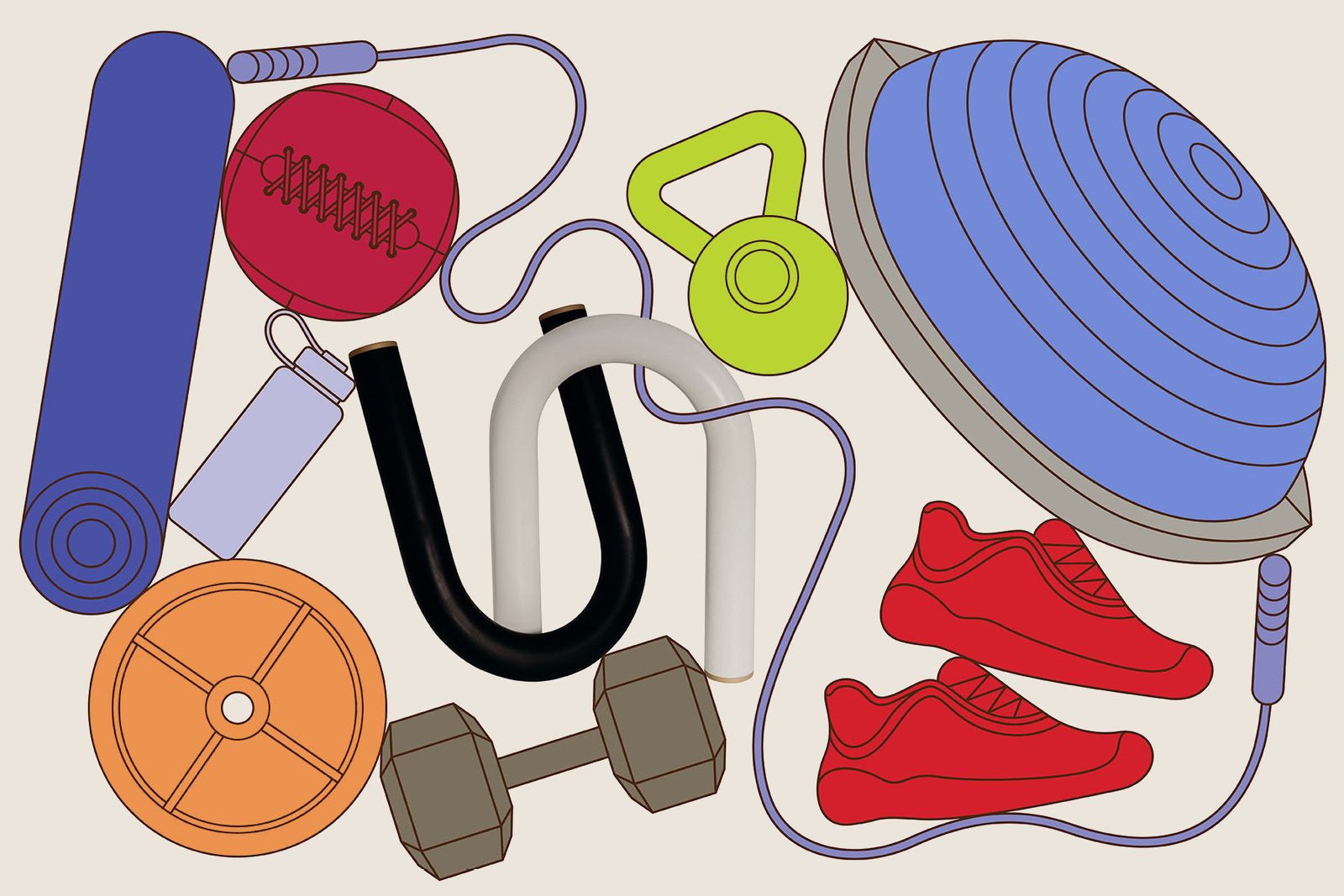
I’m sitting in my gym’s coworking space, listening to the clinking of weights and the thumping of feet on treadmills as I stare at my computer screen’s 20-plus tabs of well-designed wellness equipment. There’s a tab for a minimalist home fragrance diffuser with a collection of scents that aim to improve your mental acuity (Aera’s Clarity bundle), multiple tabs for sensors that report on how your home environment is impacting your sleep (including the sleek Apple-like Ultrahuman Home), a couple for AI-powered toilet add-ons that decode your waste (Dekoda by Kohler Health and Throne One—both simple and white), and more. These products didn’t come out of nowhere: They’re a result of our culture’s increasing obsession with wellness and better looking stuff.
Why settle for black and gray workout equipment when there’s so much more to choose from on the market nowadays? Whether you prefer wood tones or punchy colors, let your home gym reflect your personal taste. Clockwise from top: The Original by Your Reformer, Artis Run by Technogym, Rowing Machine Model #300 S4 by WaterRower via MoMA Design Store, and Kinesis Personal Vision by Technogym.
Images courtesy of the brands, illustrations by Rose Wong
Though I am hesitant about some of the items in this category, they all pique my interest. In my early 20s, I was in a car accident that left me with chronic pain. Since overcoming that, it’s been hard not to obsess over improving my body. It’s seductive to think that there’s some product that is the key to maintaining my health, even if I know there isn’t. And as someone who puts a lot of consideration into the objects that surround me, I understand the appeal of products that align with one’s everyday aesthetic rather than the one-size-fits-all vibe of wellness gear of previous decades. In my tiny apartment, it’s a welcome change that these items are easier on the eyes. If they can be out on a shelf, I can more naturally build new habits with them than if I were to shove them to the back of my closet because I can’t stand the sight of them.
Sitting sedately and staring at a screen is no way for me to judge these products, so I decide to embark on a wellness odyssey and try as many of them as I can. Will I genuinely feel better? Will I lose all my other character traits and become focused on wellness alone? What if I end up liking exercise less than I do now? There is only one way to find out.
One of my first stops is the New York City outpost of Technogym, an Italian fitness company that operates at the intersection of exercise and design. I don’t have room to bring bulky fitness equipment into my Brooklyn apartment, but here I can dream about what my ideal home gym would look like if I had the space and could afford a $14,350 treadmill. Maybe I could have a serene home gym with the company’s recently released Sand Stone collection, a line of equipment all in a minimalist beige tone. Or I could have something more metropolitan and flashy, with the Personal line and its slick mirrored surfaces. I try out the Kinesis Personal Vision, a cable machine that looks like a sleek modern mirror with four arm extensions poking from the top and bottom. It functions just like a regular cable machine but without all the visual bulk—a dial in the center allows you to adjust the resistance, and when it’s not in use, the arms can collapse away. I then move along to the Run treadmill, which can be used to simulate sled training—a type of resistance exercise popularized by CrossFit that involves pushing weight to engage the legs, glutes, and abs—in addition to regular running. Details like the wide, clear display and slat belt set it apart on a functional level, not just an aesthetic one. As simple as it may be, the speed- and incline-adjustment joysticks, which you can flick to go faster, felt like they allowed me to stay in my exercise more than when I need to slightly slow down in order to push the same button several times to get up to my desired pace. Before my workout, I was naive in questioning how much the aesthetic qualities of gym equipment really matter. I find exercise equipment, like anything else in my life, whether it’s a vacuum cleaner or a toothbrush, more satisfying if it is clearly designed with both utility and aesthetics in mind—and I regretted the fact that I’d have to return to the clunkier equipment I was used to.
There are pleasing fitness accoutrements you can enjoy in a small space, too. Clockwise from center: R.A.D UFO sneakers, Stakt Weights, Stakt Mat Pro, Jia Low P Bars by Work in Use, and Nüobell S 560 dumbbells.
Images courtesy of the brands, illustrations by Rose Wong
While at Technogym, I try out some new running shoes—specifically the R.A.D UFOs. They’re the first running shoes from R.A.D, a four-year-old company founded by Ben Massey, a former CrossFit athlete who wanted to create a shoe specifically for functional fitness. Part of my problem with a lot of the big brands is that it feels like their sneakers are designed just as much for lifestyle use as for working out. I appreciate that the UFOs are purpose built—these are made specifically to make your experience of running the best it can be. The rounded sole of the shoe propels me forward as I run, and their bulbous shape looks pretty bizarre in the best way possible—making one of the Technogym trainers curious enough to ask what I’m wearing.
Next, I head to another spot in SoHo, where an Airstream is waiting for me. Inside, the trailer is hollowed out, devoid of its usual built-in furnishings, instead lined with a lounge area at one end and a glowing bed-like platform at the other. This platform is known as the Ammortal Chamber, a recovery and energization tool aimed at "human optimization." Light therapy, sound therapy, and molecular hydrogen therapy are among the many different "modalities" built into the device, which hits several wellness buzzwords with one unusual stone. I realize while in the chamber that there is a ceiling to my ability to commit to wellness, and this chamber is above that ceiling. While it’s a little relaxing, I think it’s a bit too strange—and the science on how effective all of this is a little too foggy for me to imagine spending $169,500 on it. I can’t say I feel energized afterward in the way I was told I would.
The Ammortal Chamber is just one of a slew of big investment pieces that wellness obsessives turn to for recovery. Some say hyperbaric chambers help out the immune system; others swear by cryotherapy chambers for calming sore muscles. Cold plunges are an easier on-ramp for those who are new to the wellness racket, and they tend to be relatively affordable. The Polar Monkeys Cyber Plunge, made from stainless steel, is a good option for anyone looking to lean into the tech bro associations that wellness is taking on. For a calmer aesthetic, the wood-grain Kohler x Remedy Place Ice Bath looks ideal for the wellness-obsessed who aren’t also Cybertruck curious.
A stop at my partner’s apartment a little farther downtown allows me to try out his Nama juicer. The Nama is beloved by the juicing community for its self-feeding hopper, which allows you to add all your ingredients at once rather than piece by piece like a typical juicer. Indeed, with this juicer (and my partner, who’s been using it for years), the process of making cold-pressed juice could not be more approachable or easier to clean up. We simply cut the fruit into manageable pieces, plop them in the top, and the machine strains the pulp out one spout, and the fresh juice comes out the other. The white machine, with its distinct sections, looks orderly and commanding instead of industrial like most of the products it’s in competition with, and the juice tastes better than anything I’ve had store bought. I’m grateful for the extra calories as I continue through my day.
Finally, I head home, where await many boxes of new gear (which were provided by brands gratis for editorial consideration, though only the products that felt exceptional were chosen for inclusion here). As I unpack, I take note of what fits in my space visually and what stands out. Before starting my workout, I try Aarke’s filtered water system, which reduces heavy metals and chlorine from tap water. The stainless steel and glass pitcher is less of an eyesore than a typical plastic Brita jug—glass always feels classier—and this sleek design makes hydrating a more enjoyable ritual.

Well-designed products might make it easier to build habits around hydration and clean eating. At the very worst, your kitchen will simply look better than it did before your health kick. Clockwise from top: Modern Sprout Smart Landscape Growframe from West Elm, Lifestraw Home 7-Cup Glass Pitcher, Aarke’s Purifier Alkaline Kit, Stakt Shaker, and Beast Mini 600 Plus.
Images courtesy of the brands, illustrations by Rose Wong
See the full story on Dwell.com: Is Well-Designed Wellness Gear Worth the Hype? I Tried It to Find Out
Related stories: