Island Logic: How Terrain Shapes Coastal Architecture
Coastal landscapes often determine far more than views. Steep slopes, fragmented rock formations, dense vegetation, hidden coves, and limited accessibility can shape how privacy, movement, and occupation unfold before architecture enters the site. Their proximity to water and climate make coastal territories highly desirable for habitation, yet their ecological sensitivity and limited geography often place pressure on how development takes shape. Unlike cities, where density can support walkability, infrastructure, and collective urban life, coastal territories operate through more fragile relationships between land, vegetation, and water.
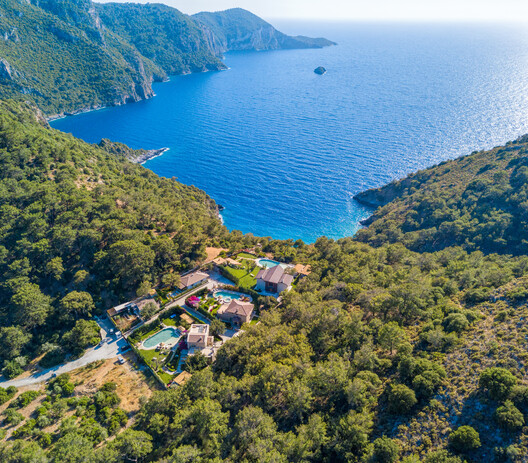
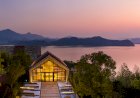
 Gokce Gemile Private Bay, Turkey. Image Courtesy of Gokce Gemile Private Bay
Coastal landscapes often determine far more than views. Steep slopes, fragmented rock formations, dense vegetation, hidden coves, and limited accessibility can shape how privacy, movement, and occupation unfold before architecture enters the site. Their proximity to water and climate make coastal territories highly desirable for habitation, yet their ecological sensitivity and limited geography often place pressure on how development takes shape. Unlike cities, where density can support walkability, infrastructure, and collective urban life, coastal territories operate through more fragile relationships between land, vegetation, and water.
Along many coastlines, development tends to prioritize visibility and proximity to the sea, organizing land through concentrated occupation and expanded circulation networks. Yet certain sites can guide another approach in which geography itself becomes the primary organizing force. How can architecture occupy a landscape without dissolving the qualities that make the site distinct? Located on a secluded peninsula along the Mediterranean coast of Turkey, Gokce Gemile Private Bay explores this question through a low-density architectural approach shaped by geography, controlled access, and spatial distance.