MIAA - Iberian Museum of Archaeology and Art / Carrilho da Graça Arquitectos
The city of Abrantes is, materially and historically, a landmark within a broader territory—an expression of the geostrategic opportunity found on a promontory at the geometric center of a region defined by geopolitical conventions, while simultaneously marking the transition between two landscape units of distinct morphologies. Standing watch over the landscapes on which it rose, Abrantes developed as both an eye and a beacon, a fortified outpost and an obligatory crossing point, in times of peace or war. Atop a telluric, foundational topos, human occupation established its opportunity to dwell, creating its locus, both systemically and inextricably linked.
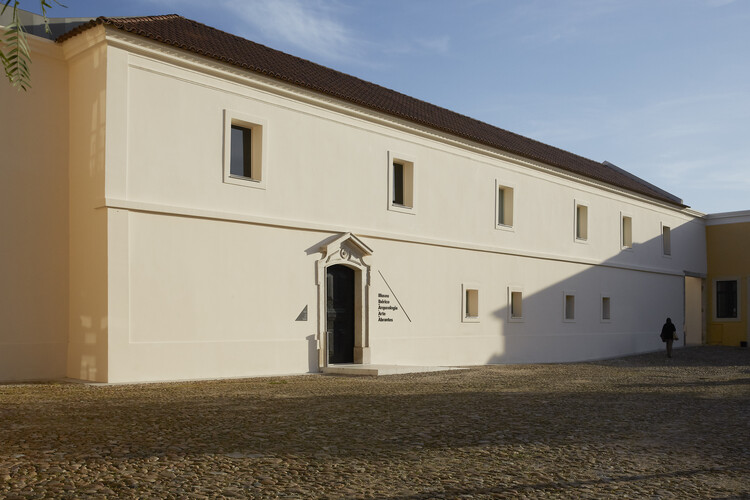
The city of Abrantes is, materially and historically, a landmark within a broader territory—an expression of the geostrategic opportunity found on a promontory at the geometric center of a region defined by geopolitical conventions, while simultaneously marking the transition between two landscape units of distinct morphologies. Standing watch over the landscapes on which it rose, Abrantes developed as both an eye and a beacon, a fortified outpost and an obligatory crossing point, in times of peace or war. Atop a telluric, foundational topos, human occupation established its opportunity to dwell, creating its locus, both systemically and inextricably linked.