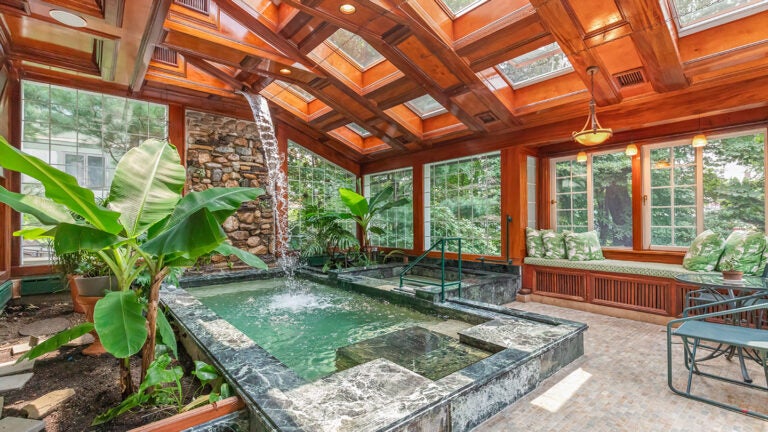
Rethinking Privacy in the Age of Glass Houses
Cardinal Glass Industries is betting big on a new type of on-demand privacy solution that builds control directly into the glass.
Cardinal Glass Industries is betting big on a new type of on-demand privacy solution that builds control directly into the glass.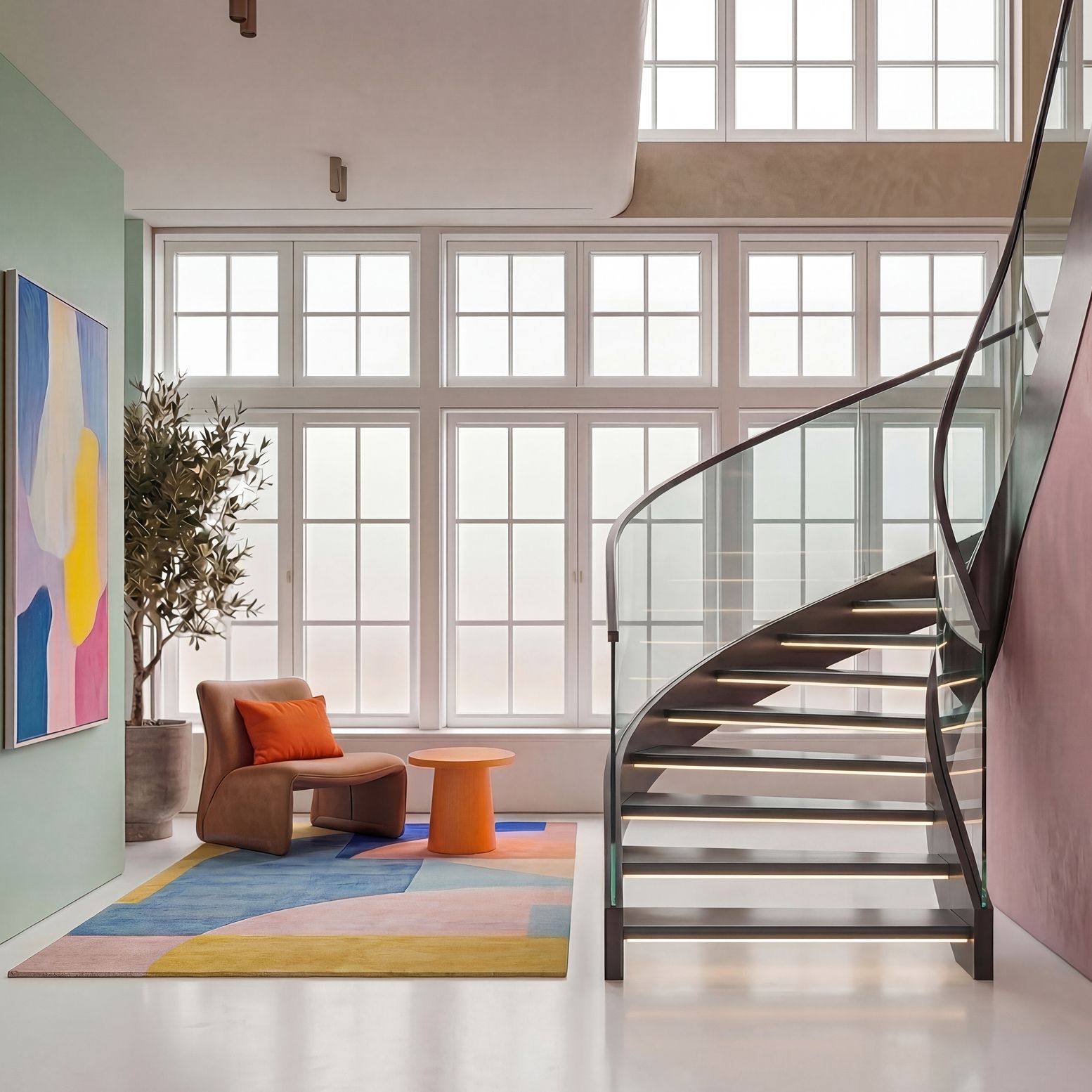
As homes have become brighter and increasingly connected to their surroundings, privacy has posed a more complex design challenge. Expansive windows, glass entryways, and indoor/outdoor living spaces bring in natural light and create a sense of openness, but they also introduce moments of exposure… particularly at night or in more densely populated areas.
Traditionally, that balance has been managed with blinds, curtains, or shades. In contemporary homes, that often makes them at odds with the very architecture they’re meant to complement.
CLiC®, a smart privacy glass developed by Cardinal Glass Industries, approaches that balance differently. The glass shifts from clear to private in milliseconds, while still allowing natural light to pass through. This system integrates privacy directly into the window or door itself, rather than layering it on afterward.
"So many privacy solutions ask you to choose," says Peter Whaley, technical sales and marketing manager at Cardinal Glass Industries. "Do you want daylight, or do you want privacy? Do you want the view, or do you want to feel comfortable in your own home?"
That tension became the starting point for CLiC. While privacy glass has existed for years, Whaley explains that many earlier systems weren’t designed with residential use in mind. "Aesthetically, it just wasn’t where it needed to be for the home," he says.

CLiC’s smart glass integrates directly into large-format windows and entryways, preserving architectural clarity while allowing privacy to be activated on demand.
Photo: CLiC
Instead of refining what already existed, Cardinal approached the challenge from the ground up, drawing on decades of experience across glass manufacturing, coatings, and lamination to create a system that aligns with both performance expectations and modern living.
Here, Whaley shares how CLiC was developed, what sets it apart, and how it’s influencing the way privacy is considered in residential spaces.
What was the original vision behind CLiC, and what did you want to fundamentally change about how privacy functions in the home?
The initial idea came from a familiar place: customer demand.
"We looked at what was already out there and said, ‘We can do better,’" Whaley says. "There wasn’t a lot of room to innovate in blinds-between-glass, and when we looked at other switchable privacy products, we felt they weren’t going to meet a homeowner’s expectations over the long run."
The goal shifted toward something more foundational: rethinking privacy as part of the glass itself. As homes have evolved to feature larger windows and more open layouts, traditional solutions have struggled to keep up. CLiC was designed to support that evolution, allowing homeowners to maintain the connection to the landscape while still having control over when and how their space is seen.
What major problem did you see in current home privacy devices that CLiC wanted to solve?
For Whaley, the issue was less about privacy itself, and more about the trade-offs required to achieve it. "With bigger and bigger expanses of glass, shades and drapes start becoming more of a compromise," he says. "You’re recessing them into soffits, coordinating across trades, trying to get them out of the way visually… and they still block daylight."
Even motorized systems, while more streamlined, can introduce delays and mechanical elements that interrupt the experience. CLiC was designed to remove those layers entirely.
In privacy mode, the glass diffuses incoming light rather than blocking it, allowing interiors to remain bright. "You’re not choosing between being on display and having daylight," Whaley says. "You can have the best of both worlds."
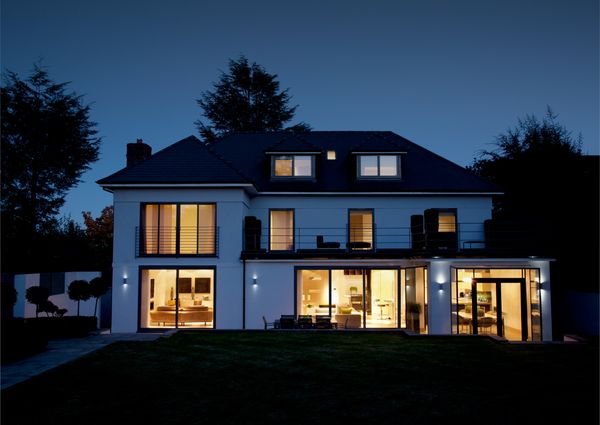
In clear mode, CLiC allows homeowners to be at one with their surroundings.
Photo: CLiC
CLiC feels as much like a design innovation as it does a technical one. How did you approach balancing performance with aesthetics from the very beginning?
Balancing performance with aesthetics was a core principle from the start. Cardinal’s development process centers on reliability, durability, and visual quality, and CLiC was designed within those same parameters.
"It had to meet the homeowner's aesthetics," Whaley says. "When they’re looking out their window, it can’t get in the way of the view outside. It can’t be a distraction."
This was particularly important given the perception of earlier privacy glass systems, which often appeared hazy or slightly opaque especially when viewed from an angle. "A lot of people have seen something similar, but they haven’t seen CLiC yet," adds Whaley.
Ease of use was also prioritized early in development. Because CLiC represents an entry point into smart window technology, it needed to be intuitive across a wide range of users. "It has to work with whatever home automation system people have," Whaley says. "But it also has to be simple enough that if someone just wants a switch on the wall, that’s enough."
How did Cardinal Glass’s legacy and expertise shape the development of CLiC?
CLiC was not developed as a standalone experiment. "Cardinal started in 1962," Whaley says. "We’ve watched design trends evolve toward bigger glass, more light, and more connection to the outdoors."
That long view helped inform both the problem and the solution. As homes became more open, privacy solutions struggled to keep up both aesthetically and structurally. CLiC was developed in response to that shift, but also because Cardinal had the technical depth to approach it differently.
"We’re vertically integrated, so we go all the way from raw glass to coatings to lamination and finally the insulating units in the windows themselves," Whaley explains. "We really leaned on every one of our divisions for this." That level of control allowed the team to refine the product at every stage. It also contributed to a longer but worthwhile development cycle.
"If we’re putting something into homes, it has to last," Whaley says. "That reliability piece isn’t optional."
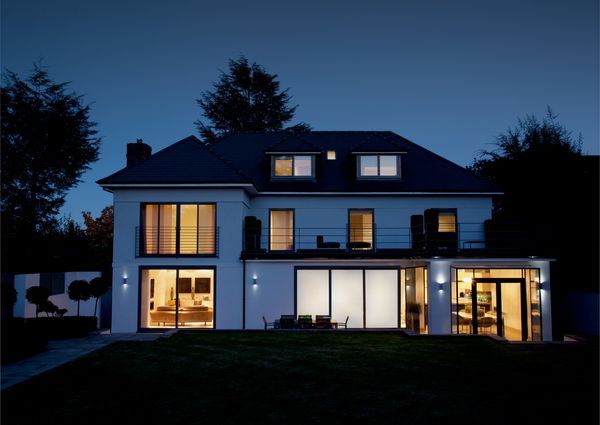
CLiC’s technology maintains clarity and daylight in privacy mode, while still obscuring visibility from the exterior.
Photo: CLiC
See the full story on Dwell.com: Rethinking Privacy in the Age of Glass Houses
Related stories: