This Blackened Cedar Home Was Designed to Vanish Into the Trees—Almost
The all-electric home by OPAL Architecture pairs a striking charred timber exterior with bright interiors to create a forest retreat for a family of four on the coast of Maine.
The all-electric home by OPAL Architecture pairs a striking charred timber exterior with bright interiors to create a forest retreat for a family of four on the coast of Maine.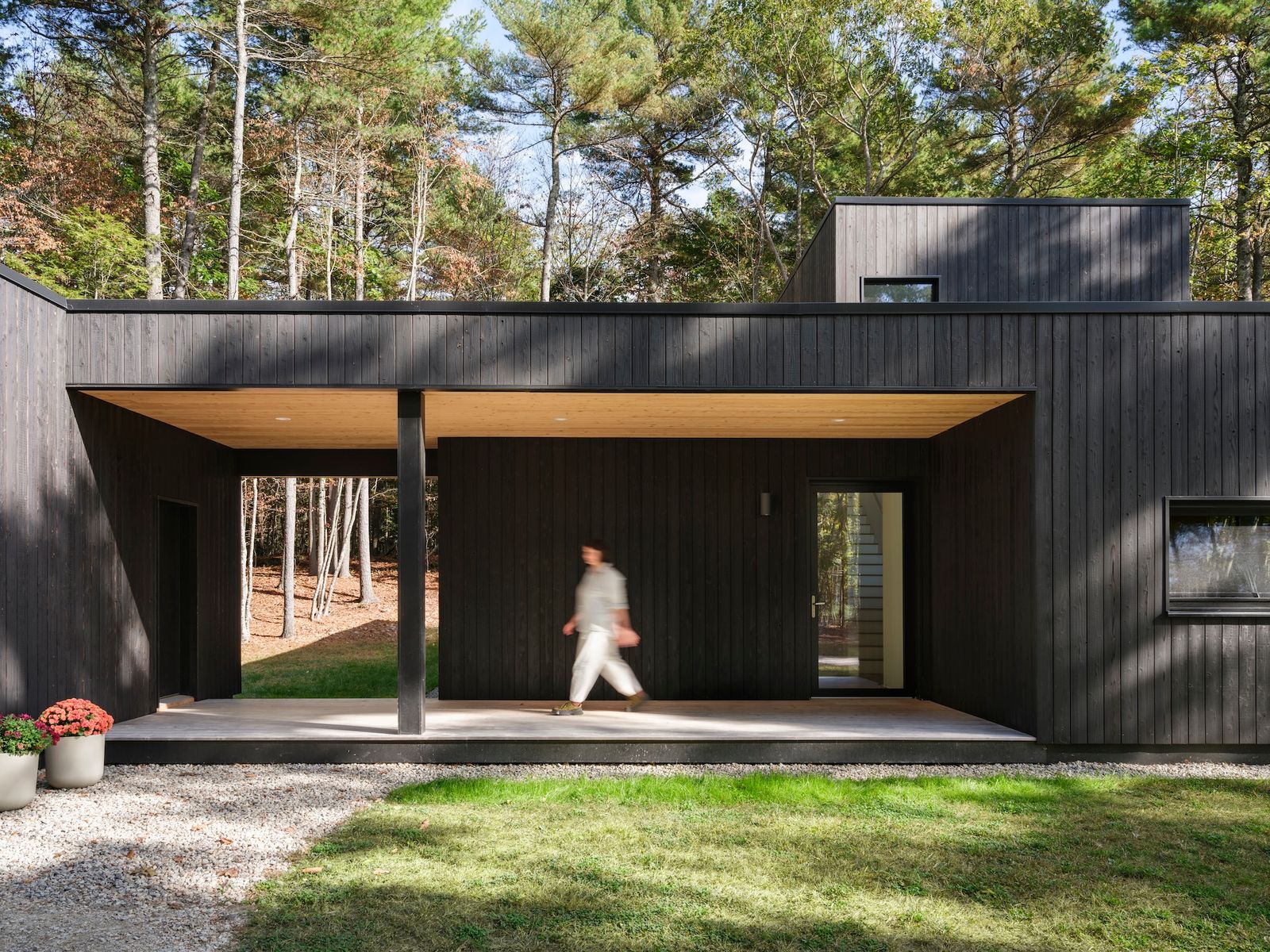
Half a mile from the Atlantic, down a narrow road bordered by old stone walls, a dark stacked form emerges from the birch, oak, and pine of Maine’s York County. This is the Elemental House, a home for Joe and Katie Edwards and their two young children that was designed by OPAL Architecture to feel as if it had always been part of the landscape.
"We wanted the home to have a dark tone on the exterior that would make it disappear to some extent in the shadows of the woods," explains OPAL design partner Riley Pratt. "The dark exterior and moments of transparency through the home create a lantern-like effect that we find quite beautiful."
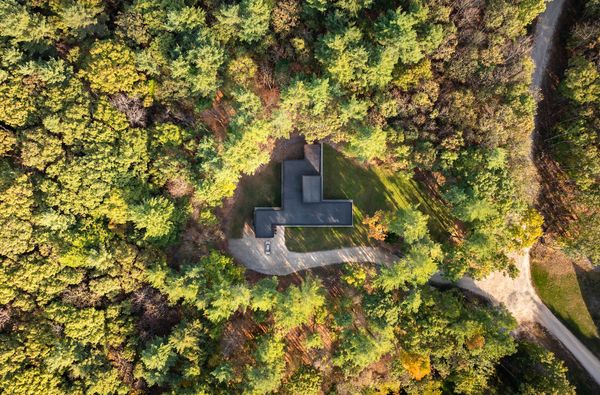
The L-shaped plan and detached garage sit within a clearing on the family’s two-acre wooded lot on Raynes Neck, a peninsula located about half a mile from the ocean. The cedar exterior of the home, Gendai Linseed Black yakisugi by Nakamoto Forestry, all but disappears into the surrounding forest.
Photo: Trent Bell
Coming from nearly a decade in small city apartments—including a six-year stint in a basement unit—the couple’s brief was clear. "Our first priority was a house that made us feel connected to the outside world," says Joe. Beyond that, they desired space to grow as a family, the ability to work from home, and the efficiency of a house informed by Passive House principles to minimize ongoing costs.
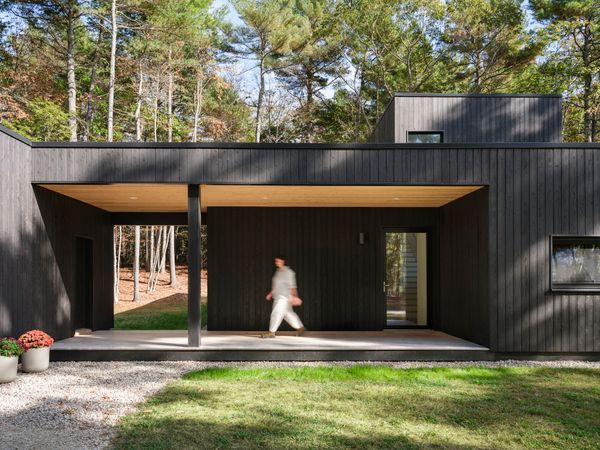
A generous covered entry porch provides a sheltered connection between the main house and a small garage and workshop. The warm-toned wood soffit creates a striking contrast against the charred Japanese cedar cladding, while the open breezeway beyond frames a view through to the woods.
Photo: Trent Bell
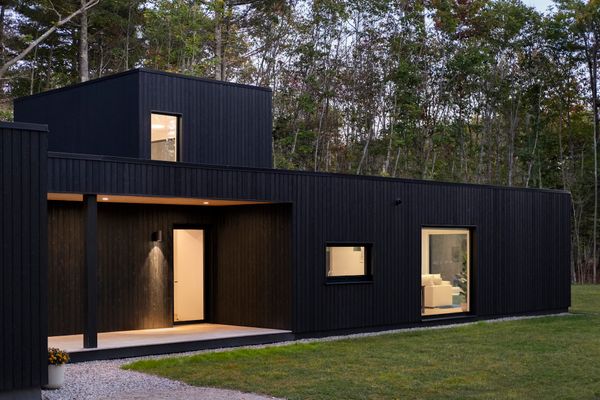
The composition of flat-roofed volumes—clad entirely in Nakamoto Forestry yakisugi sourced from PEFC-certified, air-dried Japanese cedar—reads as a single dark form against the forested landscape, punctuated by carefully placed openings that offer glimpses of the bright interior. At twilight, the entry facade (as seen here) becomes illuminated by warm light spilling from the covered porch and windows onto the gravel path.
Photo: Trent Bell
See the full story on Dwell.com: This Blackened Cedar Home Was Designed to Vanish Into the Trees—Almost
Related stories: