Welcome to the Age of the Architectural Artist Residency
How three nature-facing retreats—a set of prefabs in a Uruguayan forest, a DIY cabin renovation in northern Norway, and a grassroots studio on an island near Seattle—give guests permission to push past their own limits.
How three nature-facing retreats—a set of prefabs in a Uruguayan forest, a DIY cabin renovation in northern Norway, and a grassroots studio on an island near Seattle—give guests permission to push past their own limits.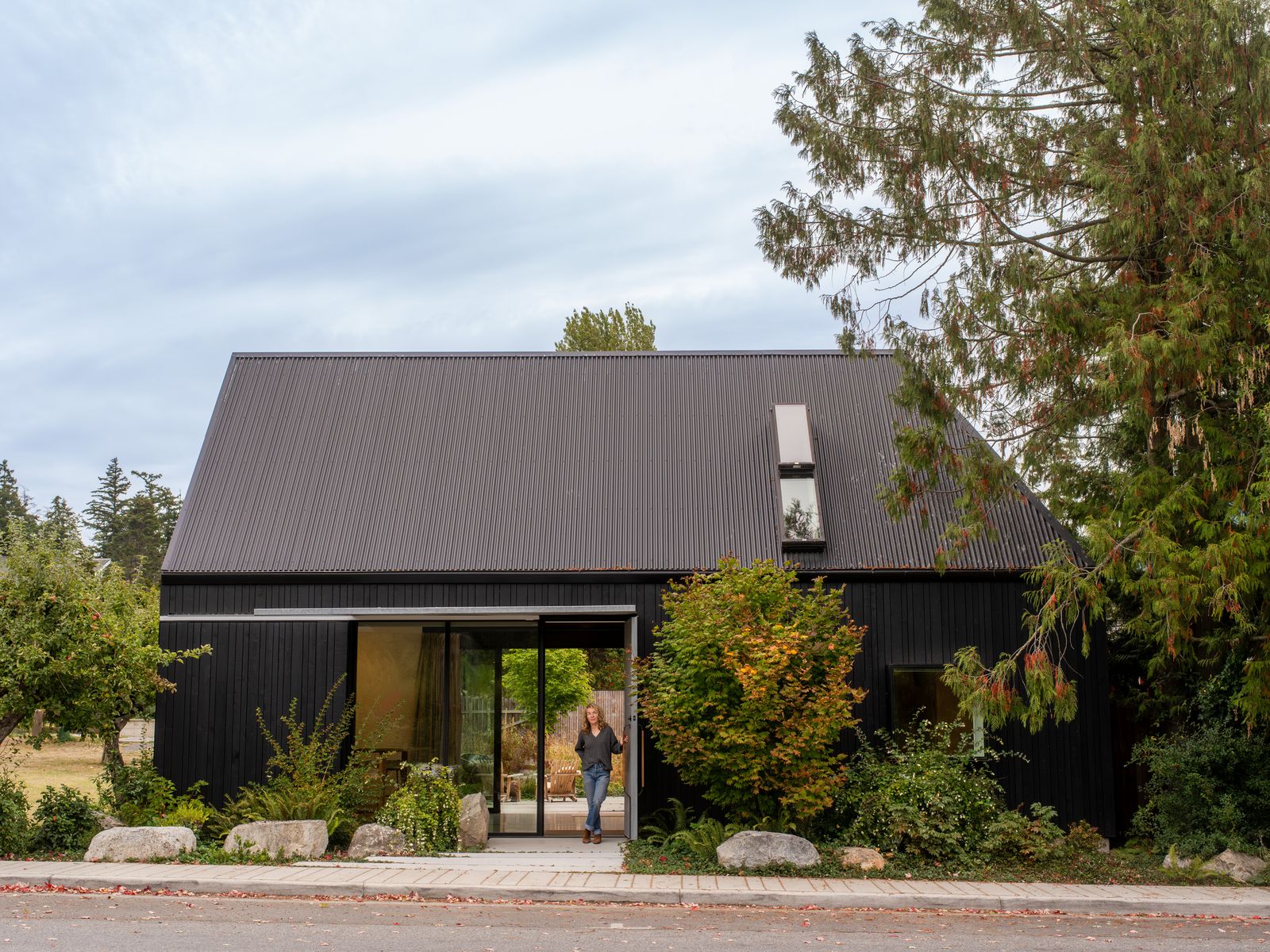
The buzz of big city life can be a source of creative inspiration, but it can also take its toll. It’s easy for artists to pack a calendar with openings, performances, and talks that take time and space away from the actual work—work that, it’s worth noting, can take the form of simply walking around and thinking.
That’s when many artists seek refuge at a residency. More often than not, that residency is out there, in nature, in varying degrees of isolation and community. That’s because thoughts move differently when you’re closer to wildness. A long stretch of landscape lets an idea unfurl. Placed in a new context, free from normal obligations, artists are allowed to confront their work with more clarity.
These three spaces offer just that but come with design touches that enhance the effect of their settings. To create Iolair, an art patron from Seattle started a program on Orcas Island from a glassy, gable structure in town. At House of Hulda, the cofounder of a cultural club in London rolled up her sleeves to renovate a retreat on the far-flung Norwegian island she grew up on. And for Portal Bosque, an Argentine entrepreneur traded New York City for an arts center on the Uruguayan coast that places prefab cabins in the woods. In each case, the residency offers artists what the owners were looking for, too—a break from cacophony and a closer connection to nature, creativity, and themselves.
Iolair
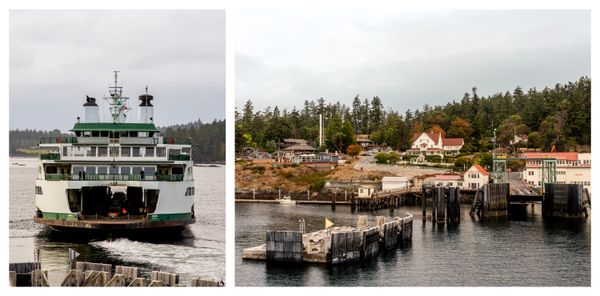
On Orcas Island outside of Seattle, Washington, arts patron Linda Lewis hired area architecture firm GO'C to design an artist residency in the village of Eastsound, which she visited often as a kid.
Photos by Kyle Johnson
Linda Lewis, who calls herself a "super private" person, thinks it’s hilarious that she built something that stands out in a small town. She’d been visiting Eastsound village on Washington’s Orcas Island since childhood, and it was a place that kept calling her back as she dreamed of opening an artist residency. Linda had worked in galleries and nonprofits long enough to know how meaningful it would be to support artists this way—and where better to do it than on familiar turf, surrounded by the island’s rugged beauty? "I see the natural world as a source of inspiration, respite, and solace," says Linda. So when she found a vacant lot in the heart of town, she knew she’d found a home for Iolair.
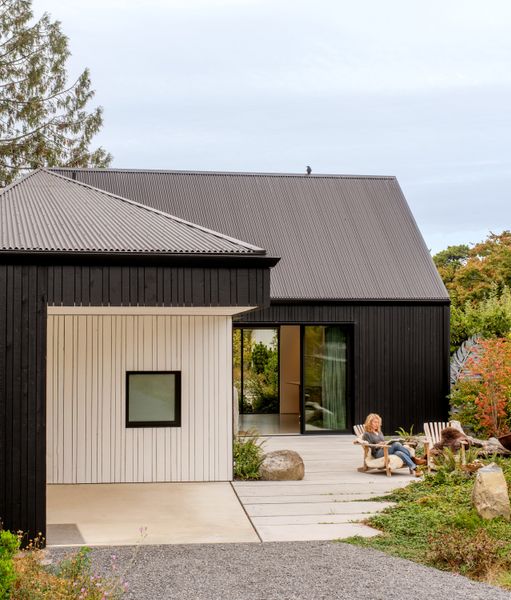
The simple, L-shaped house has one set of glass sliders that opens onto a rear patio and garden and another that opens onto the street to connect visiting artists with the neighborhood. The windows and sliding doors are from Fleetwood.
Photo: Kyle Johnson
The invite-only residency, which opened in 2025, now hosts artists in a gable-roofed, live-work structure that, at least in scale, rhymes with the older buildings on the street. "My intention is to be as good a neighbor as possible," says Linda. Its black-stained cedar exterior, however, presents a crisp contrast. Designed by GO'C Studio, the L-shaped building hugs gardens. Inside, white walls and a cathedral ceiling form the creative studio and gallery space, while an office loft, kitchen, bedroom, and one and a half baths flex for both solo stays and community events.
Large windows flank the studio, so "the light is extraordinary," says Linda. "It creates these insane shapes." The glass front of the building also allows passers-by to peer in to see artists at work. According to Linda, it seems to be creating more excitement around contemporary art in Eastsound, which has a strong craft tradition: "I would not have imagined that the building itself would be such a powerful character."
Lewis went with a gable-roofed structure meant to match the scale of surrounding buildings but stand apart in striking black cladding. A porthole-style window and vaulted ceilings, along with the glass sliders, amplify light in the gallery space.
Photos by Kyle Johnson
See the full story on Dwell.com: Welcome to the Age of the Architectural Artist Residency
Related stories: