What the Backlash to Build-to-Rent Housing Says About America’s Single-Family Home Obsession
Aiming to limit large investors buying up single-family homes, a new bill could slow down the construction of BTR developments. The real problem is more difficult to solve.
Aiming to limit large investors buying up single-family homes, a new bill could slow down the construction of BTR developments. The real problem is more difficult to solve.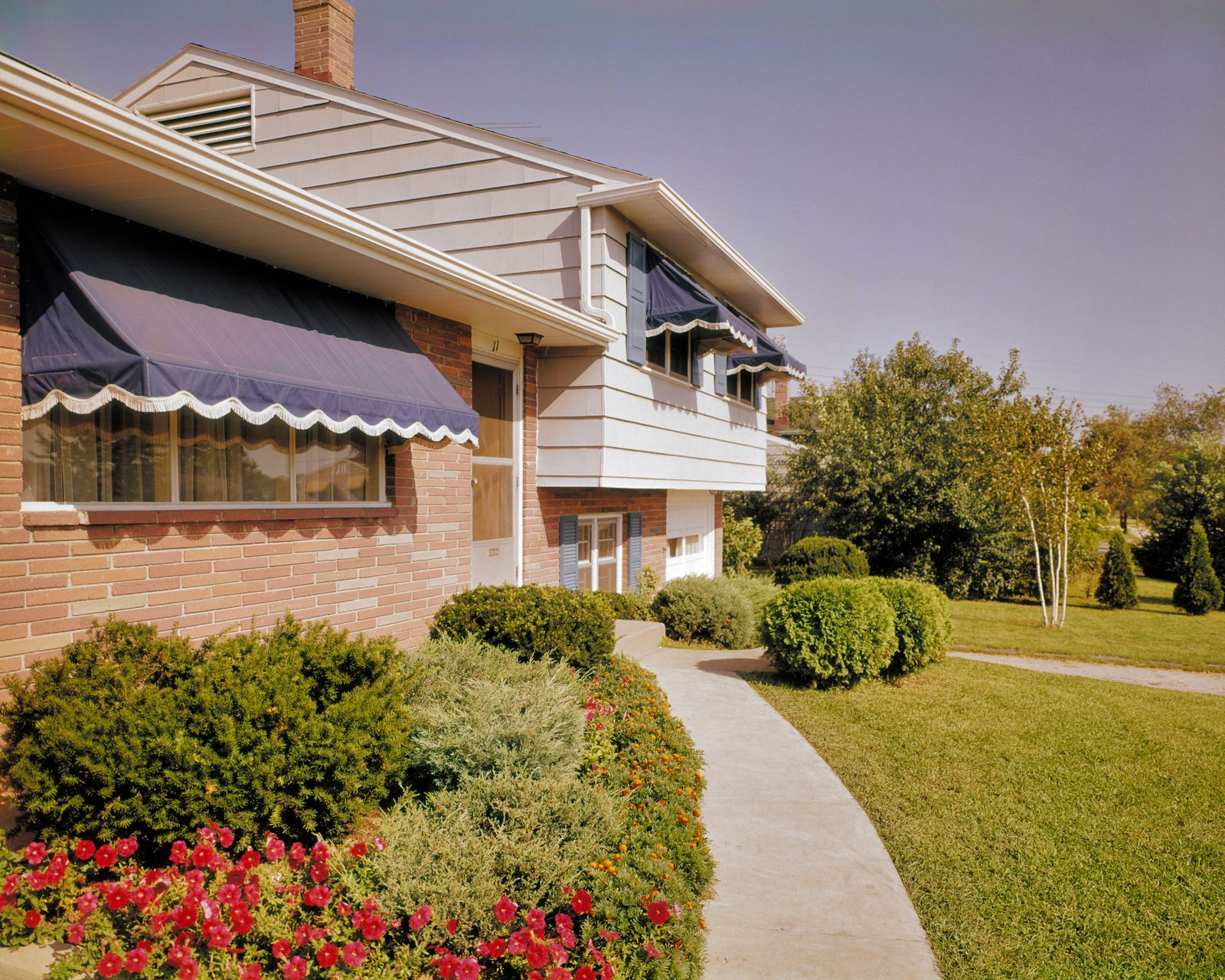
With home prices and interest rates stuck in a post-pandemic limbo, the American dream of owning a single-family house has, for many, evaporated. Choosing to rent forever has become a respectable option—the New York Times has some handy advice, and Reddit users converse about the pros and cons of remaining a forever-tenant. Developers have taken notice: As millennials and Gen Z age into their prime homeownership years and are unable to take part in the rite of passage that is home buying, homebuilders are creating more options for those who dare to dream of a life beyond the apartment complex, but who lack the funds to upgrade. Build-to-rent (BTR) developments, made up of single-family homes designed and built for a community of renters, have been on the rise since the early aughts. BTR homes, at their most basic, provide a way to "have it all," sans mortgage.
These developments made headlines recently when the U.S. Senate passed its ROAD to Housing Act in March, which, according to the New York Times, would effectively make BTR developments more difficult to build and rent, and is a grander maneuver to get corporate bigwigs out of the single-family landlord business. Per the Times, the bipartisan bill "sets new restrictions on investors who own 350 or more single-family rental homes, requiring them to sell newly built units to individual owners after seven years, or face stiff fines." The bill’s passing has prompted a slew of criticisms; a Washington Post op-ed penned by conservative think-tank The Manhattan Institute states that the legislation would result in fewer homes being built overall. Investors are keen to jump into the BTR pool: Though it has slower returns than other institutional real estate asset types, the op-ed says, the demand for rental single-family homes is stable and thus attractive to investors. It calls into question why these developments have become so popular with the American public in the first place, raising the issue of who has the right to live in a stand-alone house with a yard and a garage. Developers, it seems, aren’t just meeting changes in renter preferences for single-family homes; they are capitalizing on the void left by a vaporizing American dream.
Build-to-rent is one of the fastest-growing segments of our construction market today, though its practice is still relatively young. Beginning in the aughts with the Great Recession’s predatory home lending industry and subsequent housing collapse, institutional investors acquired nearly 240,000 foreclosed homes, and turned them into rentals. Much of this large portfolio consists of scattered houses in existing neighborhoods where a renter might live next to a homeowner. Over the past decade, though, prospective investors have turned to building entire single-family neighborhoods to be occupied solely by renters. Per the National Association of Home Builders, these developments accounted for nearly nine percent of all single-family homes built in the U.S. as of 2024; new homes that are sold for the purpose of becoming rentals add another three to five percent of the new housing stock.
According to Berkadia, a commercial real estate group, rentable single-family communities have made the biggest impact in the Sunbelt, which currently hosts all of the top 10 BTR markets. These homes provide the trappings of single-family living (a yard and garage) with a variety of home types, including townhomes, larger stand-alone homes, and cottages (sometimes called "horizontal apartments"). Berkadia reports that the growth of BTR communities is a "natural progression of the single-family rental market" that emerged from the Great Recession. Its growth, per a market overview from CBRE, is in response to the "evolving preferences" of renters: millennials who are ready to start a family but are priced out of the market, or baby boomers who are downsizing and desire flexibility. But chalking it up to new renter preferences is a misnomer; builders capitalizing on a much longer-held symbol for American prosperity, making it accessible to those for whom the economy has deemed prejudiciously "unworthy."
In his book Architecture and Suburbia, historian John Archer writes of the correlation between architecture and national ideologies of selfhood. The 19th-century practice of owning a single-family home on a piece of "unproductive" land (which is to say, land that’s not meant for farming) was associated with pastoral leisure and retirement. After a lifetime of work, one would use their hard-earned, bootstrapped savings to purchase a larger stand-alone house. But that association influenced later beliefs about what the working family could buy, and what it might signify about their identity and morality. The actualized "self-made man" in modern America would own a home—not as an end-of-life marker, but as an ongoing measure of class achievement.
This wasn’t a natural occurrence, however: Journalist Alexandra Lange has spent years following the evolution of the stand-alone dwelling, and cites former president Woodrow Wilson’s Own Your Own Home campaign as one of the earliest forms of propaganda that ignited today’s obsession with single-family homeownership. "His administration," she says, "developed specific policies in conjunction with the housing industry, to kind of encourage families to save and spend their money on single-family homes." Wilson’s Own Your Own Home campaign was a direct response to communism’s then-growing influence. It also laid the groundwork for racial covenants, writes Ángela Bautista San José in the Urban Resilience Hub.
The movement for single-family living was supercharged after World War II with the GI Bill that added millions of new single-family homes to the market. By the 1970s, the link between homeownership, individualism, and prosperity was in full swing; at its core was American expansion. "The vision of expansion was through the suburbs—a home for everybody, physically stretching to the tree line—and then a lifetime spent tinkering, renovating, expanding that home, and then that you could replicate that for the next generation," Lange says. She considers this era one of "mass psychosis" characterized by forgetting the events that have historically ended American expansionism—notably the Great Depression and wartime austerity. "Expansion was happening in the way that the propaganda promised, and so it really became embedded in people’s minds," she adds.
The BTR market is, in some ways, a new type of mass psychosis characterized not by forgetting our economic past but remembering a time of plenty, when everyone could and should own their own house. But in that psychosis, we haven’t moved the needle on solutions. In a time when single-family homebuilding is seeing a decade-long slowdown, a realistic solution might be to build using multifamily-ownership models like cooperative housing or duplexes that provide passive income to homeowners. Home design, Lange says, plays a role in often-overlooked opportunities.
"The build-to-rent model is always going to go back to what builders’ ideas of the mean is: An average vision in terms of layout, furniture, fixtures that they think the most people will want to rent," she says. " It’s like an average that suits very few people exactly, but suits the most people." It doesn’t make room for cooperative buying, multigenerational living, or mortgage support through ADUs or other auxiliary units. Instead, developers have doubled-down on the fantasy of plenty—one home for everyone.
In these BTR communities, renters get to cosplay 20th-century homeownership, and with it receive the visage of a tight-knit, suburban community. It’s most apparent in BTR amenities: Backyards, durable finishes, garages. Fitness centers, pools, and community spaces are often included, too, not unlike in high-end new suburban neighborhoods. In the Phoenix area, First Street at Happy Valley has 212 single-family rentals and markets itself not just as a rental neighborhood but as a "private and exclusive" one: a clubhouse, pool, fitness center, and a dog park anchor residents. In a paper published in the International Journal of Latest Research in Humanities and Social Science, University of Miami researcher Chukwudum Muoneke writes that such amenities come at a premium, costing renters more than what they would pay for traditional rentals and driving up rental prices in surrounding areas.
For investors, those costs are a boon—Berkadia’s market summary shows that BTR management costs are consistently lower and monthly rents rose faster than traditional apartment complexes. Muoneke also notes the community created by amenities can be more difficult to come by. "Frequent turnover disrupts social connections and hampers the development of strong community ties," he writes. "This can bring about fragmented social networks, making it harder for residents to establish any meaningful relationship thereby leading to isolation and a lack of support systems." It’s telling that across BTR investor summaries, proponents cite "community feel" as an aesthetic bonus, rather than part of a lived experience.
Still, these BTR developments add critical new housing units without requiring developers to go through the daunting task of rezoning for dense multifamily developments. For renters—especially those with higher incomes who still find themselves priced out of the market—the bungalow will remain a north star. Even if the single-family home’s pastoral idealism is mimicked by a landlord who mows the lawn and its "do what one will" individualism is marred by restrictions on how you might renovate your home to fit a changing family, the BTR model is an aesthetic escape hatch into so-called adulthood. You can have it all until it’s time to renew your lease.
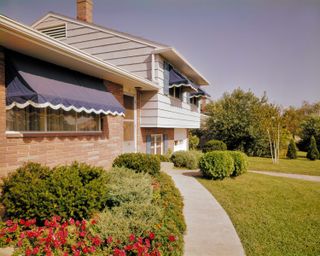
Top image by H.Armstrong Roberts/Getty Images
Related Reading:
Can We Blame the Banks for the Dearth of American Starter Homes?
The Trick to Getting More Housing Built? Target Renters, Not Immigration