
Women-Led Repair Workshops Are Teaching Hard Skills—and Confidence Too
Much of the U.S.’s housing stock is suffering from deferred maintenance. So those who weren’t taught to DIY growing up are turning to newcomer-friendly classes to fix up their pads.
Much of the U.S.’s housing stock is suffering from deferred maintenance. So those who weren’t taught to DIY growing up are turning to newcomer-friendly classes to fix up their pads.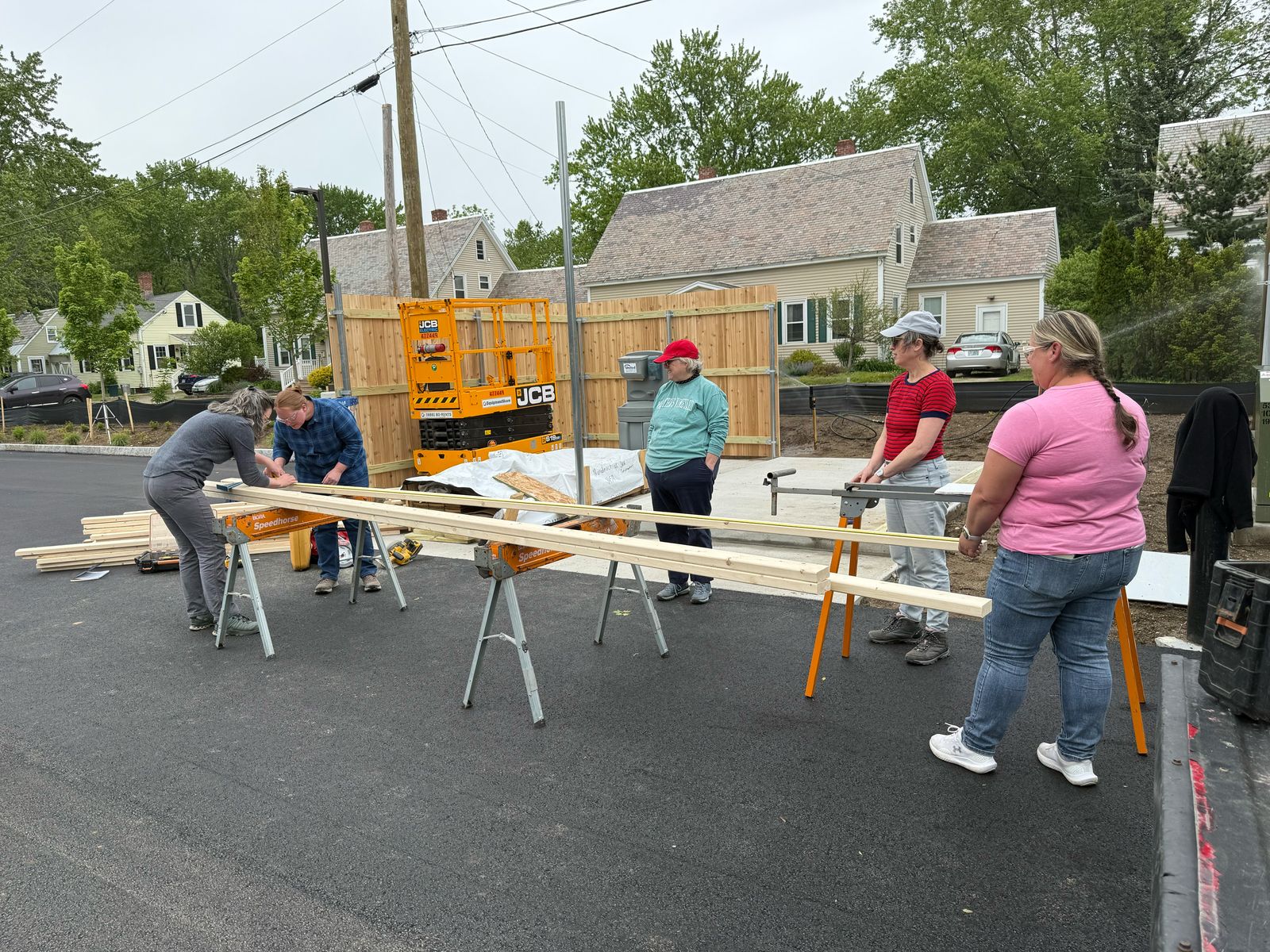
As the sun sets over Chicago, a group of 20 gather in a parking lot in Logan Square watching Juliana Masci, their home repair instructor, hold up a wall anchor. "This will need to be drilled into the drywall," Masci says, with a power drill in her other hand. "Who’s up first?"
One volunteer, Lauren, takes a cautious step forward. "I’ll try, I guess," she says nervously. Lauren takes the anchor in one hand, while Masci shows her how to place it against a sheet of drywall mounted on a box of two-by-fours. She demonstrates how to use her full bodyweight to lean into the drill as she pulls the trigger. It takes a few tries; there’s not enough pressure on the drill to get the anchor into the drywall. She tries again. The group starts clapping, shouting "you got this!" as she tries again, then again. Finally, the anchor slides right in. The group erupts into cheers.
"It’s perfect," Masci beams.
This is the scene at Babe’s, Chicago’s first-ever women’s sports bar. But these 20 visitors aren’t here to watch the Chicago Sky WNBA game—they’re here for Tool School, a training program that teaches women and femmes DIY home repair skills. Founded and led by Masci, Tool School is part of a growing movement to impart a set of basic construction and renovation skills to homeowners and renters who weren’t necessarily taught to hold a hammer or wield a drill as children. In a digital-first world, it’s a surprisingly novel idea: Unlike the usual DIY training that comes from YouTube videos or Home Depot online learning, Tool School is focused on the IRL meetups and group training that build community around the often-assumed niche (and gendered) skills like replacing a light fixture or mounting your television. During this Tuesday evening’s Drywall Mounting course, several students said they hoped to learn how to properly hang art in the apartments, or secure floating shelves that could hold the weight of their library. For these attendees, home repair is more than a chore done alone in one’s apartment; it’s a reflection of the growing numbers of woman homeowners and the rising costs of renovation.

Students at Chicago’s Tool School meet at Babe’s, the city’s first-ever women’s sports bar.
Photo by Taylor Moore
The idea for Tool School stemmed from Masci’s own love for tinkering and building, which she developed as a child through her father. Though she went on to study architecture, she gravitated toward the construction side. After years of working in the industry as a construction project manager, it dawned on her that many home and business owners might actually be able to do some of these projects themselves if only they had the skills. Those who grew up with parents who taught them, like Masci, had an advantage. "I determined that more people need DIY education, specifically women and femme folks."
This is especially true in recent years, as women have become a force in the housing market. Though women weren’t legally permitted to obtain a mortgage without a man’s signature until 1974, they are, today, surpassing men in buying homes. A 2025 report from the National Association of Realtors found that single women account for 25 percent of first-time home sales, up 14 percent since 1985; single men account for merely 10 percent. Though some might opt to hire out even minor projects, a survey by Lombardo Homes found that 27 percent of women don’t feel safe being alone with a contractor, and 60 percent felt that they were treated differently from men by contractors.
Though DIY projects are often framed as making aesthetic changes like remodels or refreshes, many first-time homebuyers end up addressing unseen, basic maintenance issues within the first year of buying a home. Especially for those lower-income buyers, neglecting even minor repairs—recaulking bathtubs or fixing cracked drywall, for example—can have an outsized impact on income in the future. The Harvard Joint Center for Housing Studies notes that deferring maintenance can increase a household’s long-term expenses; a study by anthropologist Robin Bartram finds that "routine dilapidation makes otherwise affordable housing unaffordable."
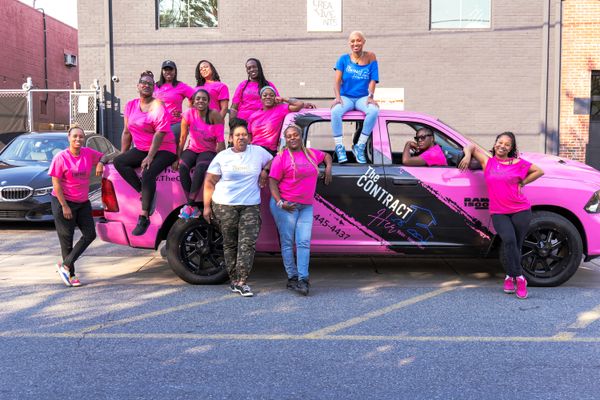
The ContractHer founder Tisha Jordan, in blue, with workshop participants.
Photo courtesy The ContractHer / Tisha Jordan
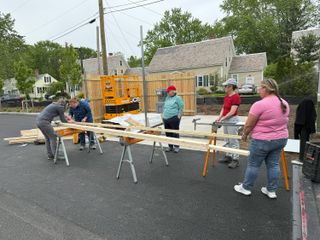
In Baltimore, The ContractHER, a DIY training company for women, provides multiday home repair and improvement workshops; they also teach students how to bid out projects and hire contractors if needed. Founder Tisha Jordan was navigating a difficult divorce and purchased a fixer-upper, opting to do renovations herself to save money, she told Washington’s NBC4. In New Hampshire, Mill Hollow Works teaches a variety of co-ed carpentry, woodworking classes, but understanding the need for peer support they also provide a Handy Woman Master series where participants learn framing, flooring, plumbing and electrical, and more. These IRL programs like Tool School teach skills and techniques, but Masci adds that they most importantly build self-assurance for those jumping into the unknown.
"It’s not a lack of skill," she says. "It’s a hundred percent a lack of confidence—a feeling of I’ve never done that before, so I don’t feel like I could do it." That sentiment echoes other findings from the Lombardo survey, where 40 percent of women feel they are treated differently from men at hardware stores and one in five report feeling judged by store employees. It can lead to insecurity, not just in these physical spaces but in their own abilities, says Masci. "It’s a natural progression of what's happened throughout history; women have to be overprepared, you have to be twice as knowledgeable," she explains. Showing up to a hardware store as a woman or femme might require extra confidence, which can be fostered in supportive, positive group settings like these.
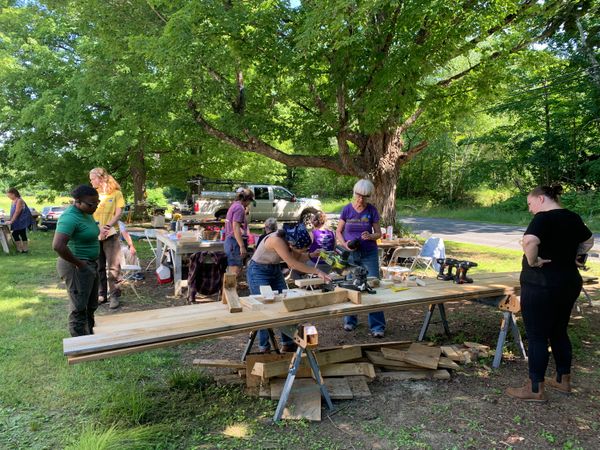
The Women’s Carpentry Weekend held by Mill Hollow Works took place outside.
Photo by Heather Holloway / Mill Hollow Works
See the full story on Dwell.com: Women-Led Repair Workshops Are Teaching Hard Skills—and Confidence Too
Related stories: