40,000 ADUs in New York by 2039? Not at This Pace
Two years into allowing backyard homes, permit numbers across the five boroughs are still remarkably low.
Two years into allowing backyard homes, permit numbers across the five boroughs are still remarkably low.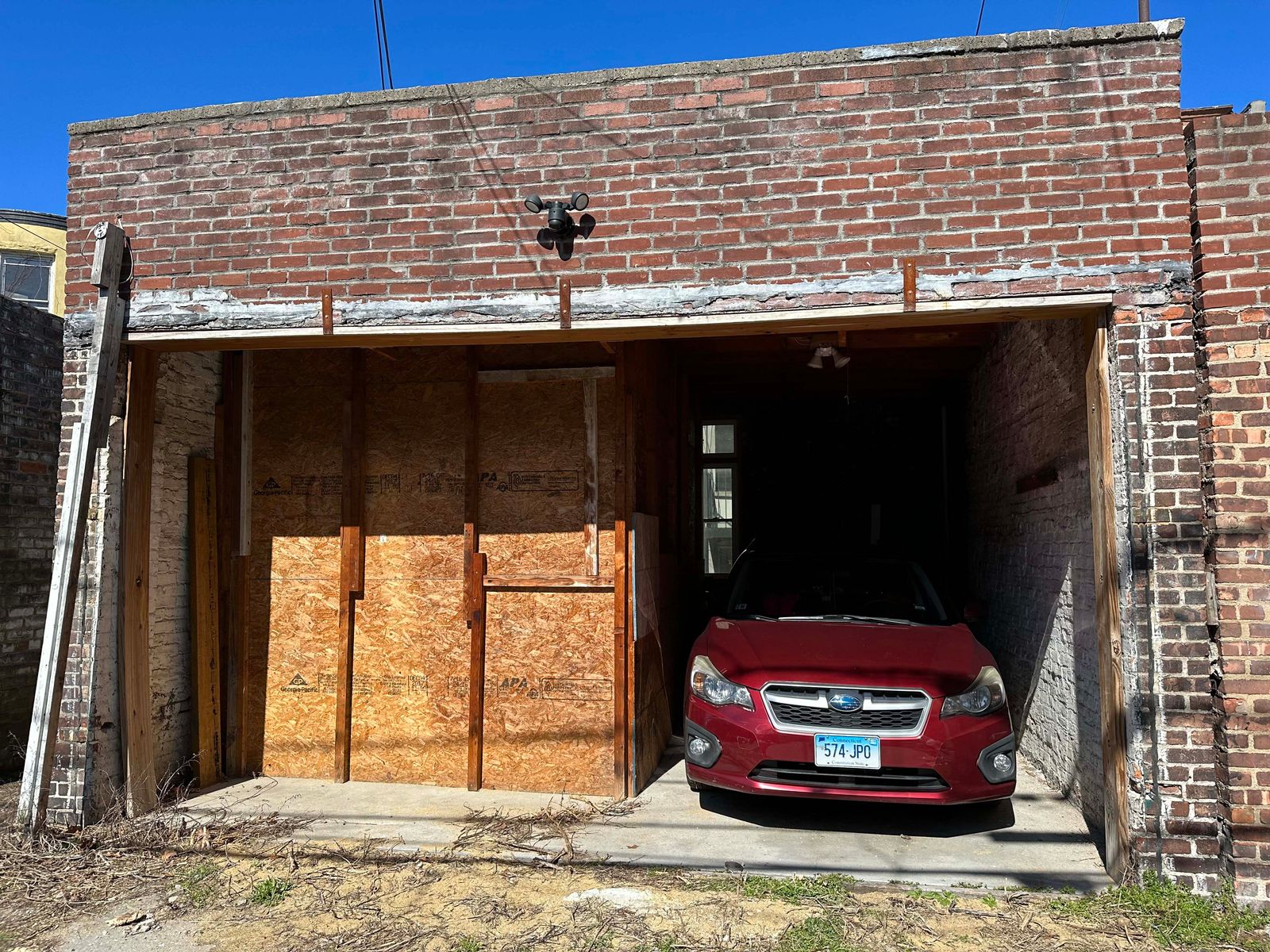
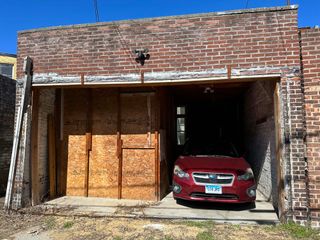
Earlier this fall, 58-year-old Sarah Jay was wrapping up some weeding in her backyard near her brick garage. Over the 10 years she’s owned her home in Brooklyn, that garage—weathered and beautiful as it is—has felt a bit like dead weight, since Sarah lives right by the subway and no longer has a car. "Underused," she says about the little structure. "A glorified parking spot." For Sarah, a longtime small business owner and part-time apartment-fixer-upper who gets satisfaction out of seeing a space transformed, it has been particularly irksome. "I’d always thought, ‘Oh, that would be a perfect studio,’" she says.
Until a couple years ago, Sarah’s hands were tied. In all five boroughs, there simply wasn’t a good legal option to convert a garage into something more useful, like a living space. But all that seemingly changed in 2024, when legislators adopted City of Yes for Housing Opportunity, a set of local housing code amendments aimed at making it easier to build new units, including small backyard homes, often referred to as accessory dwelling units, or ADUs. "I had never heard the word ADU before," Sarah says. "But I was immediately excited because I thought about the garage in the back."
The revamped housing code takes a cue from other parts of the country where ADUs have long flourished. As of last year, 18 states had passed legislation giving homeowners a path to ADU construction, according to a policy brief by the Mercatus Center at George Mason University, which calls ADUs "the most common action state policymakers have taken to make more lower-cost housing feasible to build."
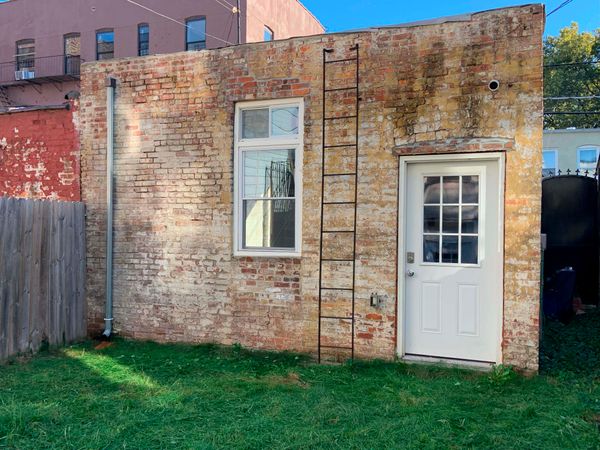
Brooklyn resident Sarah Jay has been trying to turn her garage into an ADU for two years.
Photo courtesy of Sarah Jay
Among U.S. cities, the ADU torchbearers tend to be out West, including Seattle and Portland, which have each issued hundreds of ADU permits annually as far back as 2016. In Los Angeles County last year, more than one out of every three new units of housing—well over 10,000—was an ADU.
New York City isn’t just behind in adopting legislation. It’s also burdened by untouchable historic districts, restrictive flood zones, and minimal open space. According to one estimate, only 12 percent of the city’s one- or two-family properties—about 68,000 lots, largely in Staten Island, the North Bronx, Eastern Queens, and small pockets of Brooklyn—are even allowed to have an ADU under the new housing code. Still, a City of Yes environmental impact statement suggested the legislation would lead to as many as 40,000 ADUs in New York City by 2039.
But at the one-year mark—after it began accepting ADU permit applications on September 30, 2025—the Department of Buildings had received 281 ADU permit applications and issued permits to 57 of them, according to a department spokesperson.
To boost the city’s permit numbers, the mayor’s office announced two programs in March, geared toward prospective ADU builders. The first was a revival of the Plus One ADU Program—a pilot launched in 2023 that allows homeowners to express interest in city-provided ADU resources, like low- or no-interest loans, construction grants, and project management assistance. The second was ADU for You—a new website promising "faster approvals and fewer surprises," where users can browse a library of 11 preapproved ADU designs from development and architectural firms.
"We are balancing the desire to get people over the finish line as quickly as possible with the need to make sure the plans are done correctly."
—Ahmed Tigani, NYC Department of Buildings Commissioner
A few of the designs in the preapproved library piqued Sara Jay’s interest. After calling around, she was drawn to the work of Karim Ahmed, principal at Reform Architecture, whose design features warm wood siding, seam metal, and a gable roof above a new or existing garage. After visiting Sarah’s backyard to assess potential site challenges, Ahmed’s firm drew up a proposal for services that span design, filing drawings for the Department of Buildings, contractor bidding, and construction administration.
But when Sarah first imagined converting her garage, well before the city’s resources were announced, she thought it might only set her back about $100,000 in total. That amount, unfortunately, is the absolute minimum expected construction cost across designs in the preapproved library. Construction for other designs, including Ahmed’s, is estimated to cost well over $400,000.
That’s partly why Sarah felt compelled to put her name in the hat for financial assistance through the city’s Plus One ADU Program. In March, she completed an interest survey meant to determine her property’s eligibility. But in June, she received a follow-up email from the city saying the program was "still in the process of completing site analyses for thousands of responses." The summer came and went. By October, she was still waiting to hear back. "It’s frustrating that the Plus One is taking a long time to get back to me," she says. "It would be nice if there was an answer. But if the answer is gonna be positive, I’m willing to wait."
She’s not the city’s only ADU-hopeful who’s waiting. The bundle of 57 permits issued in the first year? It doesn’t include projects by any of the firms in the preapproved plan library, according to a review of data from the buildings department.
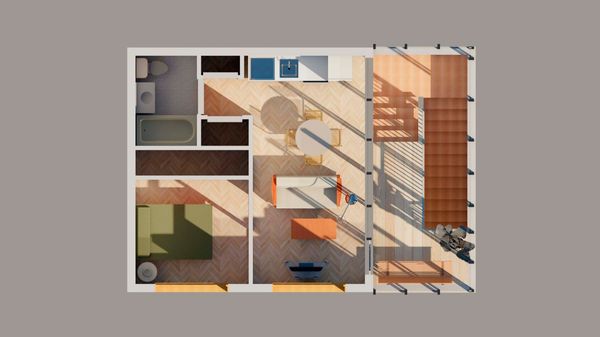
Maisel House by Reform Architecture is part of NYC’s preapproved plan library, but the firm has yet to build one.
Courtesy of Reform Architecture.
Brooklyn-based firm SITU—whose preapproved design aims to occupy the smallest footprint possible in order to fit the tightest eligible lots—had yet to be contacted by a homeowner with a promising site months after the preapproved library was announced. "At least for the first few conversations we’ve had, it has been challenging because they’re not very easy sites," says SITU founding partner Basar Girit. "Once you make changes, then it’s no longer preapproved." By the summer, as progress remained slow, Girit wondered whether the rollout was actually succeeding, posing a gloomier musing over email: "Ambitious city initiative falls flat?"
The results for Karim Ahmed’s firm haven’t been much different. "A lot of inquiries, but not any completed or approved projects," he says. "But there’s a lot of financing, approvals, and that kind of stuff that happens in this industry. So I don’t really get too emotional about it. I think the biggest piece is that this is a new program."
That sense of newness is what city officials stressed when asked about the progress. "We know how difficult it is for people to be able to get to the point of starting a project and really mustering up those resources," says Department of Buildings Commissioner Ahmed Tigani. "But if you think about where we were in previous pilots, the movement here is promising." He adds, "We are balancing the desire to get people over the finish line as quickly as possible with the need to make sure the plans are done correctly."
If Sarah can eventually get across the finish line, what she’ll look forward to is flexibility. The ADU would be a perfect place for family—whether it’s one of her adult daughters who are about to finish college or her 96-year-old father who recently mentioned wanting to leave his longtime studio apartment. But if it’s not used for family, then the extra rental income wouldn’t hurt. Neither would the option of moving in herself, if her own home ever starts to feel too big.
The bottom line? "It would be a dream to have it," she says. " I don’t wanna say if, because I really want do this. I really want this to happen."
Top photo courtesy of Sarah Jay
—
Related Reading:
A Guide to Preapproved ADU Plans in Your City
ADUs Were Banned in Chicago for Almost 70 Years. This Woman Just Built One of the First