From Tent to Terminal: Bedouin Craft in Contemporary Infrastructure
Across the Gulf, Bedouin heritage often enters architecture first as an image. Airport terminals recall tent silhouettes, visitor centres incorporate woven screens, and pavilions reinterpret traditional textiles as decorative façades. These references have become a familiar visual language for expressing regional identity. They also risk reducing one of the world's most sophisticated vernacular building traditions to an architectural motif. Long before the Bedouin tent became a cultural symbol, it was an environmental technology: a lightweight, adaptable structure capable of creating comfort in one of the planet's most demanding climates. What contemporary infrastructure may inherit is not the tent's silhouette, but the construction intelligence woven into it.
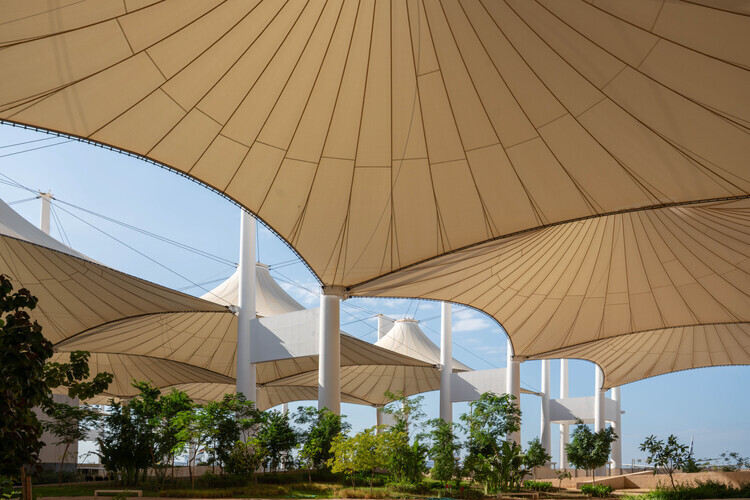
Across the Gulf, Bedouin heritage often enters architecture first as an image. Airport terminals recall tent silhouettes, visitor centres incorporate woven screens, and pavilions reinterpret traditional textiles as decorative façades. These references have become a familiar visual language for expressing regional identity. They also risk reducing one of the world's most sophisticated vernacular building traditions to an architectural motif. Long before the Bedouin tent became a cultural symbol, it was an environmental technology: a lightweight, adaptable structure capable of creating comfort in one of the planet's most demanding climates. What contemporary infrastructure may inherit is not the tent's silhouette, but the construction intelligence woven into it.