How They Pulled It Off: Updating—and Fireproofing—an ’80s Home in a "Very High-Risk" Zone
Architects Zoltan Pali and Judit Fekete-Pali transformed an "eyesore" house in the Santa Monica Mountains into a live/work space built to withstand its surroundings.
Architects Zoltan Pali and Judit Fekete-Pali transformed an "eyesore" house in the Santa Monica Mountains into a live/work space built to withstand its surroundings.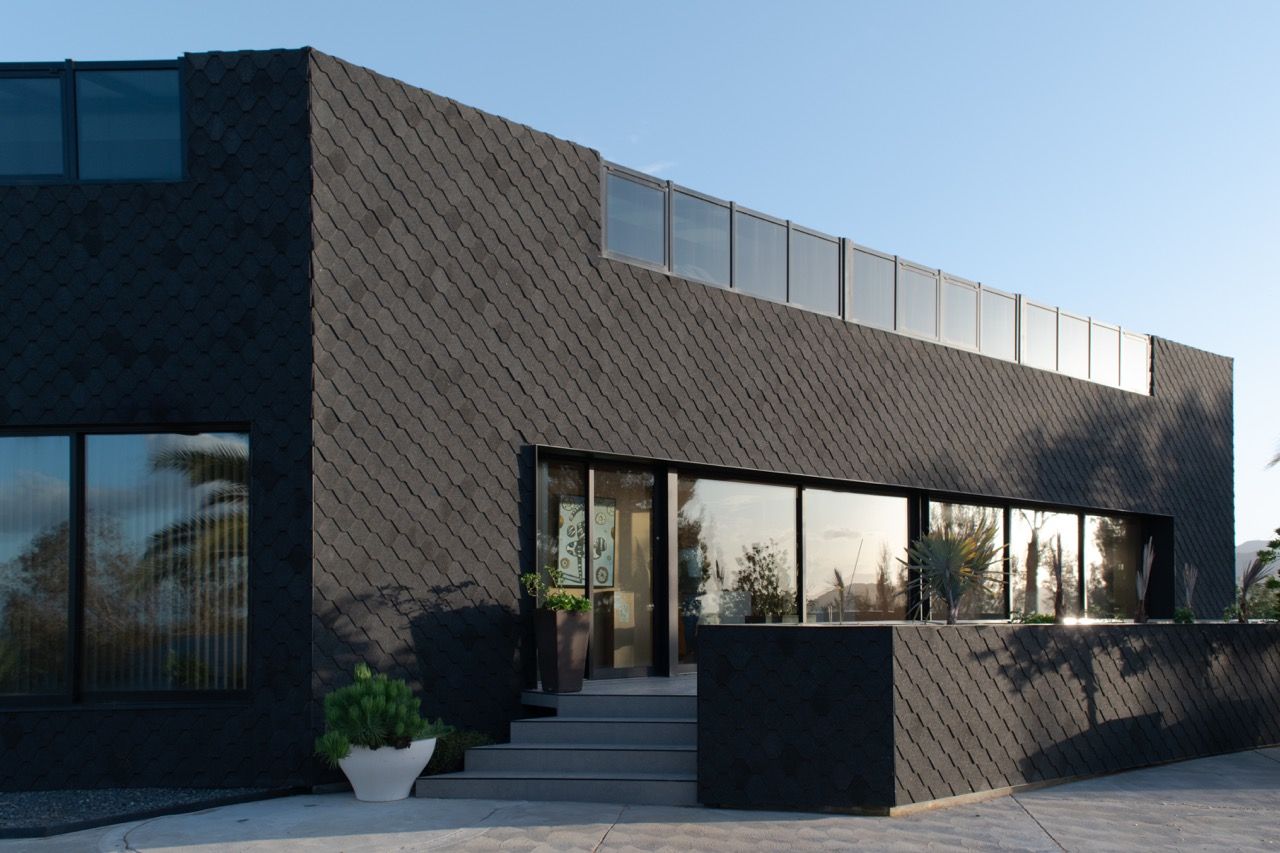
Welcome to How They Pulled It Off, where we take a close look at one particularly challenging aspect of a home design and get the nitty-gritty details about how it became a reality.
When Zoltan Pali saw his house for the first time, he had two words: no way. In 2016, Pali and his wife, Judit Fekete-Pali—cofounders of L.A.-based architecture firm SPF:architects— were looking to relocate from their convenient live/work space in Culver City to a house in the Santa Monica Mountains. They had spent around a decade looking for the perfect property, when Fekete-Pali stumbled upon a 17-acre plot on the ridgeline, with views of the ocean on one side and the mountains on the other. The scenery was beautiful, but the house itself was an eyesore, and it was in a "very high" fire-risk zone, surrounded by dry, flammable brush. Tearing the house down wouldn’t be possible, because it was in a protected area. They would have to work with what was there.
"It was so ugly," says Pali. "It looked like the house from My Big Fat Greek Wedding, with fake Corinthian columns." Built in the 1980s by its former owners, the white stucco house was shaped like an elongated octagon which was, says Pali, "their interpretation of the Parthenon."
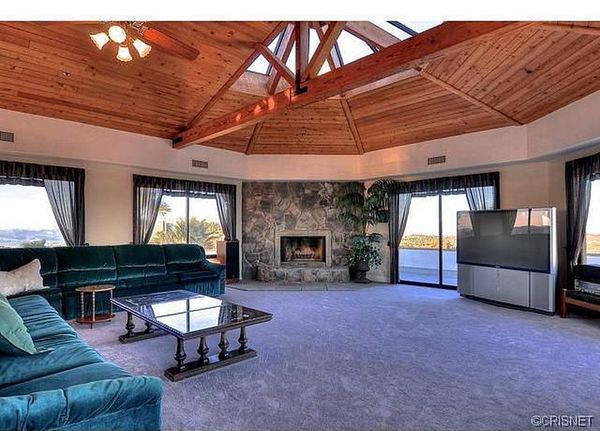
Before: The house had an awkward octagonal footprint, outdated fixtures, and wall-to-wall carpeting in the living room.
Courtesy of SPF:architects
"The building was atrocious," Fekete-Pali agrees, conscious that walkers and horseback riders could see it from the trails. More than just looks, safety was a concern too. "The neighbors are pretty far away, so it’s a goner if a fire starts," she continues. "Those were our main concerns: How do we make the house kind of disappear? And at the same time, how can we make the building fire-resistant?"
The couple were better equipped to deal with the challenge than most. Resilient, fireproof design, says Pali, has always been "part and parcel" of SPF:a’s practice, before the 2017 wildfires, or the Palisades fires last year [added a link; also, should this be Palisades and Eaton fires? (I think Palisades was only one fire?)]. "Whether you’re by the beach, in Malibu, or in the Bird Streets up in Los Angeles, it’s always a concern."
So how, then, do you create a home which is both tough against fire and beautiful?
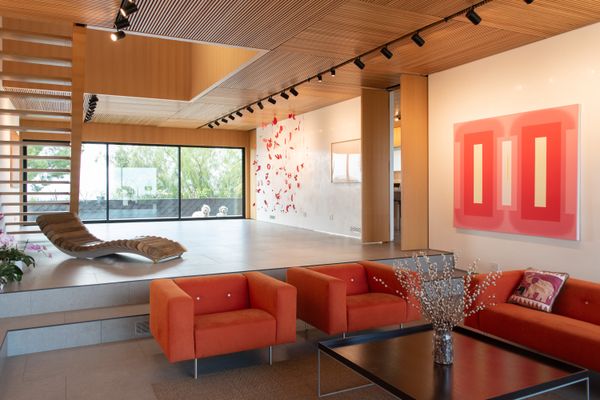
"It’s minimalist in nature," says Pali. "To us, there’s beauty in the rational."
Photo: Renzo Pali
How they pulled it off: Turning a 1980s "eyesore" in a fire risk zone into a serene, fireproof home
- Get rid of those eaves: Not long after moving in, L.A.’s 2017 wildfires had come within half a mile of the property. The priority, says Pali, was to stop fire getting into the house: "We figured if it’s in, it’s over." The fire department had advised that fires usually start under a building’s dry eaves so the eaves were dutifully removed, and the roof was covered with a naturally fire-resistant asphalt shingle.
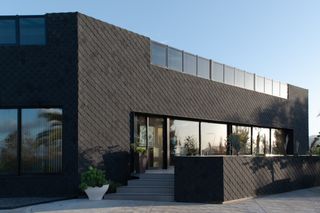
- Add asphalt cladding: The plan had just been to apply that charcoal-colored shingle—"ubiquitous" in tract homes across the country—to the roof. But, says Fekete-Pali, "we started the roof, and we just didn’t stop." They opted for a thicker, more robust hexagonal shape, giving the house a distinctive, streamlined look and ensuring that it will not catch fire. "Among the trees, it’s like a shadow. The people walking in the mountains and on the horse trails don’t see the building anymore," she says. "No more eyesore, just the beautiful nature."
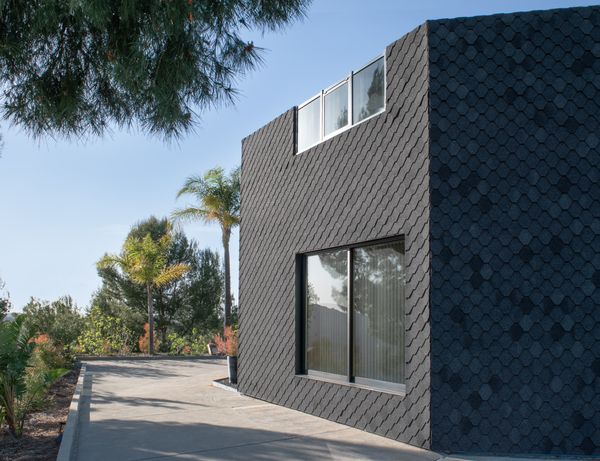
Pali and Fekete-Pali chose to clad the whole building in fire-resistant asphalt shingle, cut into robust hexagons.
Photo: Renzo Pali
See the full story on Dwell.com: How They Pulled It Off: Updating—and Fireproofing—an ’80s Home in a "Very High-Risk" Zone
Related stories: