Inside the Unconventional College That Blends Classical Building Trades With Liberal Arts Education
Students at Charleston’s American College of the Building Arts are finding hope for a stable future in mastering crafts like blacksmithing and architectural carpentry.
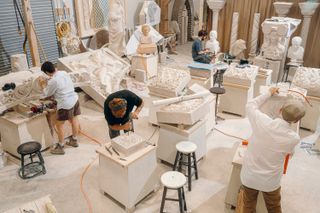
Students at Charleston’s American College of the Building Arts are finding hope for a stable future in mastering crafts like blacksmithing and architectural carpentry.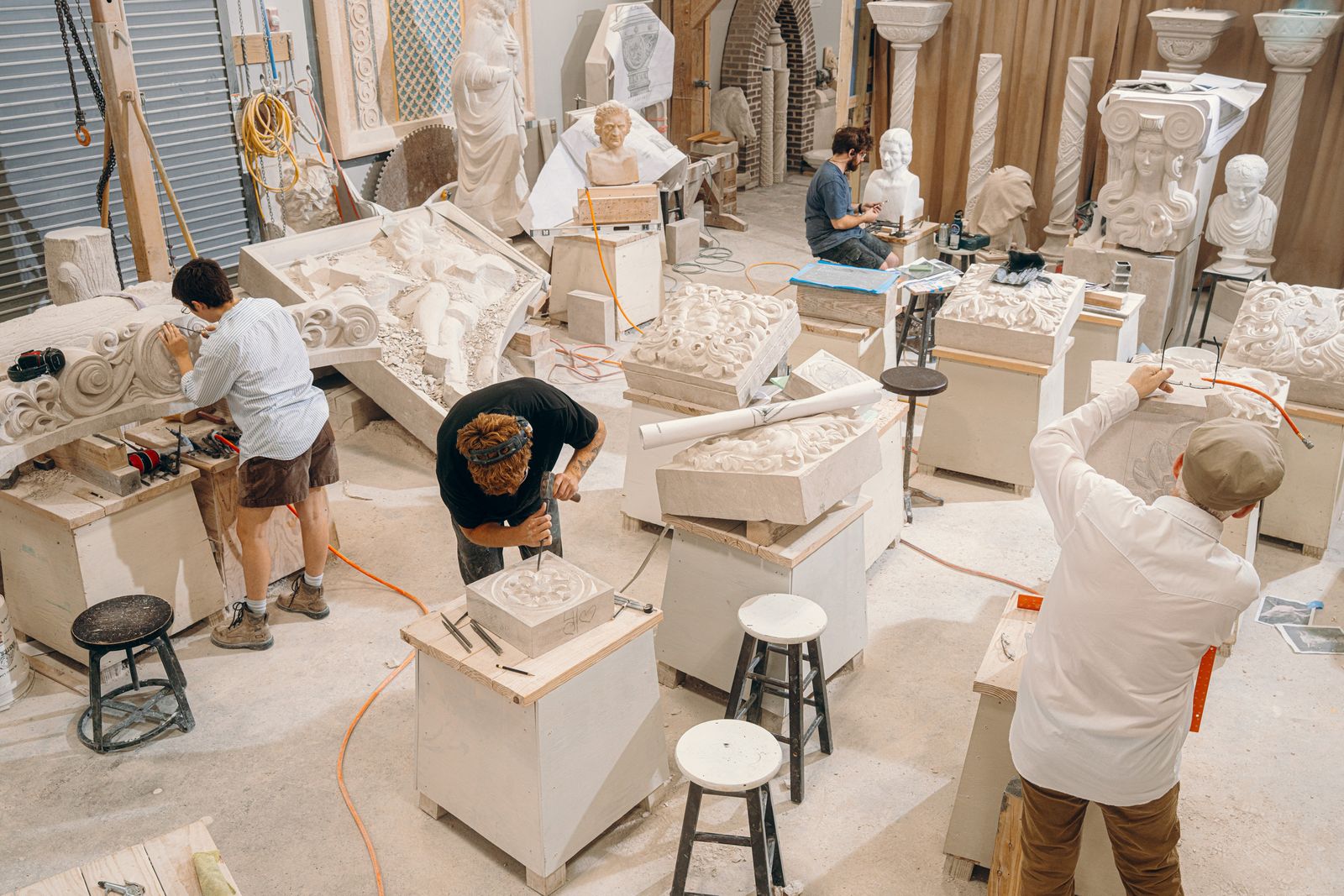
Up in the rafters of the 1897 historic Charleston Trolley Barn, which houses the American College of Building Arts (ACBA), there is a respite from the campus’s buzzing finals week. Like a tree house, the space is intimate, a bit cramped, but filled with warmth. Pasted on one of the walls is what appears to be a page torn from a book depicting a Frederic Remingtonesque painting of an Old West gunslinger. Superimposed over the image are the words "SLOW IS SMOOTH / SMOOTH IS FAST." Smooth isn’t a texture—it’s a rhythm, a way of applying knowledge to skill with attention and care. Smooth is mastery.
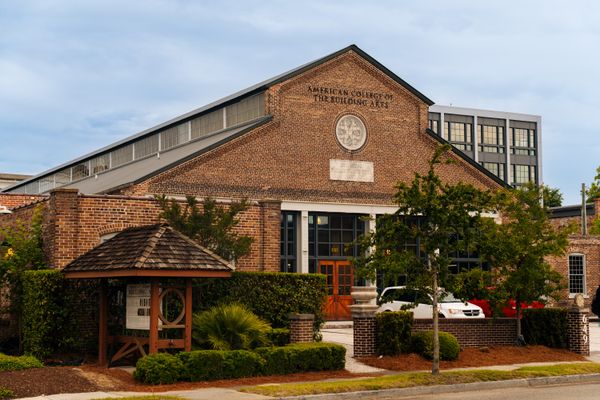
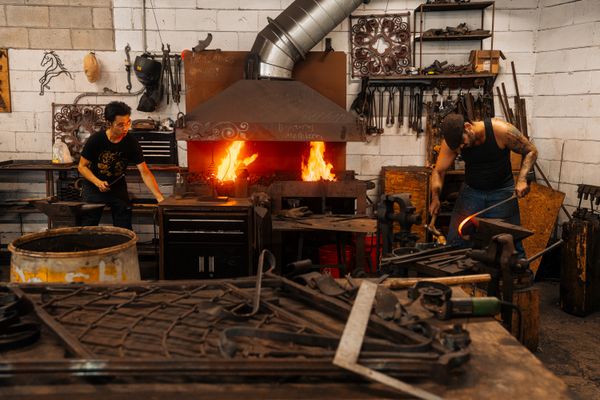
This could be the motto for ACBA, an institution that trains students in classical building arts. Here, thousands of hours of slow, dedicated learning and thinking yields cohorts of experts in six traditional crafts: blacksmithing, timber framing, architectural stone carving, plastering, architectural carpentry, and classical architecture and design. As a two- and four-year accredited college, it has students spend thousands of hours working under experts in their field, both at the school and through externships. Unlike many trade programs that provide learners with experience through apprenticeship, ACBA’s curriculum includes a robust liberal arts education to help them learn the architectural, scientific, historic, and business components of the work they will graduate into. From the first day freshman year, when one’s major is declared, students are thrown into the deep end of traditional building trades. It lends to the student body’s unofficial motto: Aut disce Aut discede, Latin for "Either learn or leave."
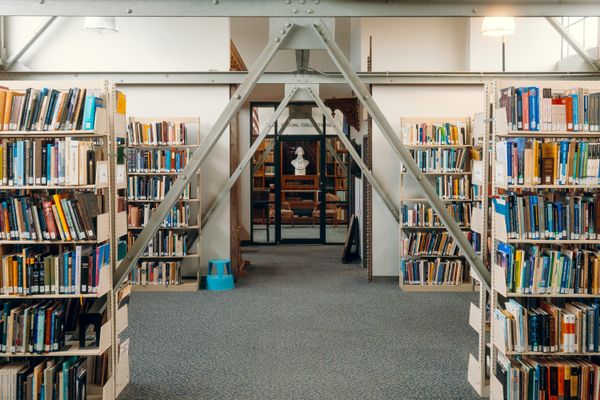
The school’s model is unique among undergraduate institutions. It is a liberal arts school tied to the past, but its rigorous specialization and tactile emphasis is modeling a potential future for higher education. As faculty in a higher education arts school, I’ve witnessed anxieties over artificial intelligence in classrooms, declining enrollments, cuts to federal funding, antidiversity mandates, and more that have brought academia to its knees. But in comparison with the many stories of college faculty, administrators, and students who are at odds with an uncertain future, those of the dozen ACBA students I spoke with have a very different outlook on their postgraduation lives. Here, 86 percent of grads are employed in their trades six months after graduation. But what’s most remarkable is the school’s learning culture: At ACBA, the tenets that have anchored most universities—curiosity, inclusion, creativity, self-determination, and tenacity—don’t come from blanket administrative statements. Here, they are the products of difficult, backbreaking, and very, very slow work.
Nobody on campus is rushing on this hot, mid-May afternoon, despite the electric feeling of students trying to complete their final projects before the semester ends. Many seniors are working on a capstone project that they’ve spent months planning and executing—some are installed in or collected by the school, others are done for private clients. In the school’s stone shop, young people carefully chisel away at hunks of Alabama limestone. One senior, Albert Garone, meticulously shapes a piece of marble into a bust of Thomas Jefferson, a project that he and his classmates have been working on in partnership with a team at Monticello.
See the full story on Dwell.com: Inside the Unconventional College That Blends Classical Building Trades With Liberal Arts Education
Related stories: