New Terminal at Jodhpur: Designed in Response to Local Culture, Climate, and Modern Travel Needs.
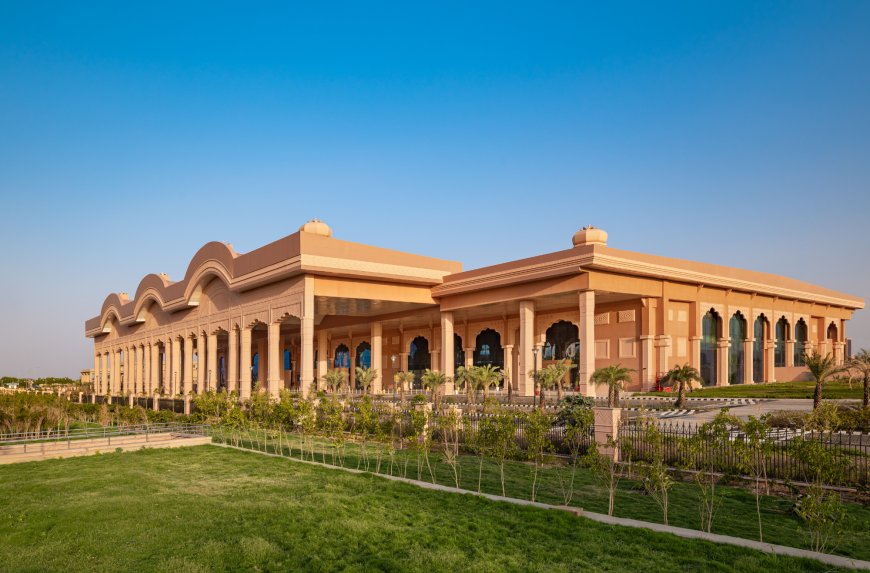
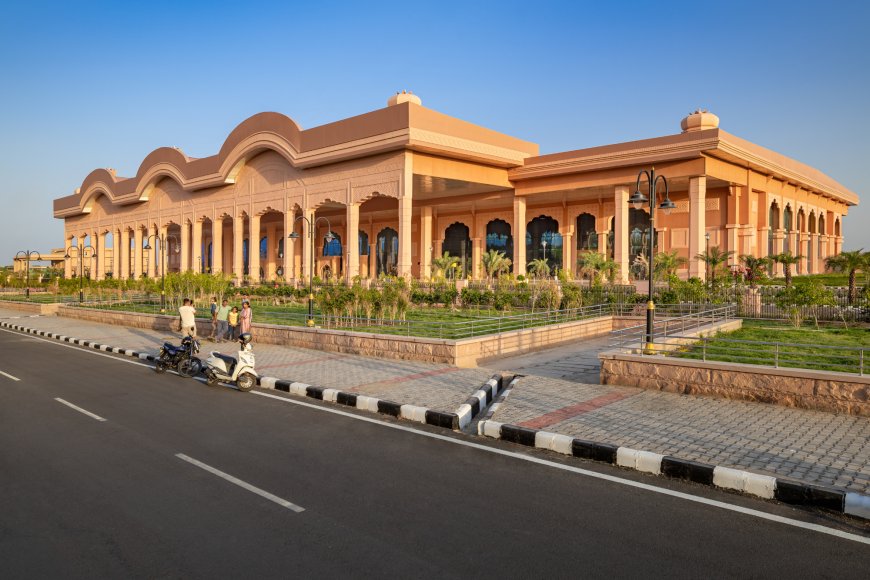
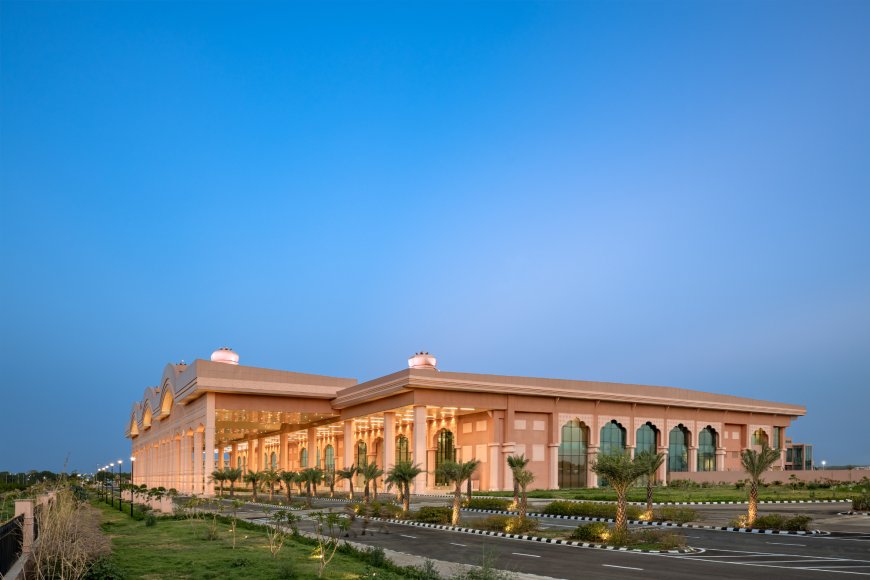
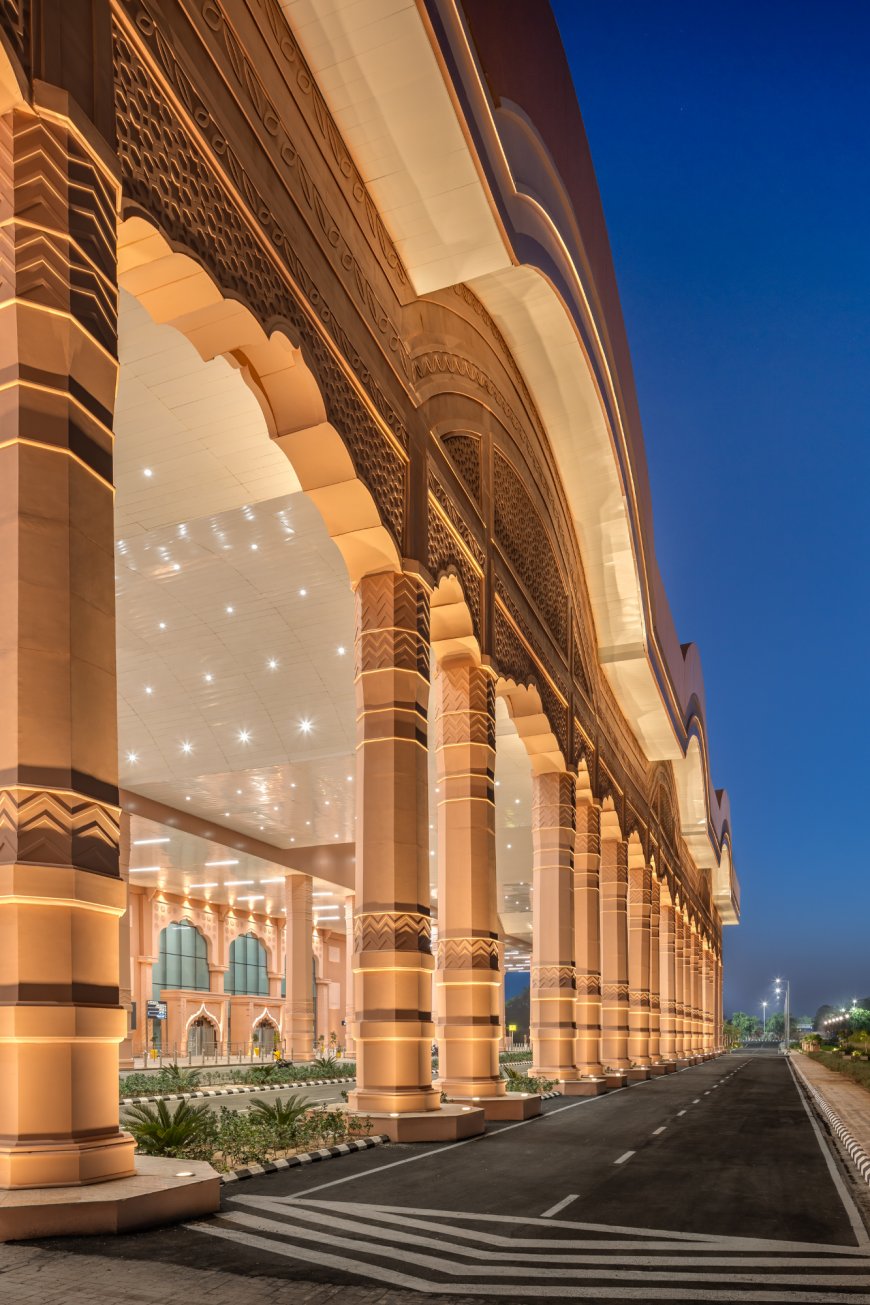
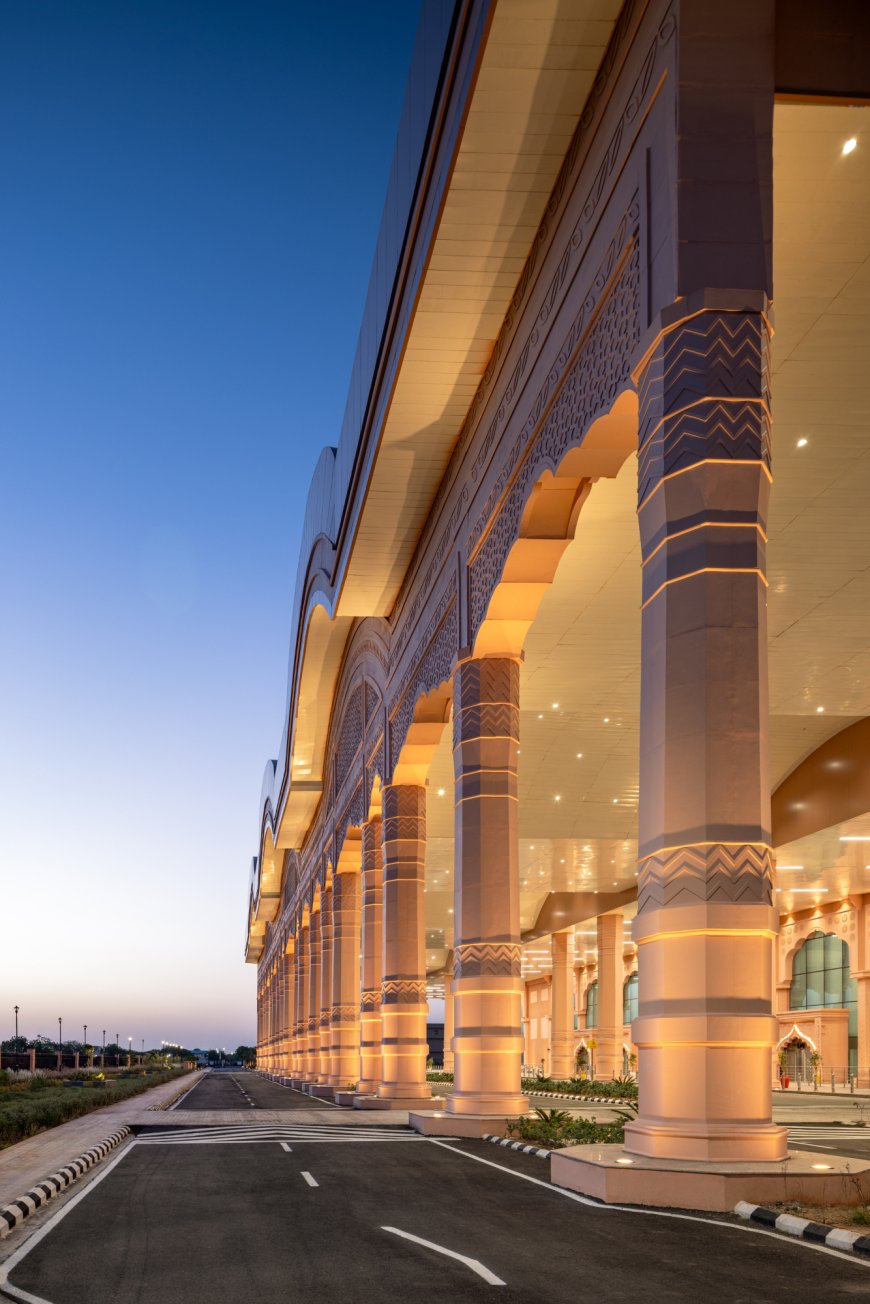
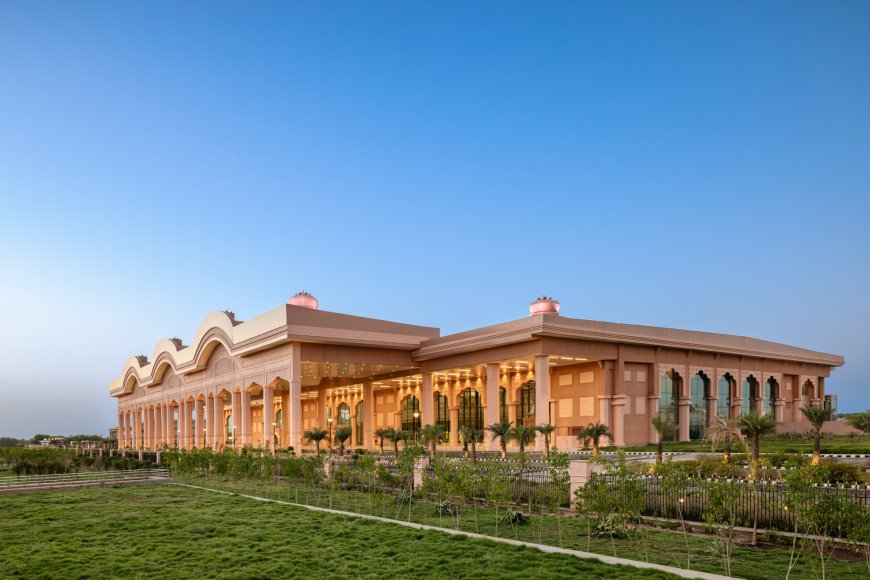
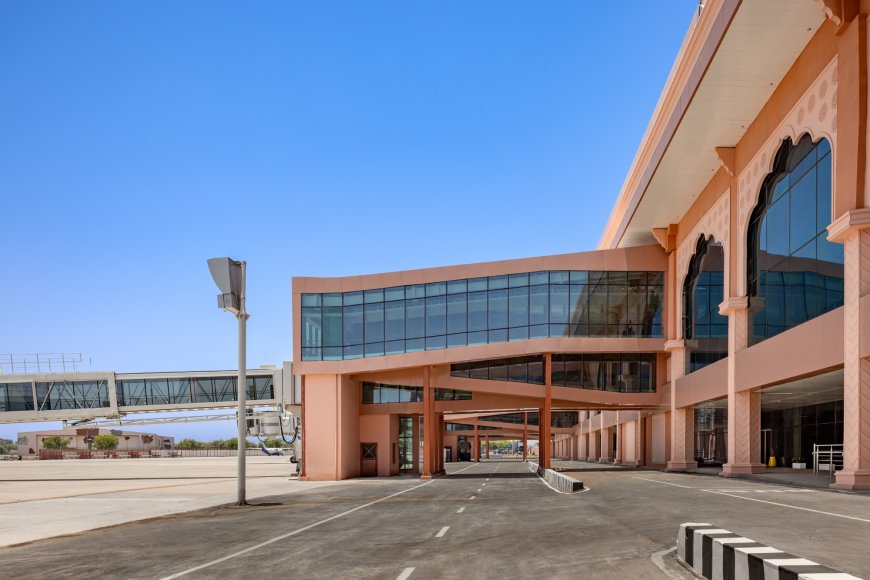
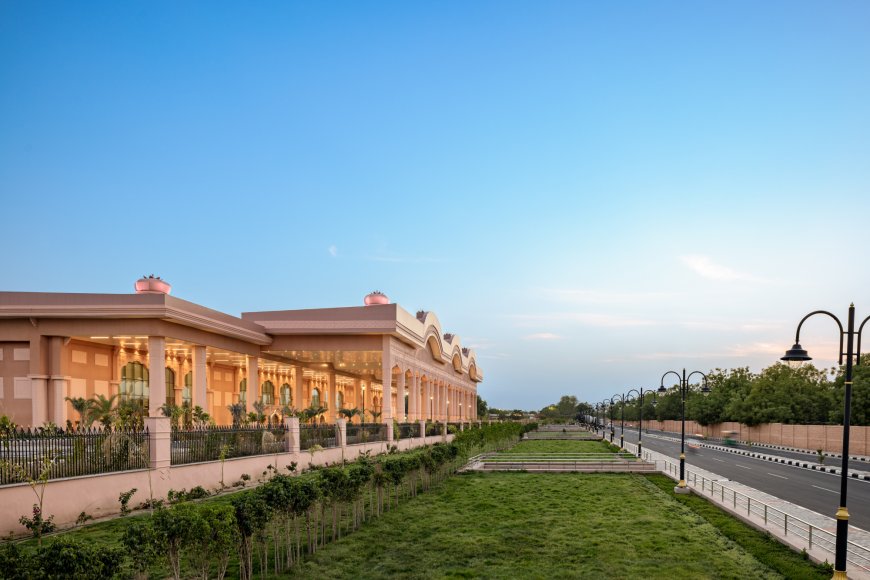
The new terminal, designed by STHAPATI, strengthens the city’s role within Rajasthan’s key tourism and connectivity network. As the number of visitors increases, the need for enhanced connectivity emerges as both an economic driver and an architectural opportunity. The development establishes infrastructure capable of accommodating future growth while improving access to the region at both national and international levels. The Terminal design is rooted in the cultural identity of the place, drawing inspiration from Jodhpur’s art, architecture, and its royal aviation past.
Jodhpur’s architectural identity is shaped by its fortified skyline, blue-washed settlements, and a legacy of intricately crafted stone structures shaped by climate, craft, and spatial hierarchy. This built vocabulary continues to define the city’s character and reinforce its position within Rajasthan’s cultural and tourism landscape. As a part of India’s most visited heritage corridors alongside Jaipur and Udaipur, Jodhpur attracts global travellers to the indigo-hued lanes of the old city, the imposing silhouette of Mehrangarh Fort, and a network of palatial venues that host cultural events and destination weddings.
Jodhpur’s aviation journey began nearly a century ago when Maharaja Umaid Singh established the Jodhpur Flying Club in 1931 beside his Chittar Palace, now known as Umaid Bhawan, introducing aviation to the desert landscape of western Rajasthan. This early association positioned the city within India’s evolving aviation network while remaining closely tied to its royal legacy
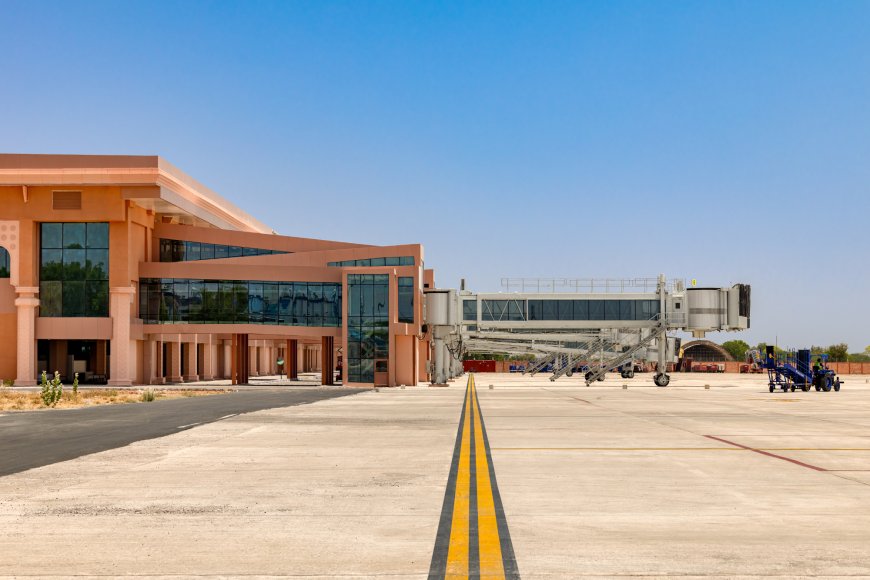
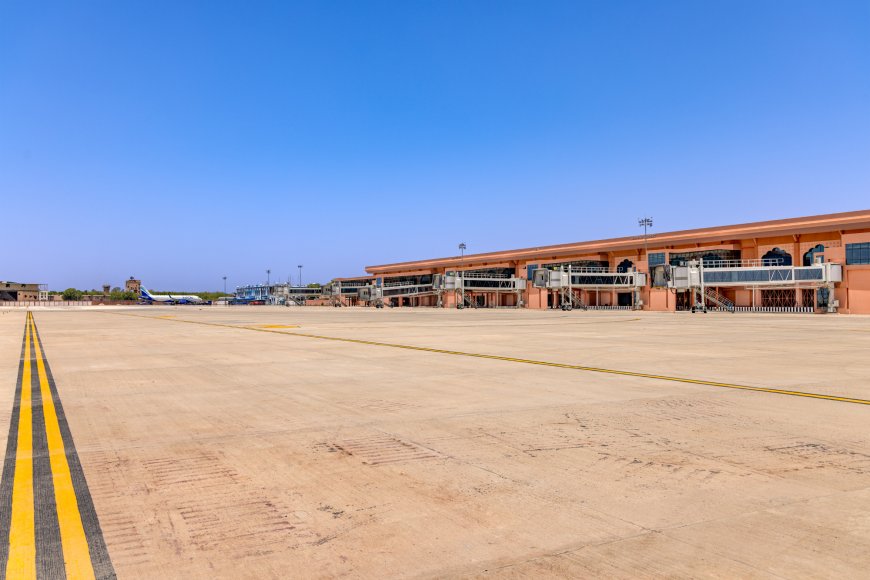
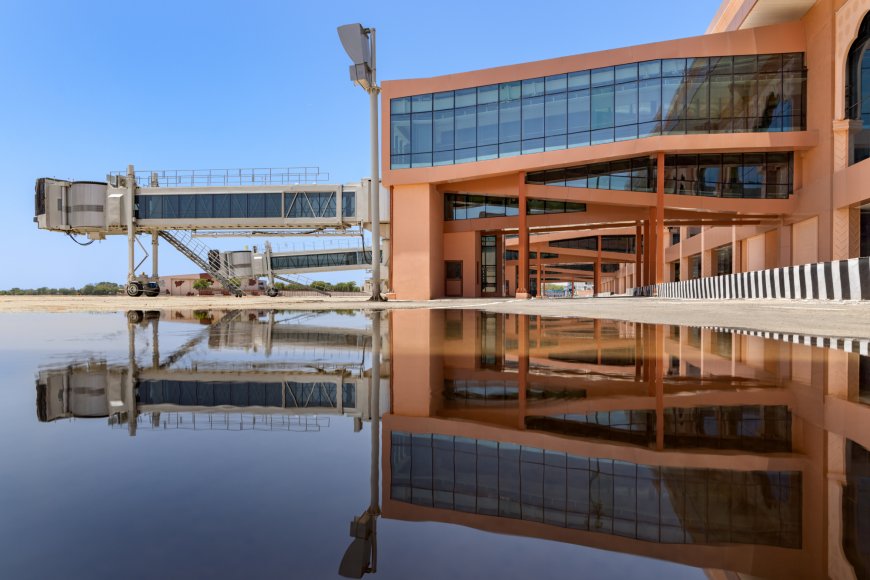
The existing terminal at Jodhpur Airport served the city for many years as a modest, functional facility designed for smaller passenger volumes and simpler operational requirements. As the city evolved, the terminal needed to match the scale of passenger demand or the expectations of contemporary air travel. The new terminal addresses this shift by spanning 2,52,000 sq. ft. of built-up area, accommodating 2 million passengers annually, and supporting a peak-hour capacity of 1,000 passengers, with 6 aerobridges connecting passengers directly to aircraft stands.
Planning for Efficiency and Flow
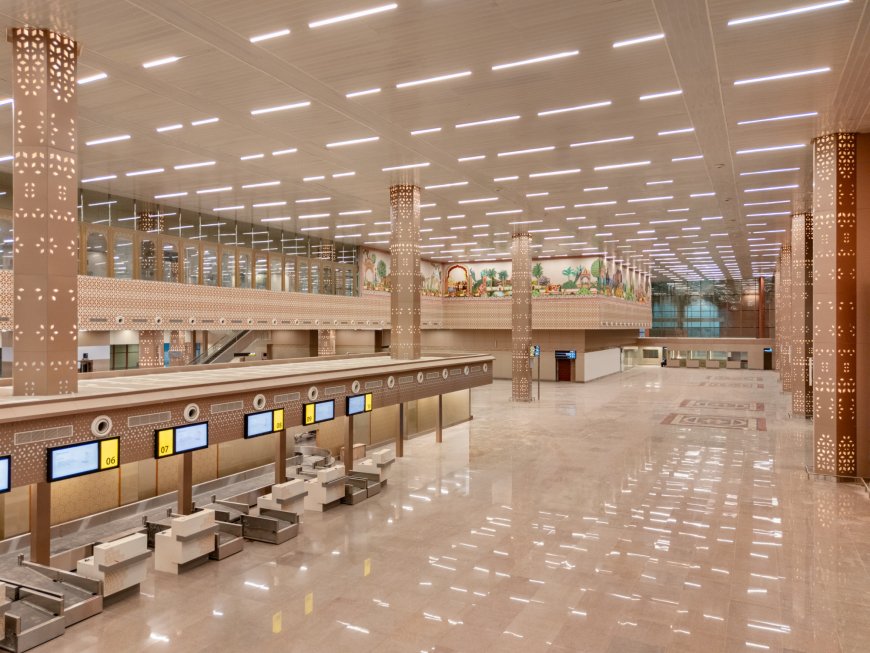
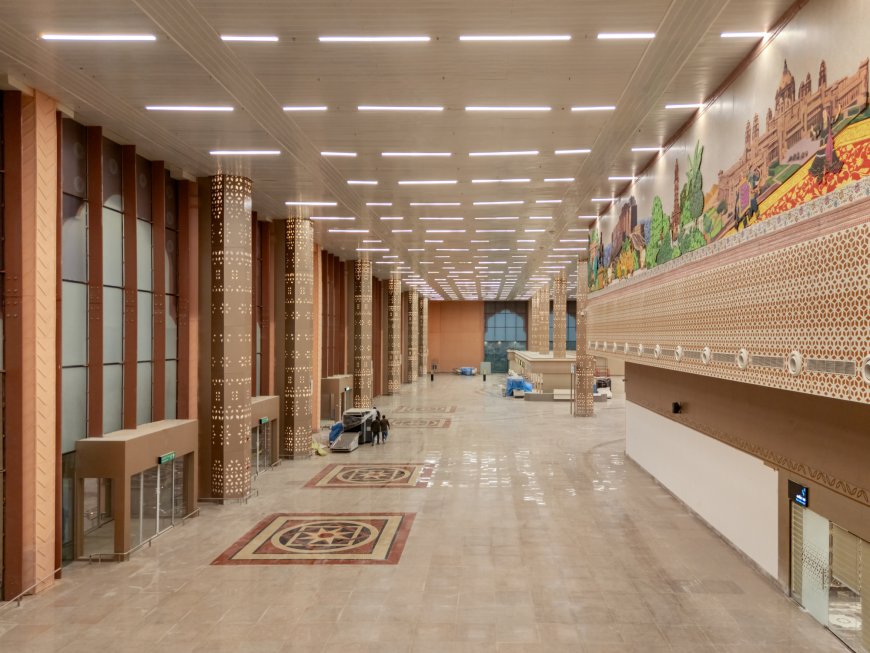
The planning strategy prioritises clarity and efficiency across passenger movement. Departures and arrivals are organised to minimise cross-flow, with check-in counters arranged in an island configuration and security laid out in a linear sequence to ensure smooth progression. Circulation corridors, baggage handling systems, and wayfinding are designed to reduce dwell times while maintaining intuitive navigation across the terminal. Service and staff movement are routed independently to support operational efficiency without intersecting with public zones.
Airside upgrades, including apron expansion, enhance aircraft handling capacity and help decongest overall airport operations. Provisions within the planning framework anticipate future growth, enabling scalable expansion and accommodating evolving mobility systems as passenger volumes and transport networks continue to develop.
Terminal Architecture as a Cultural Gateway
The architectural composition of the terminal draws inspiration from the historic gateways that define many cities across Rajasthan. These gateways historically marked transitions between the city and the landscape, the palace and the public realm.
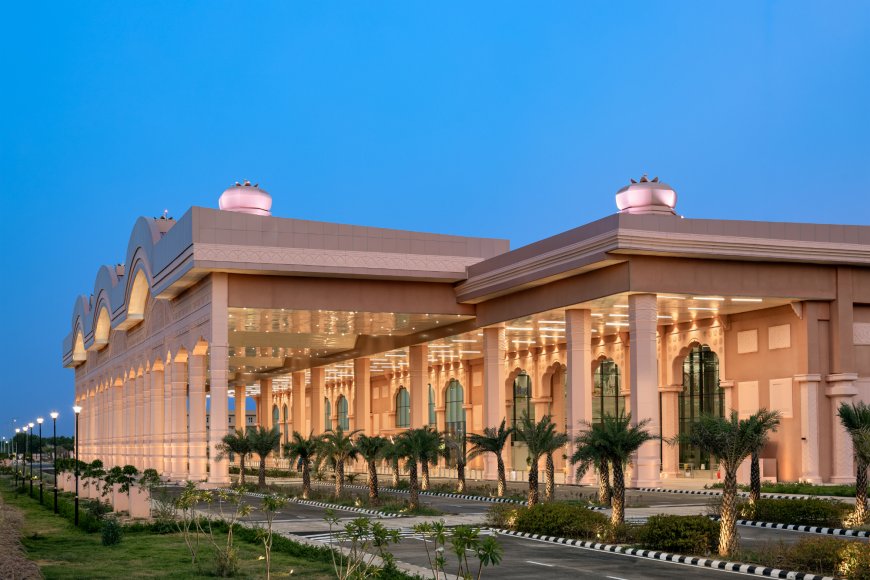
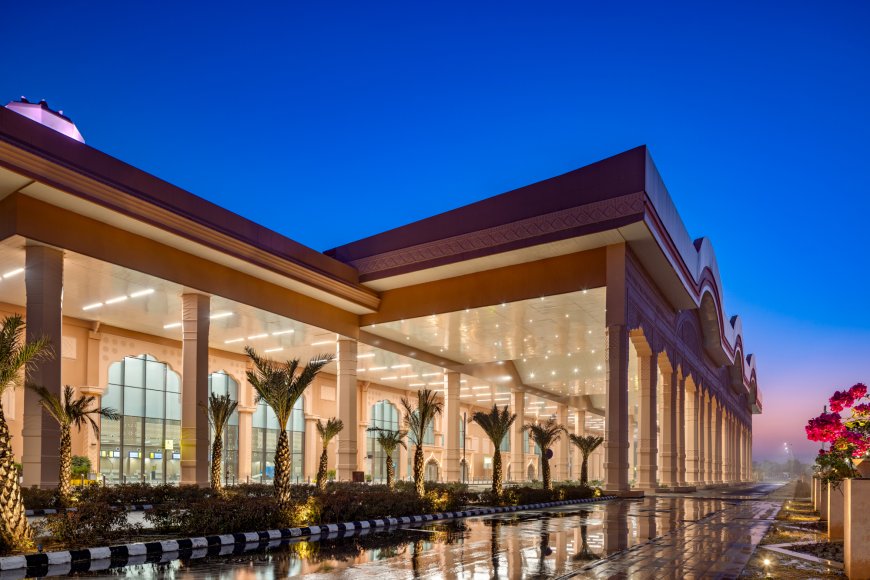
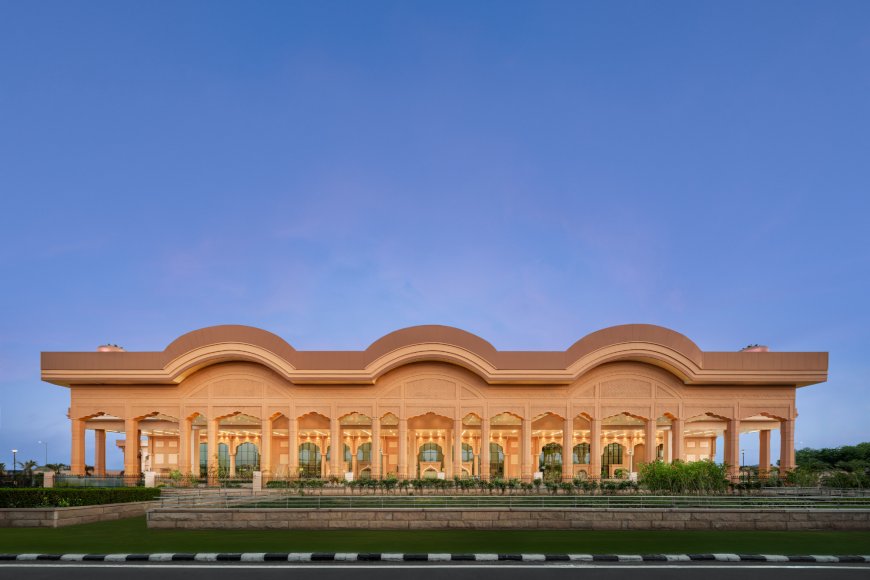
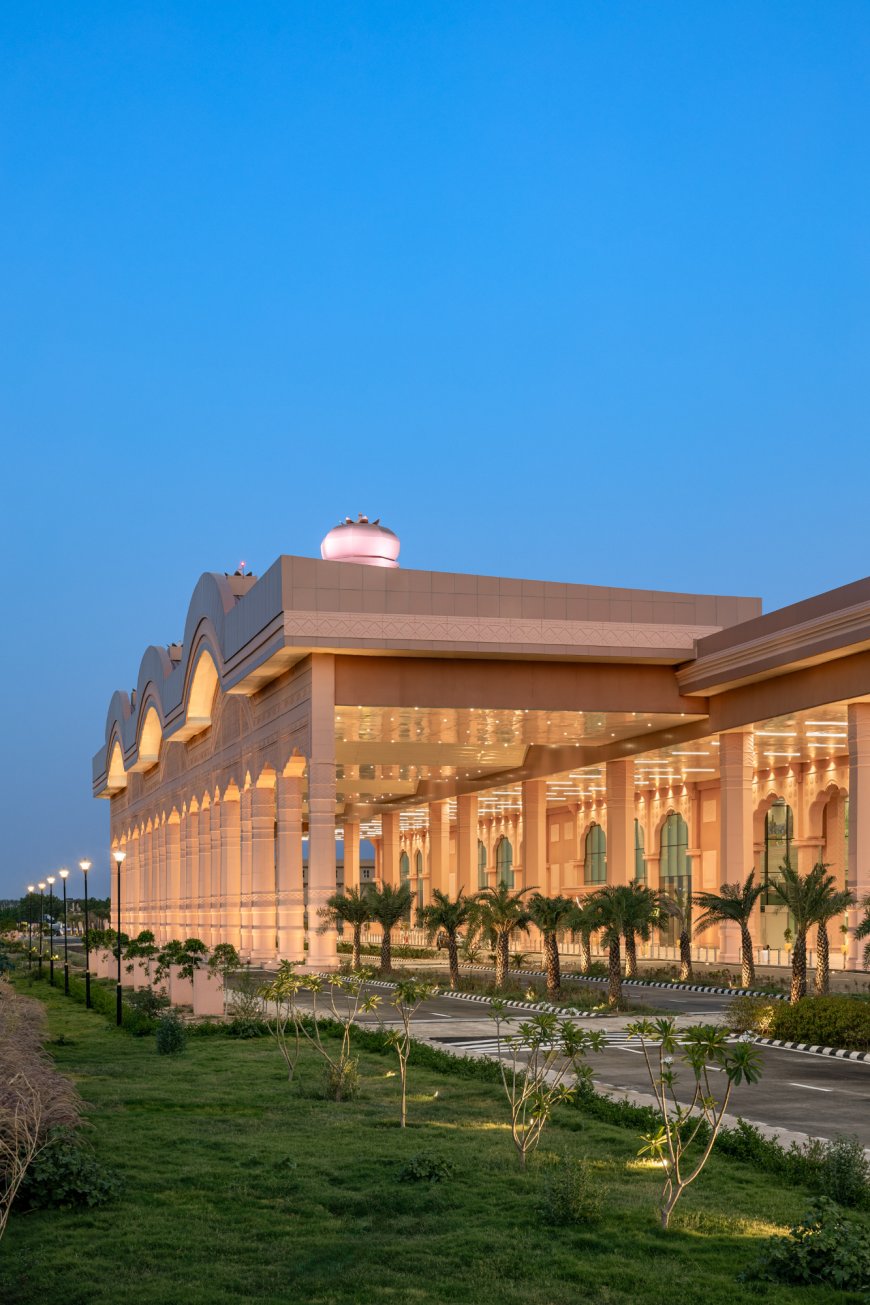
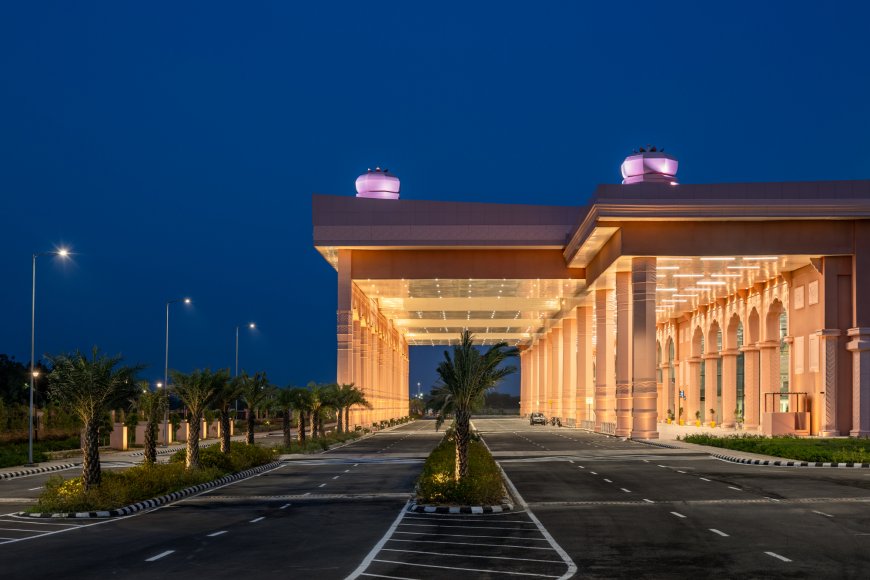
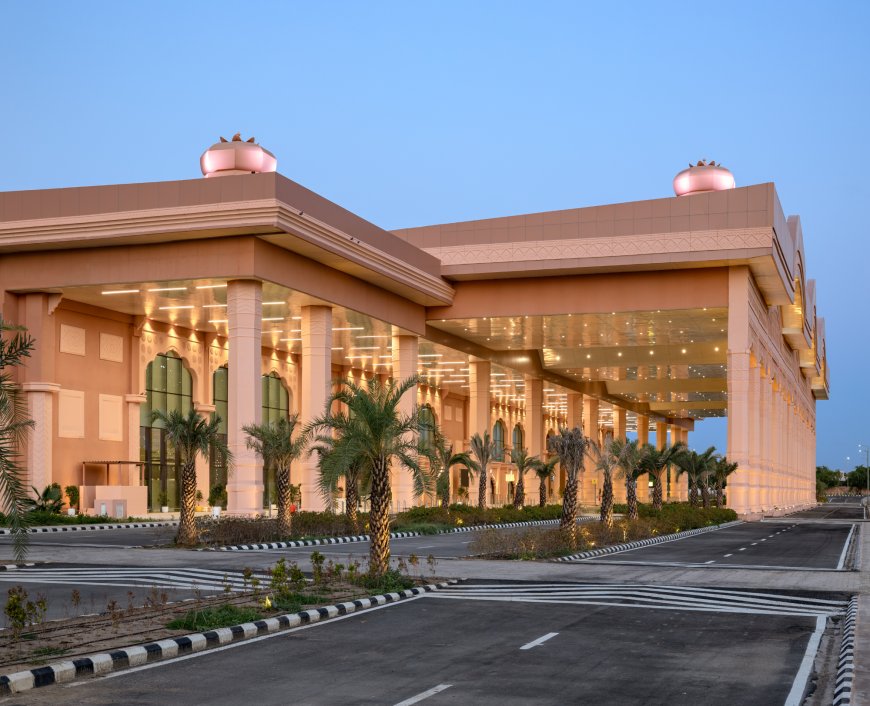
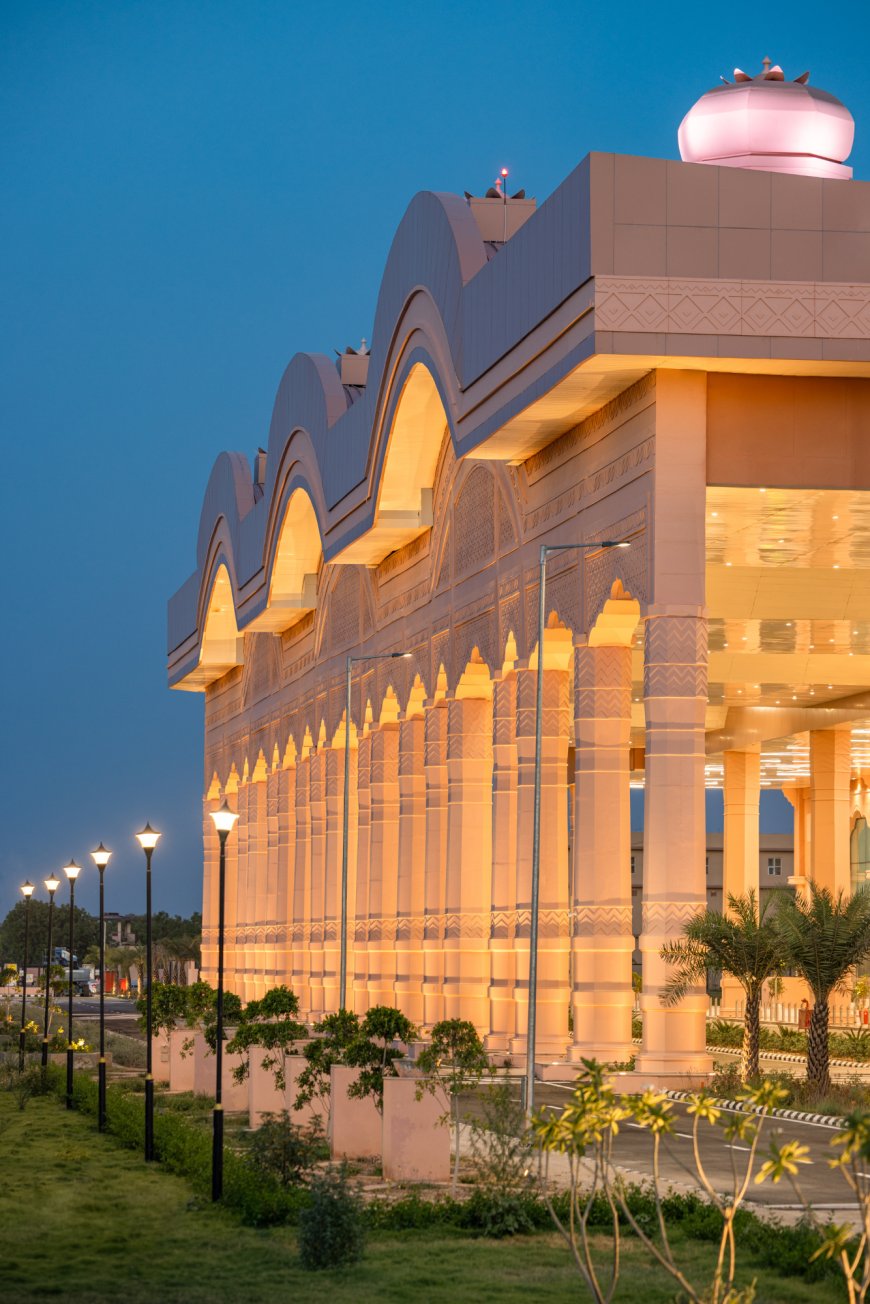
At Jodhpur Airport, this idea shapes the arrival experience. Passengers approach the terminal through a forecourt that leads to a pronounced entrance threshold crowned by a fluted domical form. The dome is finished with a kalasa positioned on a lotus base, elements widely seen in temple and palace architecture across the region. Placed at the centre of the facade, the domed gateway establishes a recognisable architectural identity for the terminal while framing the transition from the exterior forecourt into the interior concourse.
Drawing from the Architectural Language of Jodhpur
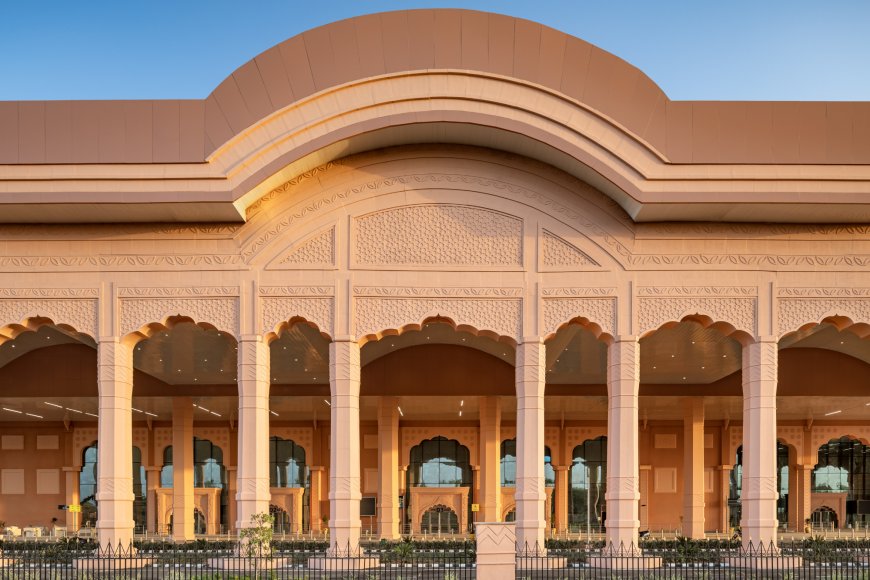
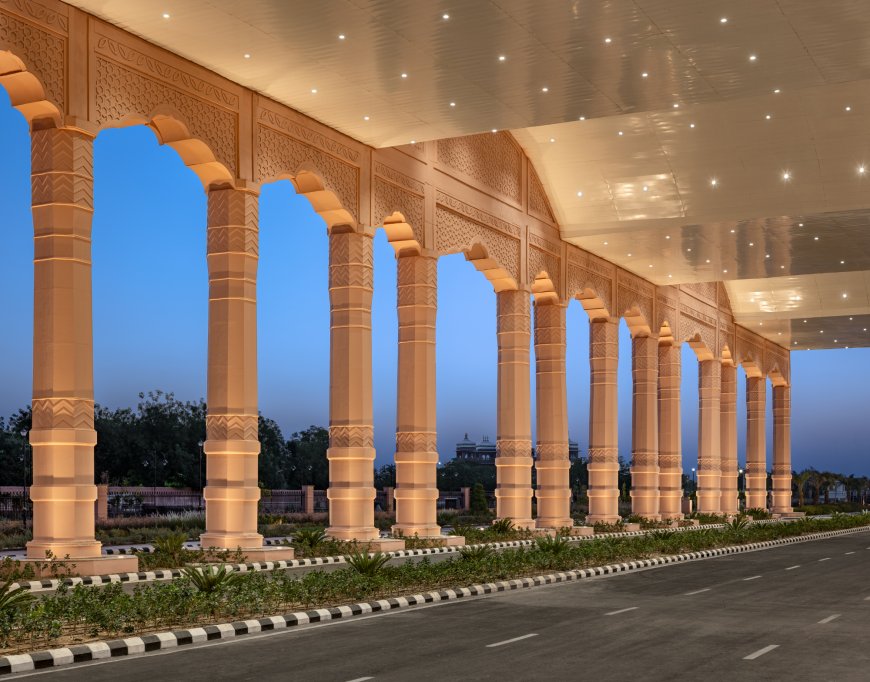
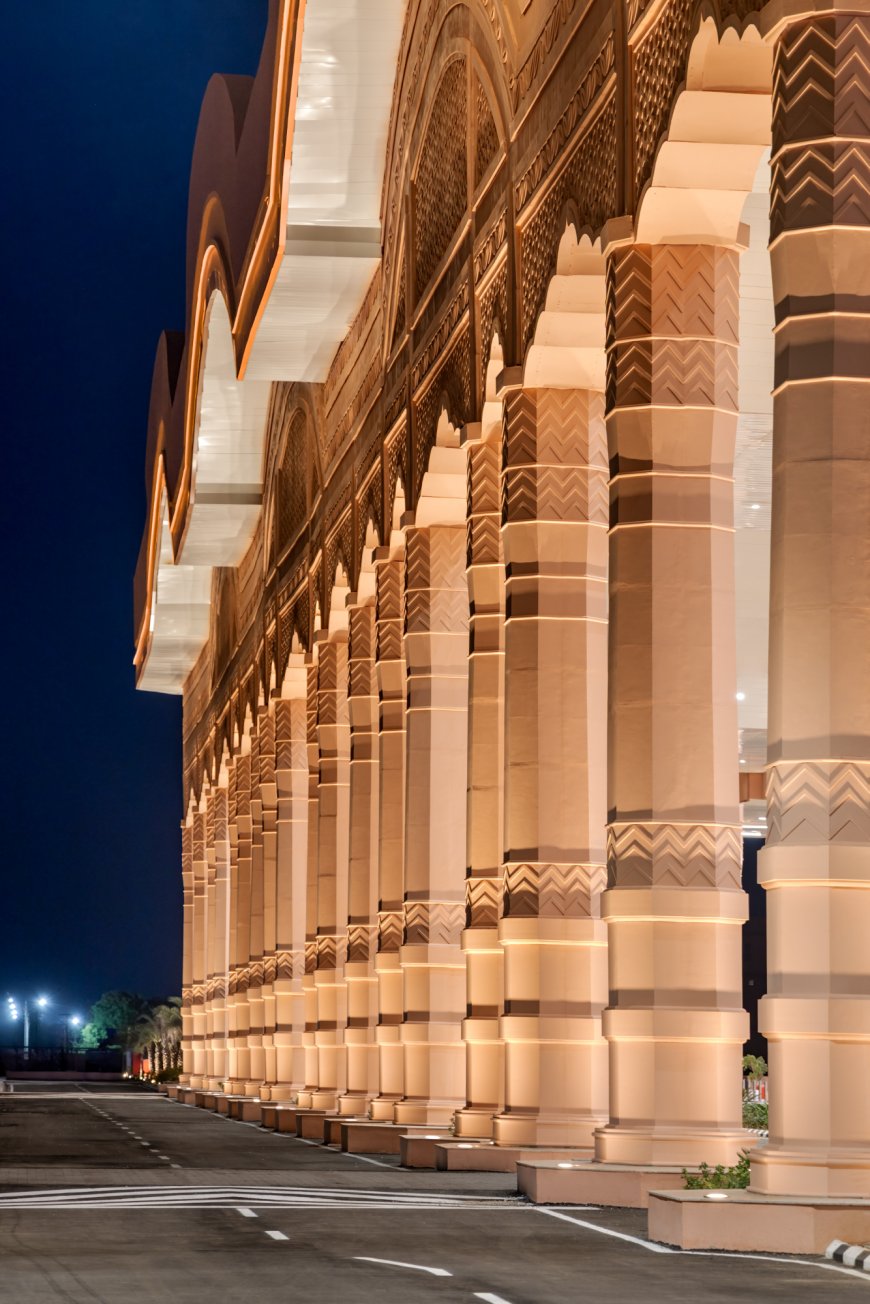
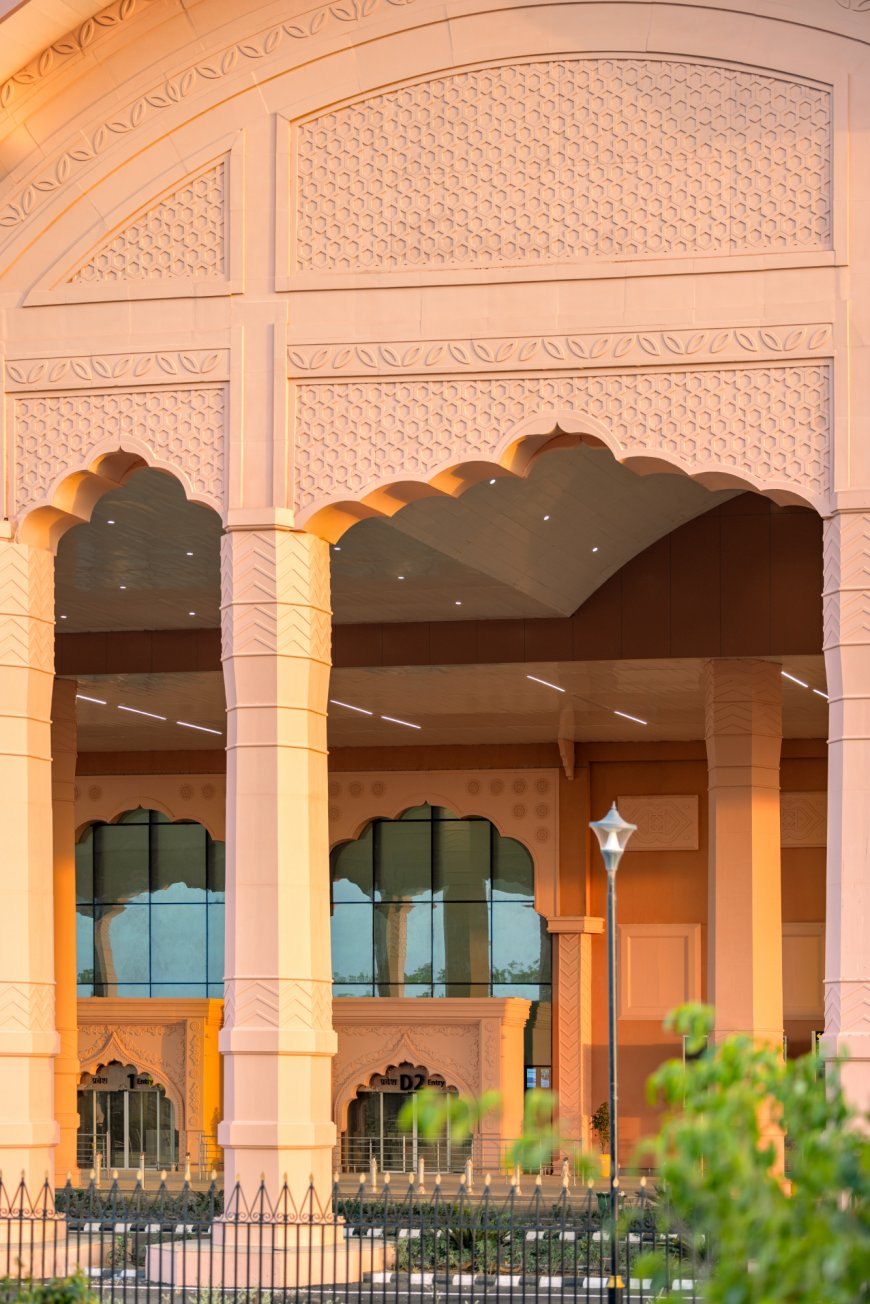
Jodhpur’s forts, palaces, and historic residences demonstrate a long history of carved sandstone surfaces and finely articulated architectural elements. At the new Terminal, contemporary materials are used in the design to achieve efficient material performance and construction timelines while retaining the visual character of traditional architectural references, balancing context, constructability, and resource optimisation.
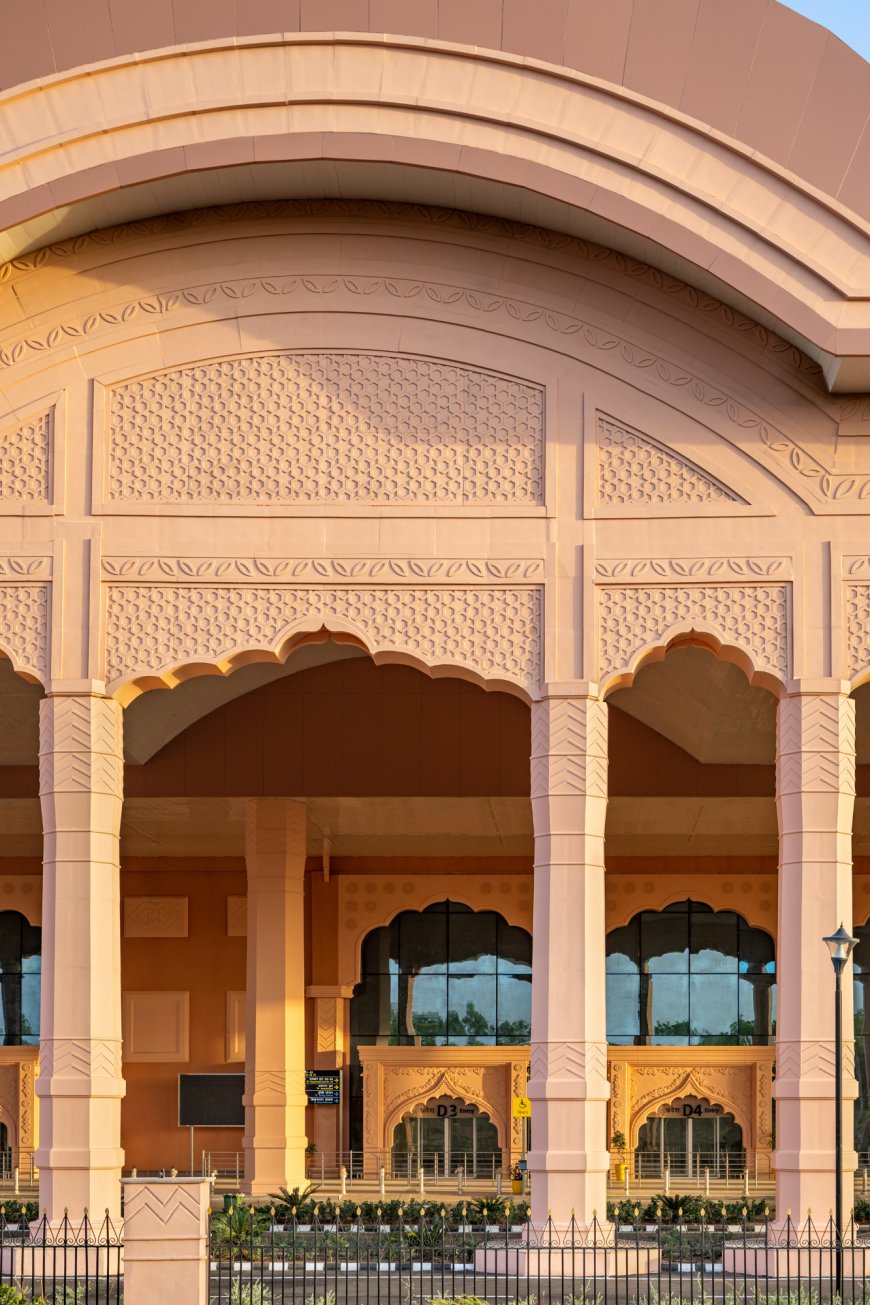
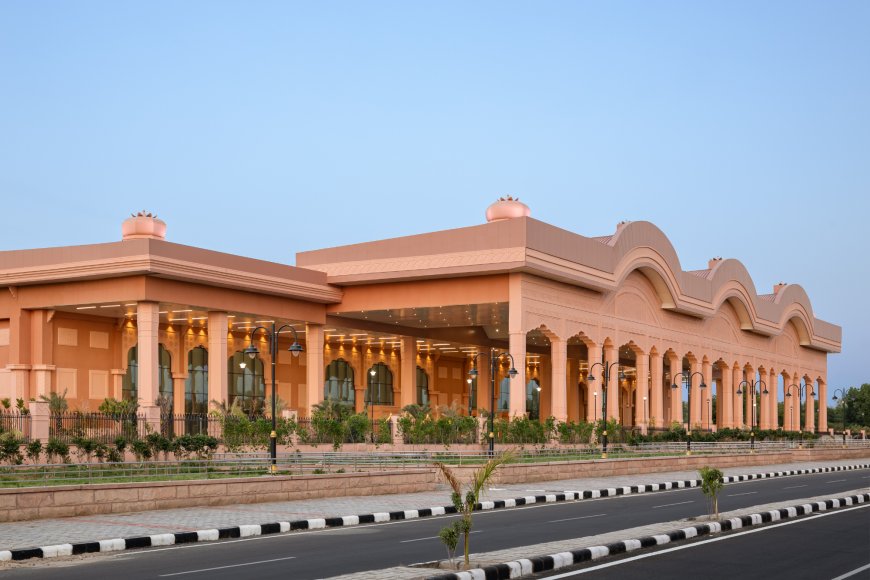
The terminal continues this lineage through intricately carved GFRC finished facades, columns, and architectural frames that introduce depth and texture to the building envelope. The facade incorporates multifoil arches, a form widely seen in Rajputana architecture, in which the arch's inner curve is articulated into multiple rounded lobes. The patterns and motifs are inspired by regional craft traditions, embedding Jodhpur's material culture within the scale of contemporary airport infrastructure.
Passenger Experience and Interior Spaces
Natural light plays a defining role in shaping the interior environment of the terminal. The building envelope and fenestration strategy allow extensive daylight penetration across regularly occupied areas. A window-to-wall ratio of 39.7% balances daylight access with control of solar heat gain.
Artificial lighting systems supplement daylight where required while maintaining consistent illumination across waiting areas, circulation zones, and operational spaces. Thermal comfort is maintained through envelope performance and mechanical systems designed for Jodhpur’s hot-arid climate, while acoustic insulation around major equipment helps keep indoor noise levels within acceptable limits.
Art as a cultural continuity
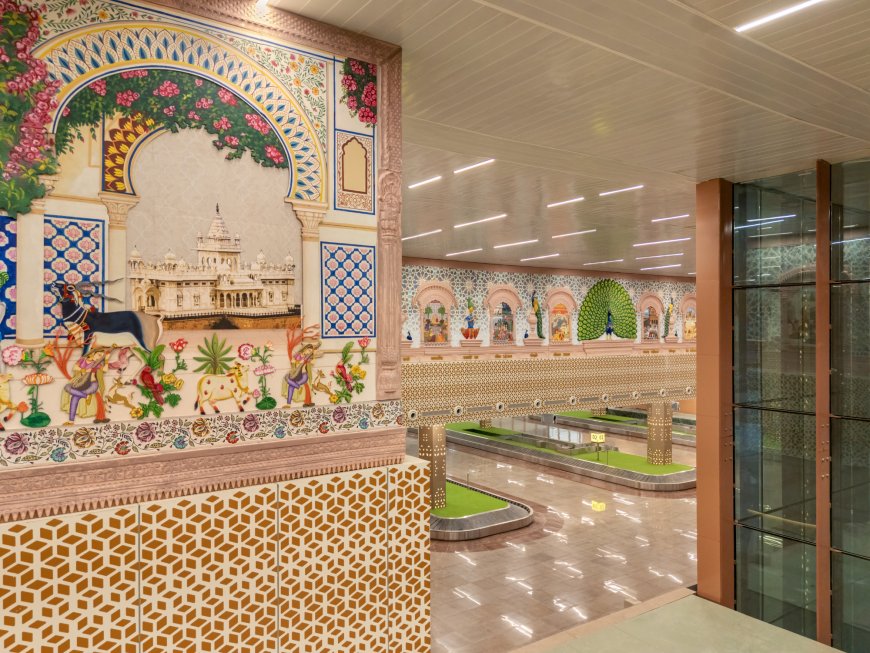
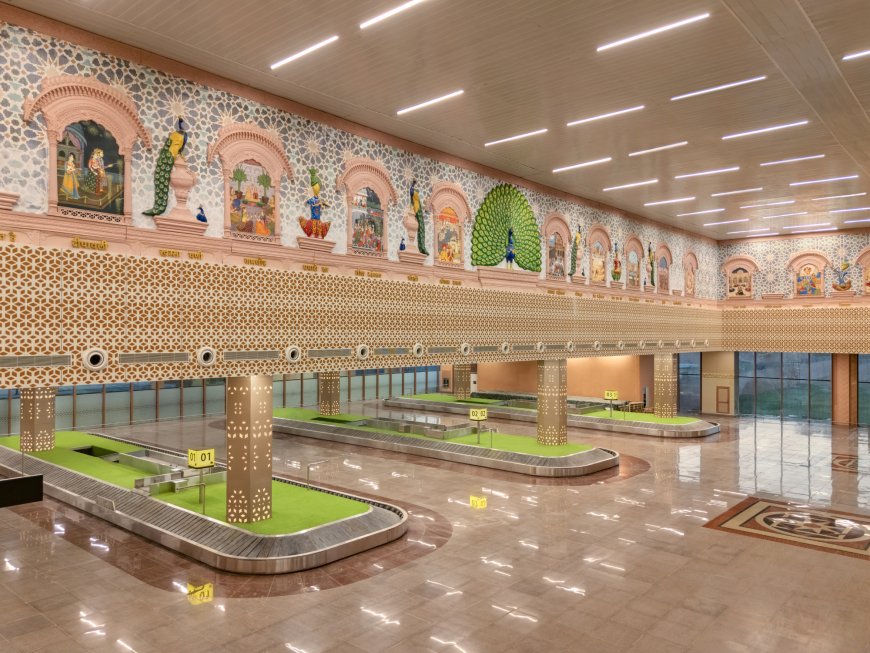
Interior spaces incorporate visual references to Rajasthan’s artistic traditions. These artworks are developed in collaboration with regional artists, extending local craft practices into the terminal's public realm and reinforcing a sense of cultural continuity within a contemporary setting. Curated murals depict regional motifs, including peacock imagery and scenes drawn from royal courts, themes frequently found in Rajasthani painting and decorative arts.
Reducing Energy Demand in a Desert Climate
The project aims to achieve GRIHA certification by integrating sustainability into every layer of design. Passive design strategies and efficient mechanical systems reduce overall energy demand. Insulated assemblies, controlled glazing ratios, shading strategies, and high-efficiency HVAC systems work together to minimise cooling loads. Energy simulations indicate that the terminal consumes over 50% less energy than the benchmark for comparable airport buildings, demonstrating the impact of combining passive environmental strategies with efficient building systems.
Water conservation measures extend across both building systems and site infrastructure. Water-efficient plumbing fixtures, including low-flow faucets, dual-flush water closets, and sensor-based urinals, reduce potable water consumption by over 70% compared with conventional fixtures. Wastewater generated at the terminal is treated at an on-site sewage treatment plant and reused for flushing and landscape irrigation. Rainwater from roof surfaces and paved areas is collected and directed to recharge pits, enabling approximately 39% of the site’s annual runoff to be returned to the groundwater through this system.
Intelligent Systems Supporting Long-Term Performance
Operational performance is supported through an integrated network of monitoring systems. Smart meters track energy consumption at the grid connection, diesel generators, and major building systems, while sub-meters monitor HVAC equipment, lighting, and vertical transportation. Water flow meters record supply, reuse, and irrigation demand, enabling facility managers to monitor resource consumption and manage operational performance across the terminal.
Within India’s expanding aviation network, the Jodhpur Airport Terminal emerges as both an infrastructure hub and a cultural interface. The design engages with regional identity as an active framework that informs form, material, and spatial experience. At the intersection of movement, memory, and place, the terminal extends Jodhpur’s architectural legacy into a new civic scale.