
Rain Rhizome / TANAT + Rizoma del Agua
In many Mexican cities, drinking water has not simply disappeared from public life; it has been reorganized through a dense economy of substitution. It arrives by truck, in plastic bottles, in twenty-liter garrafones, through rooftop tanks, domestic filters, purification shops, informal deliveries, and routines of storage that turn access to water into an everyday practice of calculation. What appears as a failure of the network has also produced a spatial and economic culture in which responsibility is transferred to households, and often to the bodies that carry, buy, clean, mistrust, and manage water before it can be consumed.
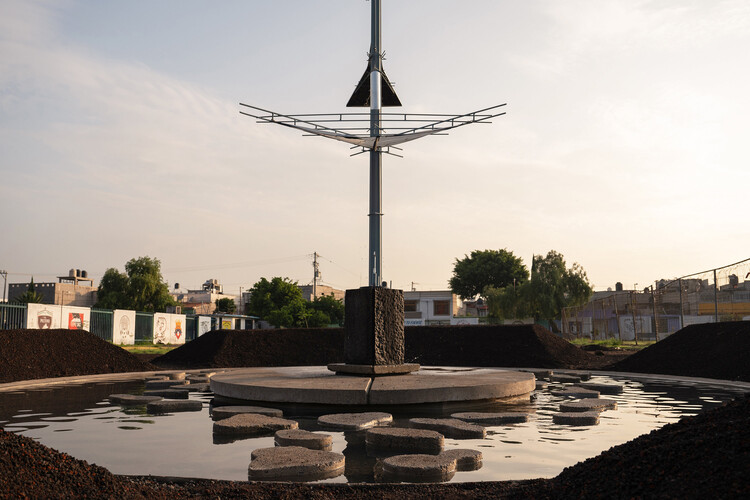
In many Mexican cities, drinking water has not simply disappeared from public life; it has been reorganized through a dense economy of substitution. It arrives by truck, in plastic bottles, in twenty-liter garrafones, through rooftop tanks, domestic filters, purification shops, informal deliveries, and routines of storage that turn access to water into an everyday practice of calculation. What appears as a failure of the network has also produced a spatial and economic culture in which responsibility is transferred to households, and often to the bodies that carry, buy, clean, mistrust, and manage water before it can be consumed.