
The Rock & Roll Hall of Fame Gets a Refresh—and Everything Else You Need to Know About This Week
Data center developers set their sights on California golf courses, three new exhibitions explore Paul R. Williams’s architectural legacy, and more.
Data center developers set their sights on California golf courses, three new exhibitions explore Paul R. Williams’s architectural legacy, and more.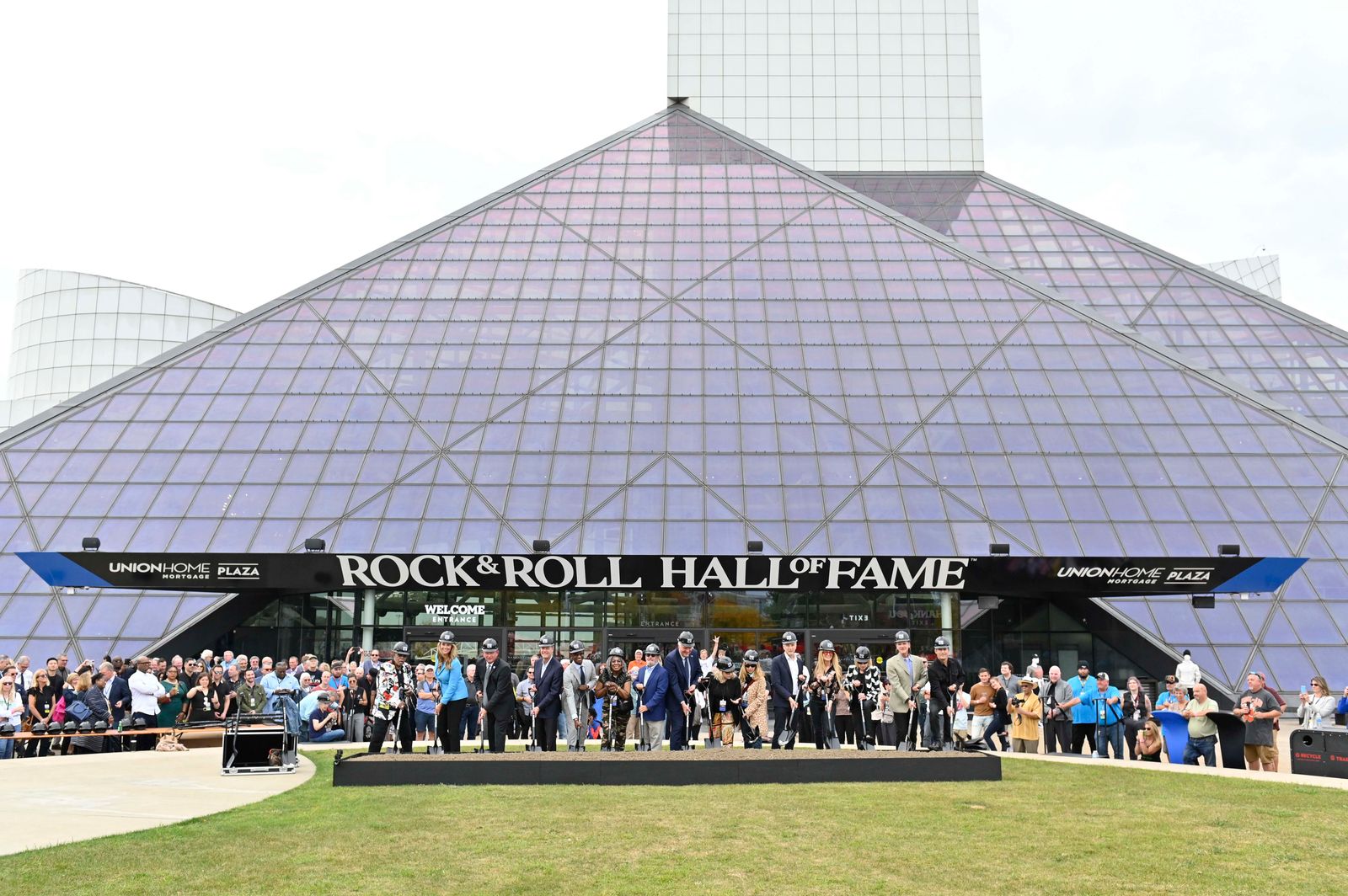
- While rock ’n’ roll may seem most at home in a dimly lit club, Cleveland’s Rock & Roll Hall of Fame & Museum is ready to let in a little light. The I.M. Pei–designed landmark has begun a $195 million renovation and expansion by Manhattan-based firm PAU, due to wrap in early 2028. The headliners: a soaring glass-walled atrium overlooking Lake Erie, a new amphitheater, and a waterfront park. The idea is to bring the lakefront into the museum and the museum into the everyday life of Clevelanders—a fresh approach for an institution that draws roughly 80 percent of its visitors from out of town. (The New York Times)
Pietro Belluschi’s modernist churches have been revered for their "holy emptiness," but not everyone shares the architect’s faith in restraint. At Christ the King Catholic Church in Milwaukie, Oregon, parish leaders have earmarked $4.9 million of a $6.5 million fundraising campaign to "beautify" Belluschi’s 1980 design. To the horror of parishioners, preservationists, and Belluschi’s own son, the plans would pile on Romanesque flourishes, paint over or rip out original woodwork, and excise the stained-glass cross by artist György Kepes. The firm behind the makeover is Harrison Design, which is also responsible for President Trump’s proposed 250-foot triumphal arch. (The Architect’s Newspaper)
Data centers aren’t exactly winning popularity contests these days. But developers in Southern California are trying a new pitch: At least we’re not a golf course. A plan for the California Country Club in the City of Industry would replace much of its 18-hole course with a 99-megawatt data center, leaving nine holes and adding green space for good measure. Its backers say the swap would reduce the property’s overall water consumption by 13 percent. Whether that will win over communities worried about noise, electricity costs, and the other joys of living near a server farm is another matter. (Bloomberg)
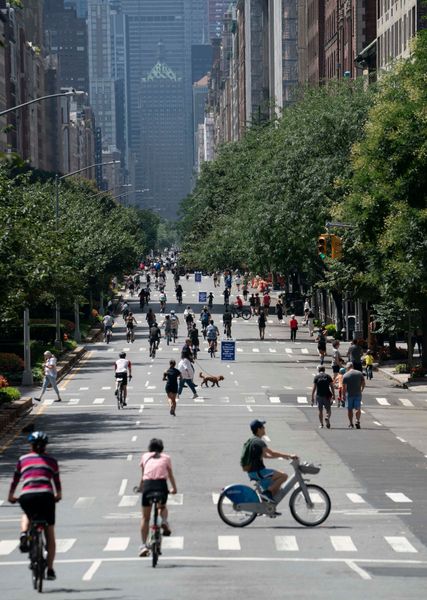
People enjoy biking, running, and walking on Park Ave. during Open Streets Saturday, August
19, 2023, in Manhattan, New York.
Barry Williams for NY Daily News via Getty Images
Giving up your car saves on gas, insurance, and repairs, but it’s easier in some places than others. A new study by CoworkingCafe ranked 111 U.S. cities on everything from transit access to how many residents walk or bike to work. Surprising no one who has ever circled a block hunting for parking, New York took the top spot, with 44 percent of commuters relying on public transit. San Francisco came in second, helped by gas at a staggering $6.33 a gallon, followed by Washington, D.C., Newark, and Boston. See how the remaining cities measure up. (The New York Times)
If you can picture the quintessential L.A. home as Hollywood sold it, you have the pioneering Black architect Paul R. Williams to thank for much of that vision. Long before indoor/outdoor living became a California real estate cliché, Williams helped make the connection between house and garden a defining feature of SoCal life. His portfolio runs to nearly 2,000 homes across L.A., including designs for Frank Sinatra and Cary Grant. Yet segregation barred him from living in many of the neighborhoods where he worked. Now, exhibitions at LACMA, the Getty, and USC Fisher are giving his archive its first major showing, ranging from celebrity mansions to public housing. (Dwell)
Top photo courtesy Duane Prokop/Getty Images