
What to Expect If You Want to Be a Backyard Beekeeper
I thought it’d be quaint to care for my own buzzing hives, but I learned there’s a lot to prepare for, from heavy lifting to warding off honey-hungry wildlife.
I thought it’d be quaint to care for my own buzzing hives, but I learned there’s a lot to prepare for, from heavy lifting to warding off honey-hungry wildlife.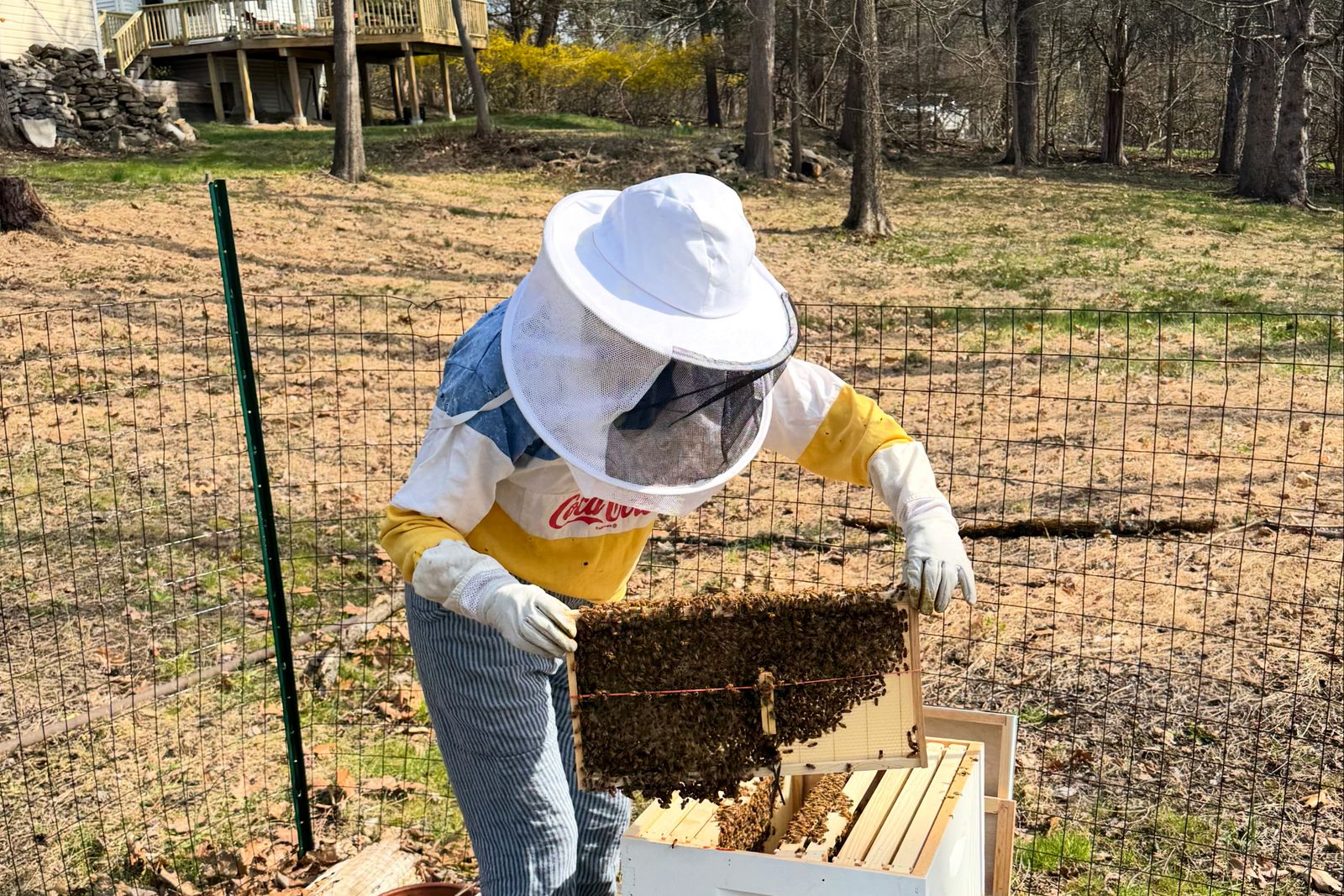
Some people pine for puppies—big, hungry eyes and wildly wagging tails. Others long for a feline companion, whose affection they have to earn. Others are into koi fish, or chickens, cockatoos, or turtles. But some of us yearn for something else: for tens of thousands of stinging insects, buzzing in a box. That is to say, for bees.
Count me among their ranks. Two years ago, when my husband and I ditched our frenzied New York City lives for bohemian countryside living—i.e. moved to the Hudson Valley—I knew I needed something to better connect me with my new, wilder environs. I am not an outdoors girl, and even less a gardener. But bees! That sounded quaint and relatively low-maintenance. I enrolled in an Introduction to Beekeeping class that January at Hudson Valley Bee Supply, my local bee store, and decided to raise the stakes by preordering a package of bees, too.
I soon discovered that keeping bees is actually nothing like keeping a cat or a cockatoo. It is, in fact, animal husbandry—not unlike keeping cows, goats, rabbits, or ducks. Jorik Phillips, my teacher and the founder of Hudson Valley Bee Supply, defines beekeeping simply: "‘Beekeeping’ is short for ‘keeping them alive through the winter,’" he says. "Otherwise, you’re ‘bee-having.’"
That seemingly straightforward mission can spin into a remarkably complex undertaking, as I was already learning before my first season had even started. Now that I’m on year two, I’ve come to appreciate that for most beekeepers (or "beeks," as we sometimes call ourselves), gaining proficiency with the essentials of the practice can take a few years—but mastery can take a lifetime.
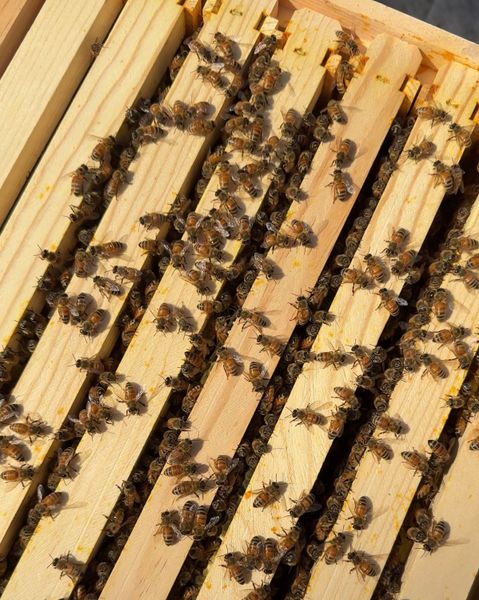
Bees buzz on the top of the hive’s removable frames.
Courtesy of Lila Allen
Getting Started
By the time my bees arrived that May, I’d studied the photocopied mite-treatment guidelines provided by my supplier, and read through Kim Flottum’s The Backyard Beekeeper: An Absolute Beginner's Guide to Keeping Bees in Your Yard and Garden. I believe strongly in learning by doing, and figured I’d sort out the rest of it as I went. I assembled the hive (incorrectly, until I was nudged in the right direction by a friend) and picked up a three-pound package of bees—that’s around 10,000 of them—from a "bee drive-thru," which is exactly what it sounds like. I tore down Highway 209 in the pouring rain in my Subaru, a few loose bees buzzing around my head as I drove. I guess this is happening, I thought.
A brave friend helped me install the package, which involved shaking those 10,000 bees directly into the hive and hoping for the best. I got stung immediately. The protocol after rehoming the bees is to let them stay put for three days as they sniff out their new domicile—but 36 hours in, I woke up to a crime scene out of Hanna-Barbera: A bear had found my hive and ripped it apart during a rainstorm, scattering pockets of bees around the grass. I broke down crying, and scooped up wet bees by the handful on all fours in the yard. I had no idea if the queen had survived; I never found her.
But a week later, I trudged down to the hive—now surrounded by the saddest fence you’ve ever seen—and saw a few bees flying in and out. Another week later, there was brood (that is, baby bees). Every day, I’d go out and see if they were still alive, and somehow, they were. My fear around them waned, and turned into something else: affection.
Once a week, as is recommended, I’d conduct an inspection, which requires suiting up and prying open the hive to check for food stores, brood (in the form of eggs, pupae, and larvae), and signs of disease or swarming. Critically, it also involves testing regularly for varroa mites—"the number one killer of bees," says Phillips—and treating them.
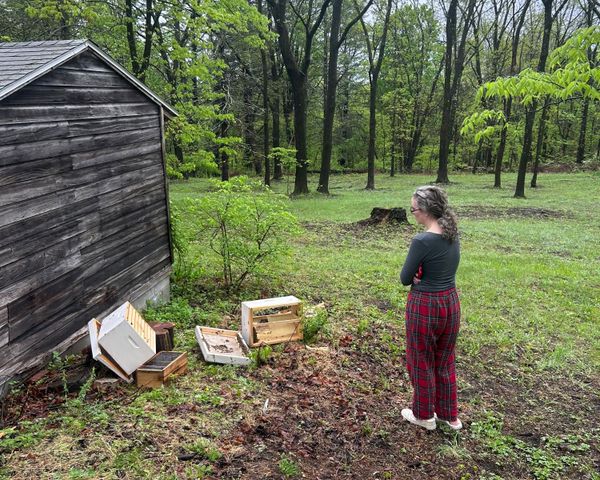
Just a day and a half after installing the bees, a bear ripped the hive apart during a rainstorm.
Courtesy of Lila Allen
What You’ll Need
In my beeyard I use what is known as a Langstroth hive, a simple wooden box with a bottom board, lid, and an interior ledge that holds eight or 10 removable frames. Langstroth hive boxes can be stacked as a colony grows, and its modularity is one of the reasons it is the most popular format here in the U.S.
Acquiring the bees to go in that hive is the easy part. Stores like Phillips’s, where I got mine, offer bees in two forms: packages (similar to the one I bought) and "nucs," short for nucleus colonies—basically, a "starter" beehive containing a few frames with worker bees, a laying queen, brood, and food stores. Hives thrive best in sunny locations and, as I learned 36 hours in, you’re going to want a fence, especially in rural areas. Though it might be tempting to keep the bees in a far-off section of your yard, Phillips would beg you to reconsider. "You’re going to want to enjoy not just taking them apart and fiddling with them, but sitting on a chair and watching the crazy stuff they do," he says.
There’s also a bit of gear required: gloves and a bee jacket, suit, or veil; a hive tool (a small crowbar-like implement for wedging frames); a hive stand (to keep out skunks and other vermin), and a smoker (to keep the bees off of you while you work). All together, expect to spend at least $500 in your first year on equipment. I don’t live in any kind of sanctioned neighborhood, so I didn’t need to check my homeowners’ association bylaws—but you might. And in some states, including my own, you’ll need to register your hive. Since your bees will likely pay a visit to your neighbors’ yards, it’s wise to let them know about your new hobby, too. (Mine were gracious and curious, but some, I have heard, are not so lucky.) "It might take some charisma or kindness," says Frank Schellace, a beekeeper, researcher, and artist. "Teach them, rather than arguing with them," he suggests. A little bribery might not hurt, either: Honey can be a very effective peacemaker.
Beyond those basics, as a new beekeeper, you’ll also need companionship. "The first one to three years for most people are going to be tough," says Schellace. He and Phillips both recommend finding a mentor that can advise you on your journey. Because best practices will depend on your local weather, climate, and flora, it’s best to find one close to you who knows the unique conditions of your area.
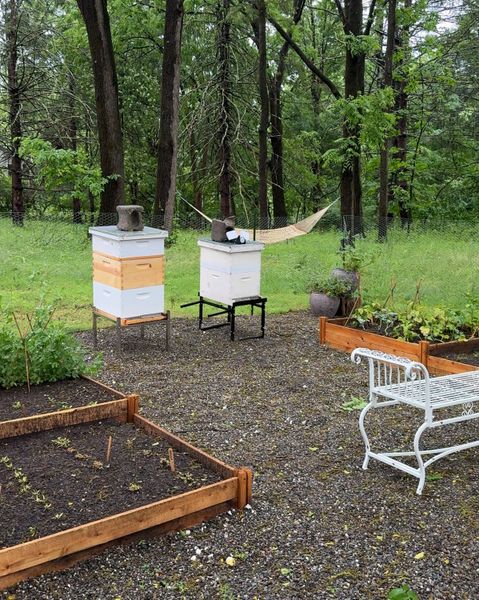
In its second year, the bee yard has been expanded alongside the garden.
Courtesy of Lila Allen
See the full story on Dwell.com: What to Expect If You Want to Be a Backyard Beekeeper
Related stories: