Asking £3.5M, This Legendary Arts and Crafts Estate Started as a Simple Cottage
Designed by famed architect Alfred Powell, Long Copse grew from a four-room summer home into a sprawling retreat with stables, a guest house, and a barn with a theatrical past.
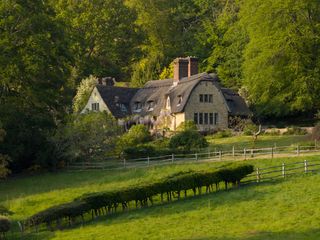
Designed by famed architect Alfred Powell, Long Copse grew from a four-room summer home into a sprawling retreat with stables, a guest house, and a barn with a theatrical past.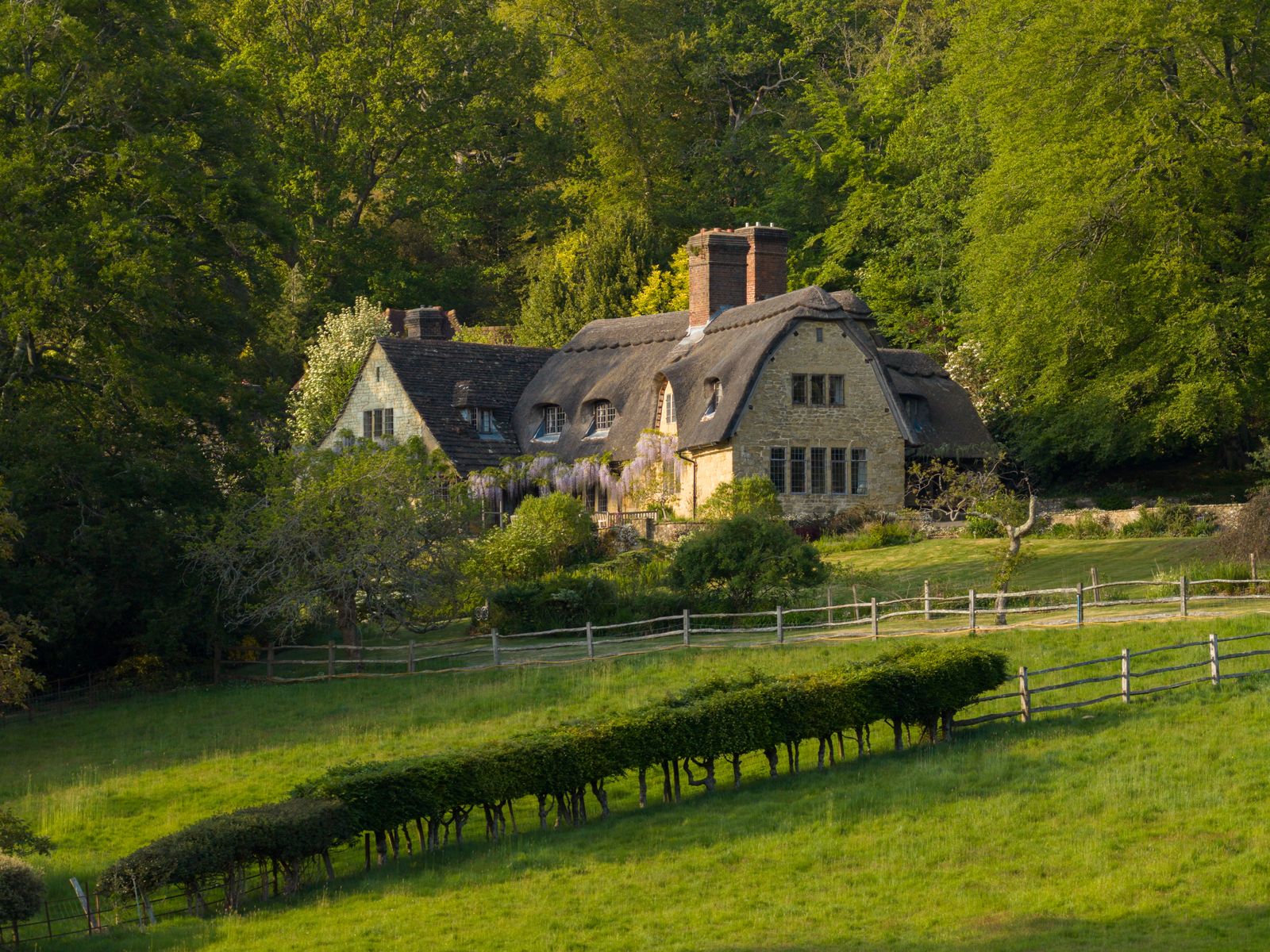
Location: Pitch Hill, Ewhurst, Cranleigh, Surrey, England
Price: £3,500,000 (approximately $4,669,000 USD)
Year Built: 1899
Architect: Alfred Powell
Footprint: 3,301 square feet (6 beds, 3 baths)
Lot Size: 8.63 acres
From the Agent: "Launching for £3.5 million, Long Copse in Ewhurst, Surrey, is one of the finest and rarest surviving houses associated with the Arts and Crafts movement, designed by architect, designer, and ceramicist Alfred Powell. Available for only the third time since it was built in 1899, the Grade II–listed home remains an extraordinarily intact example of one of Britain’s most influential design movements.
Originally commissioned as a four-room summer cottage for Mrs. Mudie-Cooke, Long Copse was conceived by Powell as an elegant country retreat, deliberately disguised as a modest Surrey cottage. As his client fell in love with the house, it was gradually extended into a larger family home, with each addition designed to appear as though it had evolved organically over centuries.
Powell was a leading figure in the Arts and Crafts Movement, which emerged in response to the industrial revolution and championed traditional craftsmanship and natural materials over mass production. Although perhaps best known for his work with Wedgwood, where he helped revive hand-painted ceramics, Powell’s architectural projects are exceptionally rare, making Long Copse one of the most important surviving examples of his work.
The house also features the work of Ernest Gimson, another influential Arts and Crafts architect and furniture maker. Described by architectural historian Sir Nikolaus Pevsner as "the greatest of the English architect-designers," Gimson designed much of the home’s existing oak joinery, original doors, fireplaces, fitted furniture, flooring, and timber detailing.
The craftsmanship extends throughout the house, from its Bargate stone exterior and leaded windows to exposed roof trusses, handcrafted oak staircases, original fireplaces, and bespoke cabinetry. Decorative sgraffito by Italian artist Cavaliere Formilli appears in the garden room, while a detached thatched guest cottage and timber-framed barn complete the property.
Long Copse has attracted architects and historians from around the world and was featured in Lawrence Weaver’s seminal Small Country Houses of Today. Set high on the slopes of Pitch Hill within the Surrey Hills National Landscape, the property enjoys breathtaking views across the Sussex Weald alongside beautifully established gardens, woodland, paddocks, and direct access to miles of surrounding countryside.
Lindsay Cuthill, co-founder of Blue Book Agency, comments: ‘The Arts and Crafts Movement was founded on the belief that good design enriches everyday life. More than 125 years later, Long Copse still embodies that philosophy. It isn't simply an important historic house; it’s a wonderfully comfortable family home where every beam, fireplace and handcrafted detail continues to serve exactly the purpose it was designed for.’"
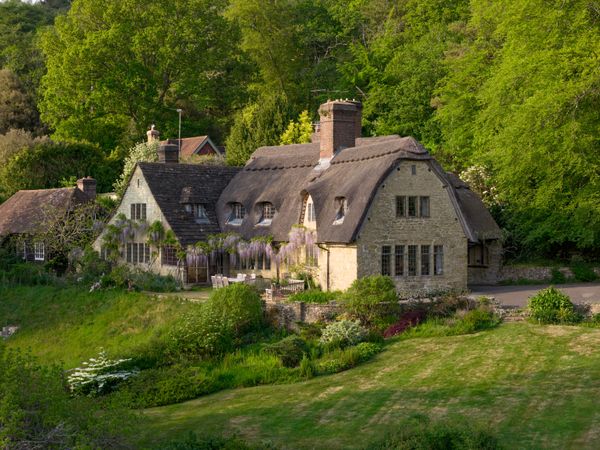
Designed by leading Arts and Crafts architect Alfred Powell in 1899 for Mrs. Mudie-Cooke, Long Copse began as a four-room summer retreat that resembled a modest Surrey cottage. As its owner’s ambitions grew, so did the house, gradually evolving into the larger country estate it is today.
Photo by Freddie Ardley
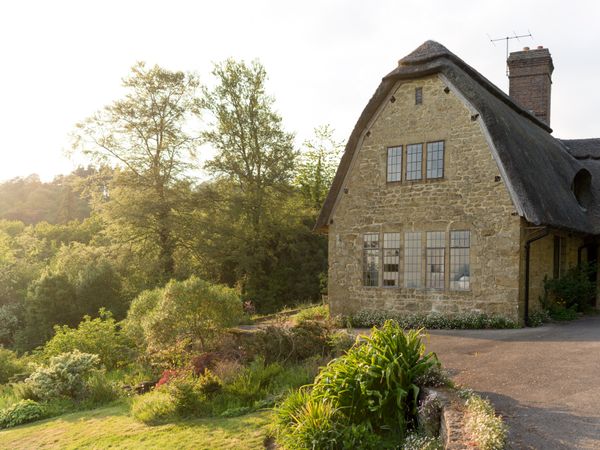
Photo by Freddie Ardley
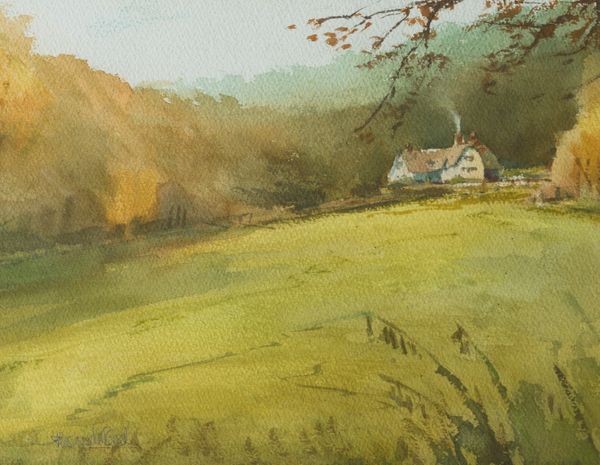
The Arts and Crafts movement emerged in Britain in the late 19th century as a response to the Industrial Revolution and the perceived decline in craftsmanship and quality brought on by mass production. Championing traditional techniques, natural materials, and thoughtful design, the movement sought to improve everyday life for both makers and consumers. Alfred Powell and Ernest Gimson were among its leading figures, and their work at Long Copse reflects those ideals.
Photo by Freddie Ardley
See the full story on Dwell.com: Asking £3.5M, This Legendary Arts and Crafts Estate Started as a Simple Cottage
Related stories: