The New Eames Museum Faces Criticism—and Everything Else You Need to Know About This Week
ADU construction is putting L.A. renters’ parking spaces on the line, a would-be billionaire enclave winds up in bankruptcy court, and more.

ADU construction is putting L.A. renters’ parking spaces on the line, a would-be billionaire enclave winds up in bankruptcy court, and more.
- For the Barend family, the dream of affordable homeownership in Bolinas, California, has turned into a living nightmare. After winning a lottery to purchase their newly built home through a project developed with Habitat for Humanity, the couple discovered a series of construction defects, including a toilet that had been dumping sewage beneath their house. Residents of two other homes in the four-house development have reported similar problems, and the Barends say they’ve struggled to get adequate help. Here’s how a dream scenario quickly became a nightmare. (Marin Independent Journal)
- Leave it to Los Angeles to turn a housing fix into a fight over parking. Under a new California law encouraging more ADUs, landlords are converting garages and parking spaces into new homes, including spots tenants say are guaranteed in their leases. Housing advocates argue that the city needs homes more than it needs parking, but older residents and those with disabilities fear losing their spaces could force them out. (Los Angeles Times)
- Nearly a decade after self-styled visionary developer Scott Gillen set out to create The Case, a hilltop enclave of five midcentury-inspired Malibu megamansions priced as high as $100 million apiece, only one has sold. Now mired in bankruptcy proceedings and a legal battle over control of the project, his bid to build "America’s most expensive neighborhood" is looking like a very expensive case study in the perils of believing your own hype. For all his attention to detail, Gillen, it seems, overlooked a crucial one: billionaires don’t want to live in a subdivision. (The Wall Street Journal)

Texas’s Senator elect James Talarico speaks on election night.
Photo by Chip Somodevilla/Getty Images
- Though 2026 was hailed as a "banner year" for housing reform, Tuesday’s election results indicate voters want more. Alongside sweeping Democratic victories, Californians approved an $11.25 billion housing bond and a measure to establish a lower-interest homebuyer loan fund, while voters in Florida and North Carolina backed constitutional amendments aimed at easing property-tax burdens. New Democratic majorities in several states could also pave the way for more renter protections and housing investment. Now comes the hard part: actually making housing more affordable. (Dwell)
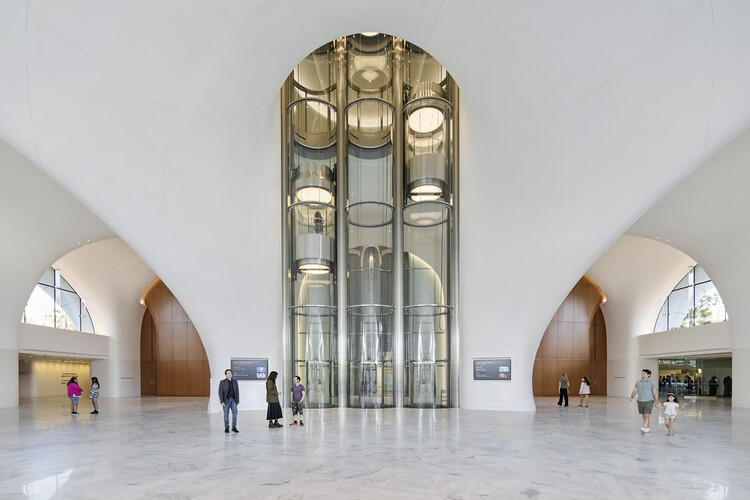
- Charles and Ray Eames believed good design should be for everyone. Honoring their philosophy, however, is proving a little complicated for the new Bay Area site being renovated in their name. As the Eames Institute moves forward with plans by Herzog & de Meuron to transform the former Birkenstock campus in Novato, California, into a museum dedicated to the design duo, questions are surfacing about the involvement of early donor and Airbnb cofounder Joe Gebbia, whose ties to the Trump administration and anti-immigrant social media posts have been called out as decidedly un-Eames. Here’s what the institute had to say about the controversy. (Fast Company)
Top photo courtesy Herzog & de Meuron