
Voters Couldn’t Be Clearer About the Housing Problem
Undergirding the midterm landslide for Democrats was a consensus that the costs of living must come down.
Undergirding the midterm landslide for Democrats was a consensus that the costs of living must come down.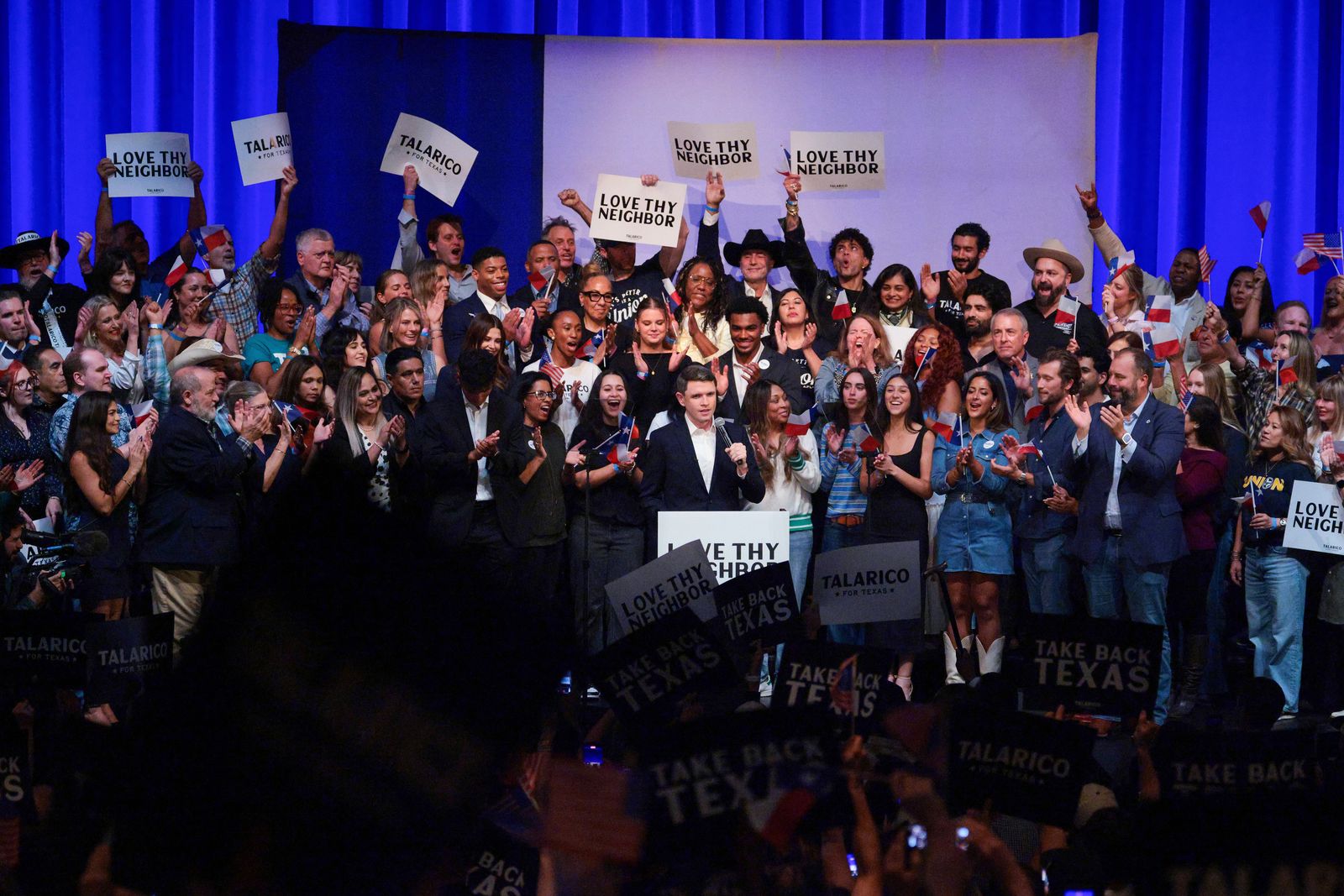
While the Democratic party’s paradigm-shifting electoral performance will be the main takeaway from Tuesday’s election, one of the likely ripples will be more opportunities to pass legislation supporting housing production and housing access.
Like the 2024 election, affordability became a major theme of this election season. The issue factored into numerous key races, and a number of propositions and ballot measures directly addressing the typical household’s largest expense—housing—proved popular with an electorate straining under inflation and high costs. Even the pushback against data centers, including land use issues, impact on construction costs, and inconvenience to neighbors, point back to housing.
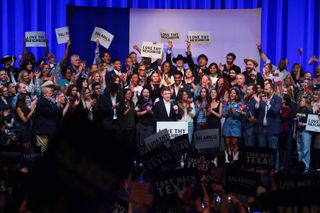
Winning candidates, from Janeese Lewis George, the incoming Washington, D.C., mayor who ran on a campaign of Homes for All, to James Talarico, the new Democratic Senator from Texas, made mention of housing issues and affordability in their victory speeches last night. "This is a win…. For every young person who’s trying to buy a home," Talarico said. Now, they’ll be challenged to take this message from voters and start passing new legislation and regulations.
The focus isn’t surprising. In numerous polls in the run-up to the election, various portions of the electorate highlighted concerns about housing: 89 percent of voters want bipartisan congressional action around housing affordability and housing costs remain a top issue for Gen Z. Owning a home feels more and more out of reach, with mortgage rates above seven percent. While median rent across the nation has plateaued, it remains significantly higher than the pre-pandemic average.
If anything, the emphasis many candidates placed on housing has only underscored just how busy city, state, and federal lawmakers have been around this key part of the affordability agenda. The now lame duck 119th Congress, one of the most unproductive of the modern era, even passed a rare piece of bipartisan federal housing legislation. State and local legislators and leaders have also been busy. According to the Pew Charitable Trust, 2026 was a "banner year" for housing reform, with states passing a multiplicity of bills focused on land-use reform, housing affordability, accessory dwelling units, parking minimums, and starter home and permitting reform.
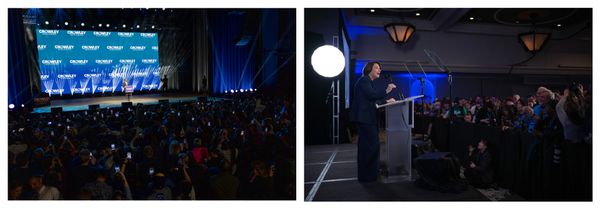
Wisconsin Democratic gubernatorial candidate David Crowley addresses supporters after declaring victory on November 03, 2026, in Milwaukee, Wisconsin (left). Minnesota’s Governor-elect, Senator Amy Klobuchar, addresses Minnesota DFLers gathered to watch election results at the InterContinental Saint Paul Riverfront on Tuesday night (right).
Photos (from left): John Moore/Getty Images; Jeff Wheeler/The Minnesota Star Tribune
Now, a string of new Democratic governors, many of whom will enter office with their parties controlling the state legislature—Wisconsin, Pennsylvania, and Minnesota all have new trifectas—will be in a position to be more aggressive with housing policy. These victories across the board may tilt the policy focus away from the traditional Republican solutions of deregulation and private investment and towards more Democratic priorities including more rent support, renter protections, and affordable housing funding.
In California’s gubernatorial race, victor Xavier Becerra, the former Secretary of Health and Human Services, has promised to declare the state’s housing shortage a state of emergency on day one, and has spoken of a number of housing and construction-related proposals: implementing shot clocks to speed up permitting, building more missing middle housing, expanding down-payment assistance, and simplifying affordable housing financing. "California should be a place where the carpenter who builds a home can afford to buy one," he said in a speech this summer.
Massachusetts’s Maura Healey, a huge housing supporter who has supported and enforced the state’s transit-oriented housing development law and helped push a $5.2 billion housing bond bill, won another term. Newly elected Texas Governor Gina Hinojosa, who delivered one of the more striking victories of the night, pushed affordability issues and homeownership with her Money in Your Pocket agenda.
Some Republicans have also made housing a priority. Florida’s incoming Governor, Byron Donalds, has pushed for removing local zoning constraints, modernizing permitting systems, and increasing the state’s homestead exemption.
On a local level, housing was also a critical issue for those seeking city leadership. In Tallahassee, Florida, progressive Jeremy Matlow won on a platform foregrounding affordability issues—"affordable housing is number one." In the nation’s capital, Janeese Lewis George made housing issues a core part of her message, focusing on issues including rent stabilization, down-payment assistance, and more efficient affordable housing creation.
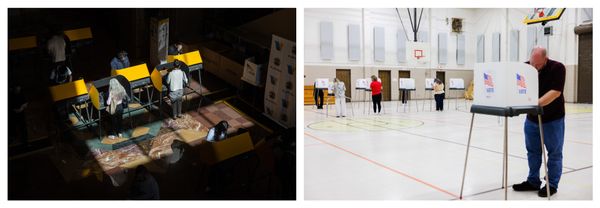
Voters in Los Angeles cast their ballots at the Metro Headquarters polling station (left). Voters in Gastonia, North Carolina, cast theirs at the National Guard Armory (right).
Photos (from left): ETIENNE LAURENT / AFP via Getty Image; Cornell Watson/Bloomberg via Getty Images
Another crucial and yet-undecided mayoral contest in L.A. has also elevated the importance of housing policy. Incumbent Karen Bass, who was slightly trailing as of Wednesday morning, had attempted to spur more construction, especially with a program to encourage the creation of new, 100-percent affordable housing across the city. But her challenger, Nithya Raman, who has been more outspoken about further housing reform, including eliminating red tape and permitting delays, has championed more aggressive zoning changes, including support of SB-79, a state bill permitting more transit-oriented development that Bass fought against.
Referendums and propositions around housing also passed at a local level, or have garnered strong initial results in states with longer vote counts. Among the most consequential, California’s Proposition 1, which enables the state to borrow up to $11.25 billion for rental housing construction and renovation, has an early lead with results still to tally, and Proposition 37, which would create a lower-interest loan fund for Golden State homebuyers, has officially passed with 60 percent of the vote. The state’s other big housing-related vote, Proposition 45, which would curtail the state’s infamous environmental review law to encourage faster home construction, is currently trailing.
In two states, the electorate supported state constitutional changes to cap or limit property taxes to combat increasingly burdensome housing costs. Florida voters approved Amendment 3, which raised property tax exemptions to $25,000, while North Carolina passed a change that would allow the state government to limit the ability of localities to raise property taxes. Both measures have been criticized for the potential damage they may do to future municipal budgets.
Other housing choices put to voters had generally positive results, with two ballot measures in Honolulu to ramp up affordable housing production passing easily; San Francisco voters passing Proposition C to increase affordable housing funding; Charlotte approving a $125 million housing bond; and a Massachusetts ballot measure to shrink lot sizes for homes (allowing more density and reshaping neighborhoods) remains in a dead heat as of Wednesday morning.
In New York City, voters passed a suite of referendums to cut red tape when it comes to construction approvals, public spaces, and outdoor dining. Mayor Zohran Mamdani, who supported these measures, wanted New Yorkers struggling with rent costs to support rule changes that would help housing construction "move as fast as they do." Voters are hoping that politicians understand the national mood and impatience with housing costs, and start moving to enact change with similar urgency.
Top photo by Chip Somodevilla/Getty Images
–
Related Reading: